








IDSurvey is Indonesia’s leading surveyor and verifier and ranks among the top three Testing, Inspection, Certification, Consultation, and Classification (TIC) companies in the Asia-Pacific region.
IDSurvey brings together Biro Klasifikasi Indonesia, SUCOFINDO, and Surveyor Indonesia under a strategic holding structure. Serving a client base of up to 26,000, IDSurvey Group operates 144 branches and operational offices and 108 laboratories across Indonesia. As a global player, IDSurvey also operates 12 overseas branch and representative offices.
“Our strategy starts with strengthening our robust base in Indonesia,” says President Director Arisudono Soerono. “We are also expanding into new products and portfolios that will drive future growth,” he adds. These include end-to-end ESG solutions, digital TIC offerings, and geospatial services.
On the global front, IDSurvey is founded on the use of international standards and growing strategic partnerships with international certification agencies. “These collaborations allow us to leverage our large market and expand our worldwide presence more quickly,” Soerono notes.
IDSurvey Group is also actively involved and plays a role in various well-known international associations.
With its abundant natural resources and strong business potential, Indonesia continues to attract international interest, positioning IDSurvey as a key player in supporting foreign investment and facilitating import and export needs. “Our main role is to help de-risk foreign direct investments,” Soerono explains. “We guide investors through local bureaucracy, assist with licensing, and ensure compliance with required global standards.”
In parallel, through its international branches, IDSurvey supports foreign investors in obtaining Indonesian certification for their products in overseas markets, expanding global market access and accelerating cross-border business expansion.
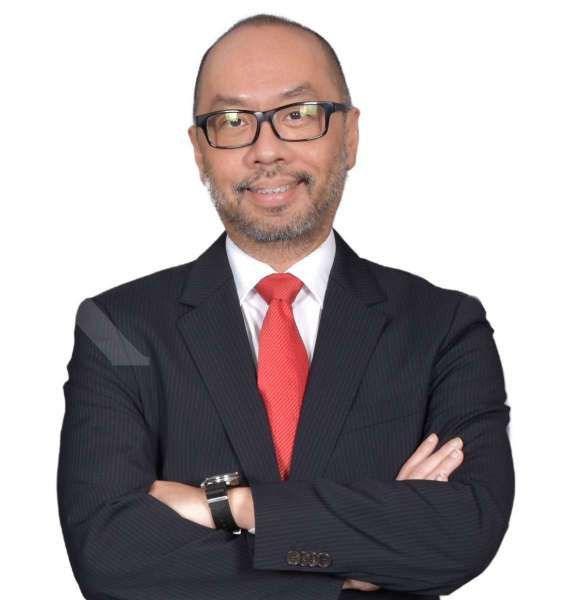
“Our main role is to help de-risk foreign direct investments.”
Arisudono Soerono President Director, IDSurvey
Post ThisRead selected extracts from the interview below.
Q: How has your experience in finance, mining, and energy shaped your leadership style?
Arisudono Soerono: What defines my career journey is working across different sectors, allowing me to view things from multiple angles. For example, my experience in financial services enables me to apply a risk management approach to client selection in certification. It also helps me identify opportunities that were previously underserved. These varied experiences push me to stay adaptable and open to new ideas. Learning new industries requires active listening and continuous learning, which have shaped my work approach and leadership style.
Q: What are your current priorities?
AS: We are currently one of the largest TIC (Testing, Inspection, and Certification) companies in the Asia-Pacific region. By 2029, our goal is to become a major global TIC player. Our strategy starts with strengthening our strong base in Indonesia, focusing on sectors where we are not yet the leader.
We are also expanding into new products and portfolios that will drive future growth, specifically green businesses, digital TIC, and the geospatial business. The geospatial sector is new, driven by a government mandate for a single standardized map, as inconsistent maps across agencies have complicated policymaking and conflict resolution.
We support the government in this initiative and are the only party authorized to commercialize the unified map. The base map itself has limited value, like plain bread, but by adding layers of data and insights, we create a complete “sandwich,” increasing its value. This approach defines our work in the geospatial, or geomatics, business.
Q: What sets you apart from regional competitors in expanding internationally?
AS: Our international expansion strategy leverages our strength in supporting Indonesian clients abroad by partnering with them to certify their products overseas. We already have seven international branches, though their activities are currently limited.
Our first step is assisting international companies exporting to Indonesia in meeting local standards, such as halal certification. Few TIC companies can certify halal products at our level, which is a major competitive advantage for us as a Muslim-majority country.
By 2026, all products imported into Indonesia must be halal certified, creating significant opportunities. We plan to begin with this sector and expand from there.
Q: Why should global investors consider Indonesia and how can IDSurvey support them?
AS: Our main role is to help de-risk foreign direct investments (FDIs) in Indonesia. We guide investors through local bureaucracy, assist with licensing, and ensure compliance with required standards. By working with us, investors can be confident their projects meet Indonesia’s technical and regulatory requirements.
We collaborate closely with BKPM, the Investment Coordinating Agency, and have seen growing interest in sectors such as electronics and consumer products, driven by Indonesia’s large domestic market and rising affluence. The resources sector also continues to offer strong investment potential.
When foreign investors come to Indonesia, they naturally work with government agencies, and we can be their partner in navigating licensing and regulatory processes.
Now is the right time to invest in Indonesia. Our GDP per capita has surpassed USD 4,000 and is approaching USD 5,000, which economists consider an inflection point where consumption grows exponentially. Domestic demand drives our GDP, and as it strengthens, manufacturing and other sectors will follow. Companies that delay may find the market already taken.
Q: Which sectors or opportunities would you highlight for global investors seeking engagement?
AS: Data centers offer great potential, but they require renewable energy, which presents huge opportunities in that sector as well. We are also supporting the battery industry. However, regulations for certifying EVs are not yet in place, which is why we have not been involved in that area.
Other major opportunities include batteries, EVs, renewable energy, healthcare, and pharmaceuticals. However, healthcare and pharmaceutical products fall under BPOM, the government’s certification body, not ours. This is why we have not yet seen a revenue increase from those sectors, though the potential remains significant.
Geospatial technology is also an exciting area. We are now using satellite imagery and spectral analysis to identify issues such as plantation age, crop health, and plant diseases, unlocking new opportunities for precision insights.