







InJourney’s integrated vision for tourism is transforming the sector in Indonesia.
Founded in 2021, InJourney unites Indonesia’s previously fragmented tourism ecosystem under a coordinated national strategy. The state-owned enterprise (SOE) manages 37 airports, including the nation’s busiest gateways, aviation services, hospitality, destinations, and retail.
InJourney’s approach combines infrastructure upgrades, enhanced visitor experiences, and operational efficiencies, transforming Indonesia’s tourism appeal and positioning the nation to capture a greater share of global investment. Here, CEO Maya Watono outlines the key priorities driving its impact in the sector.

“Everything we do follows a master plan to ensure consistency
and long-term vision.”
Maya Watono CEO, InJourney
Post ThisQ: What factors drove InJourney’s formation?
Tourism drives Indonesia’s economic growth and global appeal, which is why InJourney was established: Indonesia lacked a centralized entity to coordinate the ecosystem. We are working to standardize commercial policies, service quality, branding, and operational consistency.
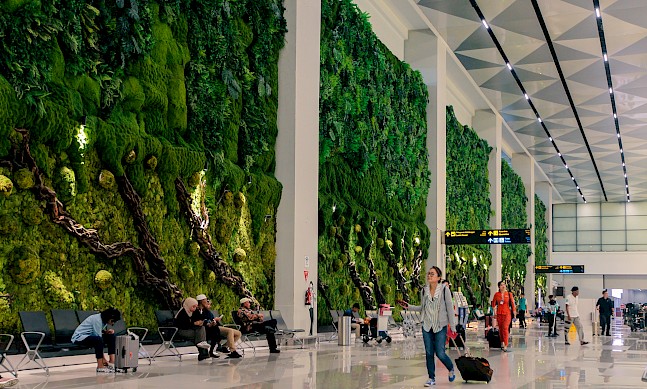
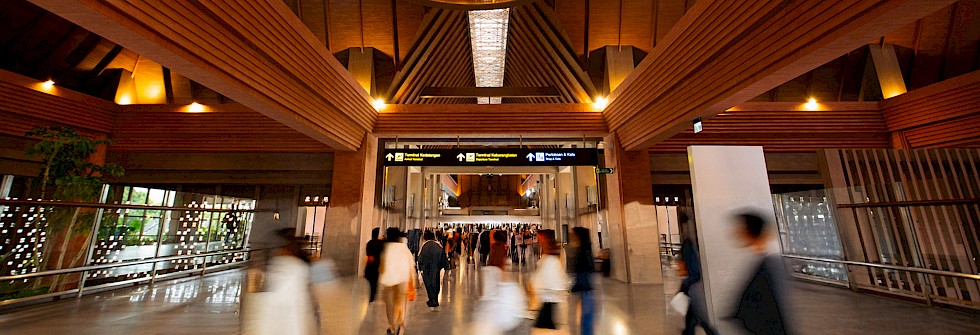
Our major transformation projects are focused on Soekarno-Hatta and Ngurah Rai airports, which together handle 79 percent of national air traffic. We expect 162 million passengers this year, up from 157 million last year, with 80 percent of that concentrated in these two airports.
This transformation is not purely physical; it includes rezoning terminals to improve flow and increase capacity. The rezoning at Ngurah Rai has boosted retail revenue by 20 to 30 percent, positively impacting our bottom line. At Soekarno-Hatta, capacity was initially 60 million and currently stands at 55 million. With the new rezoning plan, it can now accommodate up to 82 million passengers. This means we can postpone the construction of Terminal 4, which was originally planned with a budget of 14 trillion rupiah. Everything we do follows a master plan to ensure consistency and long-term vision.
Q: What are your other key business units?
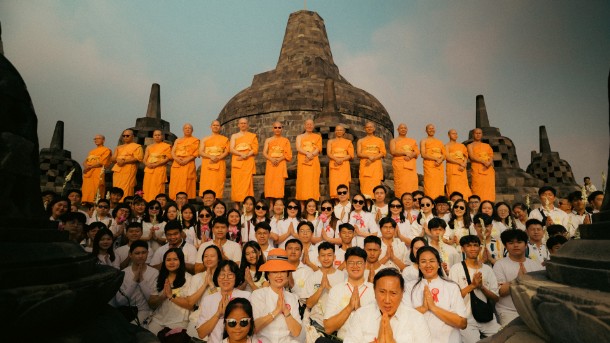
We have launched Aviation Services, which is tied closely to airport operations. Next is the cluster focused on destination management—we currently manage four major sites: Borobudur Temple, Prambanan Temple, Taman Mini in Jakarta, and Ratu Boko. These destinations help attract international visitors to Indonesia.
We also oversee InJourney Tourism Development Corporation, which handles tourism developments such as Mandalika, Nusa Dua, and Golo Mori, acting as a national-level developer of destinations. Retail is another key area, and Sarinah Mall represents our work in this space. We have transformed it significantly, turning it into a cultural experience center—a flagship destination for the best curated Indonesian crafts and souvenirs. From here, we plan to expand across Indonesia. The longer-term goal is to open stores internationally, in Europe, Australia, and parts of Asia, within the next three years.
The last component is hotels. Currently, we manage 40 hotels, but across all state-owned enterprises there are 120. These will be merged under one consolidated entity, possibly under us.
Last year, for the first time, all six of our business units turned green after years of being in the red. This was the first year every unit was profitable, signaling financial health after three years of effort.
To achieve this, we undertook significant corporate actions, enterprise restructuring, and financial engineering. However, maintaining that health requires solid, sustainable business models. Retail must be viable. For hotels, we are still refining the model. Aviation services are complex, as they are linked to both airports and airlines, and require careful structuring. Each unit must have a sound business foundation. That is why a private sector perspective is important.
Q: How are health and wellness shaping Indonesia’s tourism?
We operate the Sanur Special Economic Zone (SEZ), the first in Indonesia dedicated to health. The SEZ is a national strategic project and a groundbreaking initiative. Located on 40 hectares of heritage land, the zone includes a historic hotel built by the first President and a newly constructed hotel to expand capacity, now offering 450 room keys. It also houses Indonesia’s largest international medical conference center and the Bali International Hospital.
We plan to host nine international clinics, each a center of excellence. The first soft-launched clinic specializes in stem cell and regenerative therapy from Germany. Another, also focused on stem cell treatment but using a different approach, comes from the U.S. The company is called Cellularity. They are well established in the U.S. We also have a focus on aesthetic surgery, particularly from Korea.
Fertility, geriatrics, and neuro-residence are also planned. Fertility services will come from Malaysia, and we are bringing in investors. The model is a joint venture with local partnerships. The concept is a medical complex, essentially a large mall integrated with a hospital and multiple clinics, alongside a resort which includes a 1.2km beachfront considered the best in Bali. This has not been done elsewhere.
Q: How do you unify InJourney’s diverse business units?
Our model is that of a strategic holding. We avoid getting involved in day-to-day operations, to prevent internal power struggles between the holding and operating units. As majority shareholders, holding 90% ownership in our members, we ensure they understand our role clearly. Everything they do is consolidated into our structure.
Particularly in the early stages, there was no option other than a top-down model. Without it, there would have been no alignment. Now, six months into this shift, the setup within our members is stronger. We have people aligned with the vision. We are now talking about culture and long-term direction. I often say: our DNA is to leave a legacy. If you are here, you are here to build something that lasts. That is why I joined—to contribute to the country and create a lasting legacy for future generations. That is the message we share internally.
Q: How is InJourney helping facilitate investment?
Indonesia is among the fastest-growing economies in Asia. It is an attractive destination for investment, with strong growth potential. In tourism, we rank highest on the Southeast Asia tourism index, above Singapore and our regional neighbors, thanks to our rich culture, natural beauty, and diverse culinary heritage. We have the most extensive tourism assets in the region due to our size and diversity. However, when it comes to actual travel share and spending per tourist, we rank lowest, at number five. This gap highlights enormous growth potential.
To realize that potential, we must bring in private sector partners and investors. Without focused investment, resources are spread too thin. Our work in the Sanur Special Economic Zone is an example of how we are changing that. We are attracting global investors with strict due diligence and pairing them with local partners to demonstrate that Indonesia is open and ready for foreign investment.
In Sanur, we offer a 20-year tax holiday, unprecedented entry and practice rights for foreign doctors, and streamlined permits for equipment and medicines—all locked in for two decades. It is a concrete example of how we can create investor-friendly environments.
Historically, our incentive programs have not been competitive. But at InJourney, we have designed policies that create win-win outcomes for both investors and the country. We also ensure that foreign exchange and regulatory conditions are favorable to support rapid and sustainable growth.
Q: What sets Indonesia apart as a travel destination?
When asked what Indonesia is, I would say it is a land of endless wonder. We have incredible wildlife and the world’s highest underwater biodiversity in Raja Ampat and Eastern Indonesia, appealing specifically to divers. Mentawai offers world-class surfing, again for a niche audience. Everywhere you go, there is a new adventure.