







ISMAYA Group pioneered a new model for hospitality in Indonesia. Now the company’s leadership is taking its lifestyle ecosystem and innovative brand portfolio global.
ISMAYA Group is Indonesia’s leading lifestyle company, credited with creating a new model for the country’s modern hospitality sector. Established in 2003 by Bram Hendrata, Christian Rijanto, and Brian Sutanto as a single venue in Jakarta, the group now operates more than 170 outlets across Indonesia. From restaurants and cafes to wellness venues, events, and festivals, ISMAYA has built an integrated model for high-quality, experience-led dining and entertainment.
“I realized that there was a significant opportunity just from the lack of lifestyle presence in Indonesia, especially Jakarta,” says Co-founder and CEO Hendrata. “ISMAYA is considered the origin of lifestyle hospitality in Indonesia because when we started, we did not have any competitors.” The group’s debut outlet, Blowfish, launched at a time when the only alternatives were hotel bars and restaurants. Its runaway success established ISMAYA as a first mover, defining a new generation of standalone lifestyle destinations.
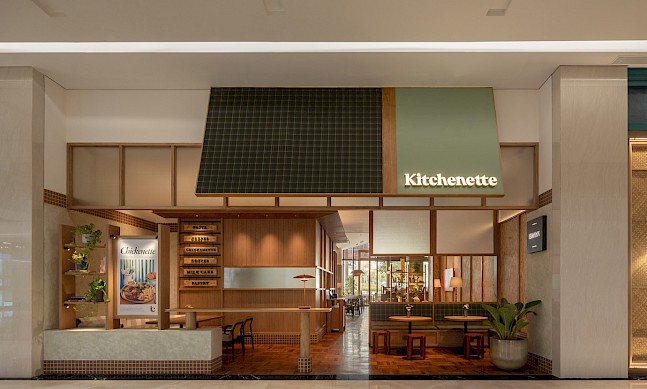
Today, under the slogan ‘Creating the Good Life’, ISMAYA’s portfolio spans multiple pillars. In restaurants, accessible, mall-ready brands such as The People’s Cafe and Djournal target high-footfall locations and broad appeal, while the elevated lifestyle concepts including Osteria GIA, Social House, and Social Garden cater to upper-middle-income urban customers. A growing wellness division, currently represented by Social Padel House, responds to the increasing demand for health-focused, active experiences, while ISMAYA’s music festivals and events are a key expression of the group’s wider lifestyle ecosystem.
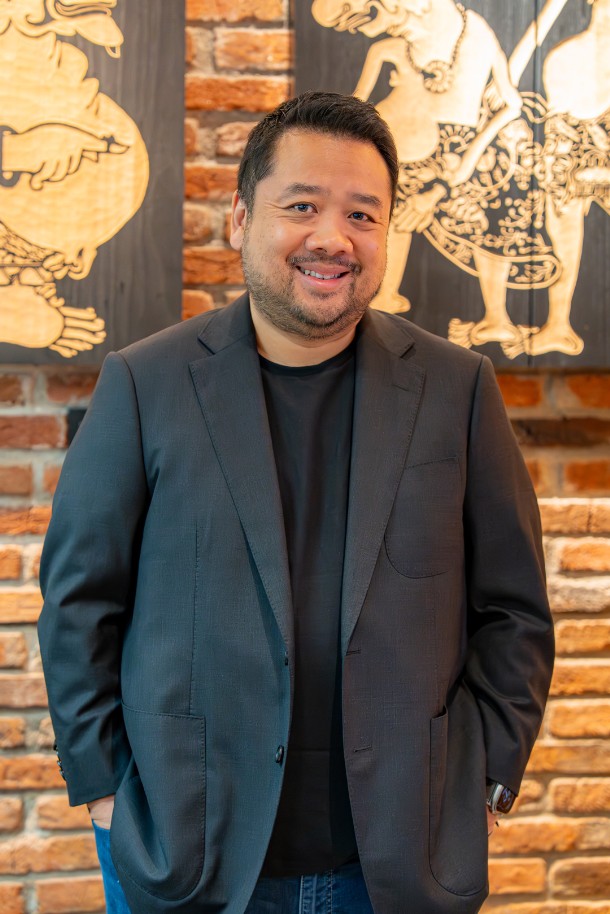
Each business unit is underpinned by detailed data analysis. “We spend a lot of time and effort understanding our customers through our ISMAYA+ app,” Hendrata notes, adding that outlet-level KPIs and service benchmarks are tightly monitored. Menu design follows the group’s 20-80 rule, with the top-selling 20% of items accounting for 80% of revenue, while food safety and quality are given the highest priority, with ISMAYA operating a state-of-the-art central kitchen equipped with German technology to ensure consistent output.
Leveraging its domestic strength, ISMAYA is now targeting international growth. Its modern Indonesian dining brand, Semaja, has been developed for global markets, complementing existing brand extensions in Dubai. Further expansion is also planned for India, Malaysia, and the UK. “Indonesian food remains underrepresented around the world,” Hendrata says. “I want to change that as part of my vision for ISMAYA.”
Key to ISMAYA’s long-term vision is developing Indonesia as a destination for gastronomy. A collaboration with Michelin-starred chef Edoardo Pellicano saw him complete a recent residency in Jakarta, part of a strategy to promote Indonesia’s native ingredients and rich culinary tradition. This reflects Hendrata’s view that the country’s tourism potential is yet to be maximized. “There are numerous opportunities if Indonesia gains the right exposure.”
As consumer expectations evolve, ISMAYA’s future rests on its ability to combine creativity with consistency. From standardized menus and real-time analytics to catering for changing food palates, the group remains committed to pioneering high-quality lifestyle experiences – an approach that reflects a refusal to rest on its laurels. “Complacency is the first stage of failure,” says Hendrata.

Read below selected extracts from the interview.
Q: Why did you return to Indonesia as its lifestyle scene was starting to take shape?
Bram Hendrata: I grew up outside of Indonesia. I was born in Singapore and studied in Hong Kong, Australia, and the U.S. for my university. Speaking with my friends who came back to Indonesia, I realized there is a tremendous opportunity in Indonesia. There is not a lot to do in Indonesia in terms of outdoor activities, especially in Jakarta. Indonesians who were exposed to this kind of lifestyle would miss it. That is the reason I came back despite not really seeing Indonesia as my home.
Q: How do you see the country’s economic trajectory shaping demand going forward?
BH: Indonesia’s GDP per capita is at $5,000, which is like when China took off. This GDP per capita covers the necessities; any increase is an exponential increase in disposable income. We believe the Indonesian economy will see significant growth in the next few years, which would allow people to be more consumptive, and the demand for more lifestyle concepts would increase. Tourism only takes up 4% of GDP compared to its neighboring countries, which are at 12%-13%.
Q: You have spoken passionately about tourism as Indonesia’s untapped catalyst. Where do you see the biggest unrealized potential?
BH: Indonesia has so much potential for tourism from its culture, Borobudur, and the islands. Borobudur is the biggest Buddhist temple in the world. This opens an opportunity for religious travel because it would become a real temple to pray at. A lot of people know Bali, but Raja Ampat and Lombok have better water.
Q: How do you see the country’s economic trajectory shaping demand going forward?
BH: We certainly want to grow domestically, but we also want to grow internationally. We have brought some of our brands to Dubai, and we are looking at expanding in India, Malaysia, and London. When expanding overseas, it is extremely important to have the right local franchisee because they know culturally what works and does not work. There is no cookie-cutter approach that works in every country.
Q: How has the group's investments in technology and operational systems evolved?
BH: During the pandemic, sales were bad, but we used the downtime to improve the company. We adapted technology that would ensure our food quality will not make anyone sick. We bought a GPU server from NVIDIA to study the food reviews and provide reports on what caused the negative reviews. If we had not gone through the pandemic, I would not have had the time to fix my roots and conduct a technology transformation.
Q: How does ISMAYA’s philosophy of being a lifestyle company, rather than an F&B group, shape what comes next?
BH: I never considered ISMAYA to be an F&B company. We have a restaurant pillar, lifestyle one, wellbeing, and festivals. The well-being movement will continue to grow in the next few years. Understanding the customers is the key to winning the game because we can only provide for our customers if we know how they behave.
Q: Why should global investors be watching Indonesia?
BH: Investors should watch this space before it is too late. A lot of people are apprehensive of investing in Indonesia because they do not know enough about the country. It is inevitable that the country will become a dominant player in the global market. Opportunity comes due to volatility. Indonesia is currently the biggest economy in the region.