








For more than 45 years, Medela Potentia has supplied high-quality pharmaceutical products, healthcare products, and medical devices to customers across Indonesia, while expanding its presence into regional markets, including Cambodia.
Earlier this year, the company’s initial public offering (IPO) on the Indonesia Stock Exchange was immediately oversubscribed. Here, President Director Krestijanto Pandji discusses Medela Potentia’s success and shares his vision for the company’s future.
Q: What is Medela Potentia’s area of expertise?
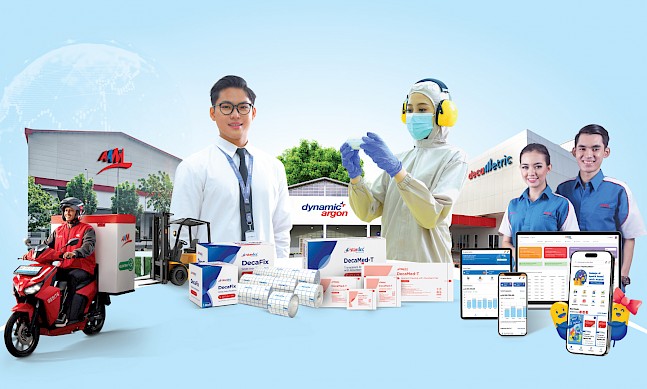
With more than 45 years of healthcare expertise, we operate in distribution, medical devices, and digital platforms, spanning sales, marketing, and manufacturing, with distribution as our largest segment.
Q: What prompted this year’s IPO?
One key reason for going public, beyond capital market exposure, was employee ownership. We introduced an employee stock participation plan. Shares were granted as bonuses, with a one-year lock-in period. Employees, including me as CEO, received shares. This creates a sense of ownership: Gen Z employees value not just salary, but equity too.
When a company performs well, the reward comes through shares, not just cash. That motivated us to work hard, and I see the same effect here. Through this IPO, we aim to advance as a trusted global healthcare group, enhance professionalism and governance, and unlock global partnerships.
Q: What was the market response to the listing?
We set the price low to secure shareholder support: at launch, it was six times oversubscribed. International funds participated, including International Finance Corporation (IFC), along with local investors. After four months, the return is 35.11 percent. The IPO was a success, even if the timing was not perfect. The challenge now is to drive the next phase of growth.
Q: How do you see the healthcare market evolving?
Indonesia has the largest population in ASEAN, yet its healthcare expenditure per capita remains relatively low. According to data from the World Bank, Indonesia’s health spending per capita was around $158.90 in 2021. Increasing this from approximately $100 to $400 per capita would represent tremendous growth potential.
We have observed growing health awareness in Indonesia. Previously, people turned to traditional healers, but now they visit hospitals or community clinics, even for minor illnesses like coughs. The behavior is shifting. The main challenge is still funding, but the government is working to increase support.
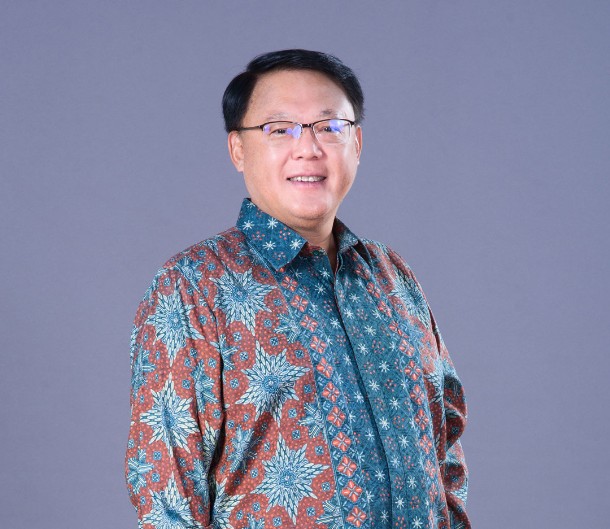
“We are open to partnerships and can distribute healthcare products nationwide.”
Krestijanto Pandji, President Director, PT Medela Potentia Tbk
Post ThisQ: What are your growth projections for Medela Potentia?
Our goal is to grow above GDP. For the first half of 2025, we reported a net profit increase of 15.76 percent and revenue growth of 3.7 percent. The challenge now is continuous improvement.
Q: What are your biggest operational challenges?
The main challenge in distribution is fixed costs. We maintain 35 warehouses across Indonesia, plus two in Jakarta. Employee expenses, transportation, and warehousing account for 70 to 80 percent of total costs. Reducing these using AI is critical.
For example, we use expert systems and machine learning for forecasting. Accurate forecasting balances supply and working capital – too much inventory ties up capital; too little causes stockouts. So, AI helps us optimize stock levels.
We are also developing a transportation management system to streamline deliveries. Instead of relying on driver intuition, the system calculates the most efficient routes to deliver to points A, B, C, and D, so optimization can replace guesswork, standardizing delivery planning regardless of who is behind the wheel.
Q: How else can technology boost efficiency?
We use AI for forecasting to optimize stock levels and working capital, while also exploring EV adoption with a 127 percent cost advantage. The GoApotik digital platform enhances traditional distribution in a changing environment, and free ERP for some drugstores links to our B2B platform, creating greater operational efficiency.
We are now storing data, and its potential is significant. Soon, we will begin offering data analysis and data-backed insights. While we are not a consultancy firm, we can serve as a data resource, supporting clients through a new business vertical.
Q: What are your expansion plans?
Our distribution expansion focuses on building strategic partners across ASEAN and growing our medical device portfolio, especially leveraging products from our established manufacturing arm, PT Deca Metric Medica.
We already operate in Indonesia and Cambodia and had nearly finalized a partnership in Myanmar before postponing. In the Philippines, we are also considering acquiring a partner. Our goal is to become a key player in the region. Beyond distribution, this also allows us to collect valuable data.
Q: How has your professional journey shaped the leadership style you bring to Medela Potentia?
My background, studying in the U.S., working in software and manufacturing, and later in business, has given me broad experience. As an engineer, I think structurally. As a software engineer, I always consider “what if” scenarios, which supports good risk management, essential in any business. While I no longer program, the mindset remains. I learned manufacturing and later pharmaceutical production, including quality control.
Early in my career, I spent four years at Oracle, then returned to Indonesia when my mother fell ill. Later, I moved to a local company in partnership with ICI, a major player in the chemical industry. I worked with plastics and polyurethane, used in many everyday products. I stayed for 12 years.
After that, I joined Ferron, part of the Dexa Group. I spent 16 years there, progressing from plant head to factory manager, then into sales, marketing, finance, and finally president director. I have always loved learning. Even later in life, I kept evolving and studying, which led me to join business school at Wharton.
Q: What opportunities exist for investment in the country and sector?
Indonesia is a large country with a big population and political stability. We consistently achieve 5 percent GDP growth, higher than many major economies in the region.
With geographic and demographic advantages, healthcare awareness is rising, and the healthcare sector is expanding. In medical devices, for instance, just 20 to 30 percent are locally produced; the majority are still imported. In pharmaceuticals, 90 percent of products used in Indonesia are already locally manufactured.
This is not just about our company, it is about an opportunity within the entire healthcare ecosystem in Indonesia. Medela Potentia is just one player, involved in distribution, medical device manufacturing, and sales.
I encourage multinational companies to invest in Indonesia’s medical device sector. We are open to partnerships and can distribute products nationwide. This is about advancing inclusion and improving healthcare for all.