








Bali-based Mirah Investment & Development is setting new standards in premium hospitality.
Mirah Investment & Development has established itself as one of Bali’s most distinctive hospitality operators, characterized by deep local insight and a long-term commitment to shaping the hospitality landscape in Bali.
The company’s strategy focuses on building world-class brands that reflect a lifestyle-driven approach – one that leverages Bali’s unique appeal by combining design, quality, and innovation. “Our goal has always been to create something exceptional within the Bali brand and then expand outward,” explains COO Scott Matson.
With a portfolio spanning luxury resorts, high-end hotels, and residential and commercial real estate, the group’s evolution is underpinned by brand positioning grounded in local identity. “Our strength lies in understanding the local market,” Matson notes. “Bali has evolved over the past five to seven years, and not all visitors come for beaches and views.”
That insight has powered the diversity of Mirah’s expansive operating portfolio. Key highlights include Cocana Resort, a five-star beachfront resort on neighboring Gili Trawangan; Kuara Lombok, a six-star, sustainability-focused beachfront resort; and the lifestyle-driven Secana Beachtown Resort & Residences, to name a few. Beyond resorts, the group operates serviced residences, restaurants, pool and beach clubs, and fitness and wellness venues.
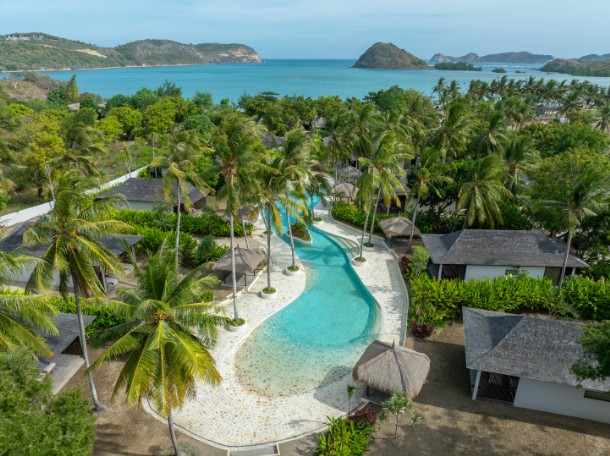
Cocana and Kuara are expanding to new locales, alongside the upcoming ultra-luxury cliff-front Amali Luxury Residence and a new Uluwatu hotel, SOMOSHOTELS, with a pool club and large commercial and retail area. This operating depth is a defining point for investors. Mirah increasingly funds its projects internally or through private equity groups and family offices, moving from a villa-sale model to an institutional platform designed for long-term scale. “It is fundamentally a transition from being solely a developer to becoming a full-service operator,” Matson explains. “That is where we truly add value and differentiate ourselves.” The Guest Society, the company’s operational arm, manages all resorts to ensure the highest levels of customer service, while Mirah’s full-service model increasingly positions the company as the go-to partner for international investors.
“One of the key factors that separates us from other companies is that we are building the corporate infrastructure required to be a trusted, transparent platform,” says Matson. That includes in-house management, legal, and tax teams to provide structured reporting and full visibility. “This allows larger investors to participate in the Indonesian market with confidence,” he adds.
“In the next 24 months, we will have doubled our current operating keys,” says Matson. “Pipeline developments will double that total again by the end of 2028.” That growth trajectory reflects a Bali market that offers clear investment scope in key areas.
With Bali’s popularity accelerating across both tourism and investment, Mirah is open to partners who see the value of entering a market with sustained, proven demand. “We would welcome conversations with a U.S. company in a similar industry that recognizes Bali as a major opportunity, values the strength of the Bali brand, and sees Bali as a platform to expand both our portfolio and theirs,” notes Matson.
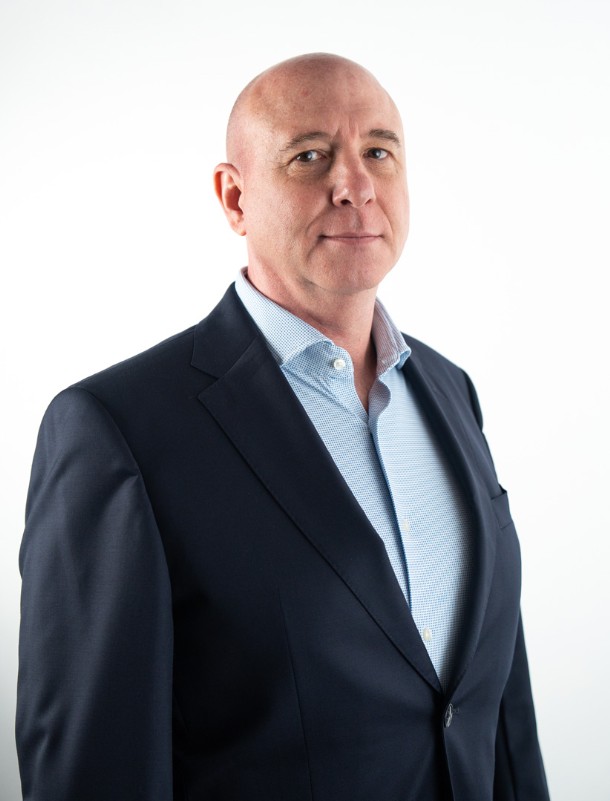
Read selected extracts from the interview below.
Q: How do you see Mirah’s locally rooted brands responding to changing traveler preferences across Bali and nearby islands?
Scott Matson: We know the local region and how to operate here, and that expertise speaks volumes. After receiving multiple offers from major U.S. global hotel operators, we decided to create our own brands. This was primarily due to our belief that we can, and do, deliver the best experience in line with the original vision from which each resort was created.
Q: From your perspective, what makes Bali such a powerful hospitality brand today?
SM: Regarding brand identity, Bali itself has become a brand, especially over the past five years. Its brand power is extremely strong. From our experience, the strongest brands tend to be those that originate from the region. Tourists actively seek an authentic, locally rooted experience. Travelers go to Thailand for a specific atmosphere or product, and they come to Bali for a different, equally distinct experience.
Q: What are the biggest challenges and opportunities you see for investors entering Indonesia’s hospitality market today?
SM: Over the past year, we have stepped back from the model targeting individual investors for retail sales, choosing instead to fund most of our hotel resort projects internally and in partnership with more professional investment platforms such as private equity funds and family offices. While the villa segment has expanded significantly, the development of new hotels and resorts has not kept pace. Many existing properties are aging, and as a result, new, well-operated properties perform exceptionally well.
Q: As Mirah scales rapidly, how do you ensure operational consistency and investor confidence?
SM: In the next 24 months, we will have double our current growth, including projects already under construction. We also have additional developments in the pipeline that will double our operating keys again by the end of 2028. It is fundamentally a transition from being solely a developer to becoming a full-service operator. That is where we truly add value and differentiate ourselves.
One of the key factors that separates us from many other companies is that we are building the corporate infrastructure required to be a trusted, transparent platform. We have in-house asset management, legal, and tax teams, ensuring that investors have full visibility through structured reporting and regular construction updates.
Q: Sustainability is a growing concern in Bali. How is Mirah addressing this in practice?
SM: We try to be as sustainable as possible. Even in the Gili Islands, our company operates with a no-plastic policy. We use only glass bottles and refill them, and we recycle wherever we can. Businesses, hotels, and resorts also have a responsibility to contribute by educating teams and communities. Many developers still operate in a “cowboy” manner, ignoring regulations, and that creates long-term damage.
Q: Looking ahead, what would you like international partners and investors to understand about Mirah and its ambitions?
SM: When we speak to investors, our message is that we are a trusted and transparent partner. We are growth-oriented, but we also have real substance behind us. A lot of what you see here lacks substance, just pictures, presentations, and promises of what they are “going to do.” We have already done it. We are already delivering. Come here and experience our products, see, feel, and touch them. We genuinely want to expand beyond Bali. Our goal is to create exceptional brands, and it would be incredibly meaningful to see them in places like the U.S. or Mexico, or anywhere entirely different, within the next five years.