







Pos Indonesia is a key driver of the national economy through its extensive ecosystem of services.
From its origins as the country’s postal carrier, Pos Indonesia has grown into a fully integrated provider spanning delivery, logistics, financial services, and more. In this interview from June 2025, Acting President Director Endy Pattia Rahmadi Abdurrahman outlines how the company’s unrivaled reach is helping drive social and financial inclusion.
Q: How has the company’s strategic direction evolved?
Pos Indonesia has evolved beyond postal services into logistics and social development, supporting government initiatives across the country. We strengthened our financial reports and shifted from a local rating agency to an international one, building confidence that our performance could withstand global review.
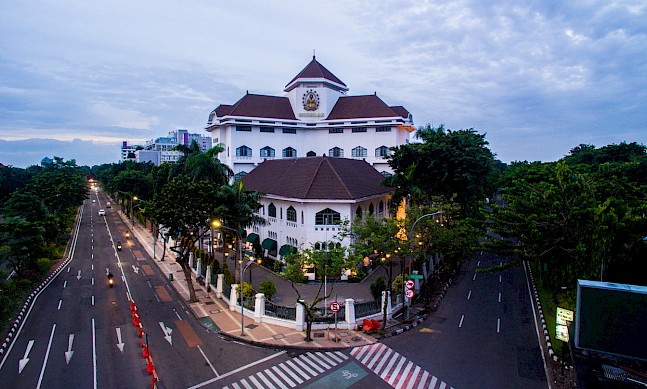
In addition, we have been focusing on digitalization, robotics, and upgrading facilities. We have a new complex, that alone is about 35,000 square meters, housed in an old building that required gradual upgrades. The largest building nearby, seven stories high, is mostly rented by the government.
We currently own about 1,500 assets, which create ongoing costs for land tax, building tax, and maintenance. Covering these costs through normal operations is unrealistic. Many of our properties were once at zero-kilometer central locations, but as economic activity shifted elsewhere, their value diminished. The government prohibits selling them but provides no financial support, forcing us to find creative solutions.
One example is repurposing historic buildings, some of them dating back to 1774, into Post Bloc. In partnership with others, we invite selected small and medium enterprises, such as food vendors, to operate there, transforming the sites into community destinations.
Q: How do you approach competition from e-commerce players?
So far, major players like Shopee, Tokopedia, and TikTok are not open to partnerships. However, with about 800 companies in the market, we have begun working with other competitors.
It is unproductive for each company to build its own network, so we encourage collaboration. While we may compete, cooperation is possible. We have started discussions with one or two major players beyond Shopee and TikTok, hoping this leads to a more competitive yet cooperative market.
We also have subsidiaries such as Pos Fin, focusing on money transfers and leveraging our extensive network to offer multiple services. Pos Fin supports financial inclusion by providing payment solutions beyond traditional bank accounts. Even in traditional markets, people are moving away from cash and increasingly using digital payment systems instead of credit cards. This shift aligns with global trends.
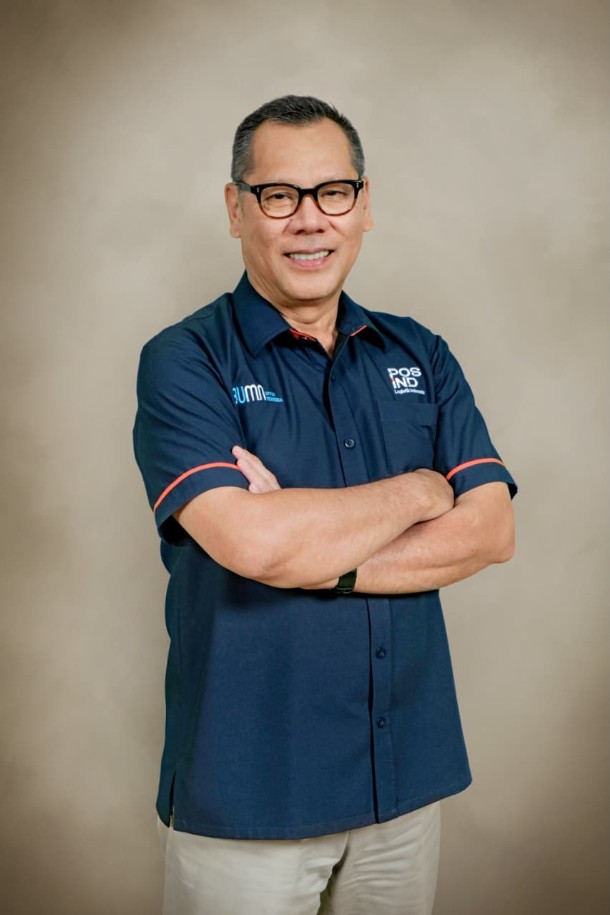
“We focused on digitalization, robotics, and upgrading facilities.”
Endy Pattia Rahmadi Abdurrahman Acting President Director, PT Pos Indonesia
Post ThisQ: How are you collaborating with other state-owned enterprises?
Many state-owned companies, seeing the success of PT Pos Properti, began leveraging their own assets. To address this, we created a seminar with other state-owned companies to coordinate efforts rather than compete. When market interest arises that we cannot serve, we pass it to TASPEN, Mandiri, or others, and they do the same for us.
Under Danantara, discussions at the highest level have focused on logistics. There are about 50 state-owned companies, many with small, fragmented logistics operations. For example, railways have their own logistics arms, while state-owned banks rely on external providers.
We identified seven to ten companies that could be consolidated under one umbrella, with Pos Indonesia leading through its existing network. This would create a strong, flexible logistics company within Danantara, driven by business rather than politics. Integration would also allow us to serve other state-owned companies, such as banks, which still require extensive document and package transfers, despite digitalization.
We believe government logistics needs should be prioritized through state-owned companies, just as public banks handle state funds. Private sector participation remains welcome, but strengthening the public sector makes sense if services are competitive.
Q: How are you preparing for your 2025 IPO plans?
The IPO plan is still ahead. Previously, we reported under the state-owned ministry, but now we operate under Danantara. This shift requires us to function as a true company, not relying on exemptions as a state-owned entity. We are treated like any other business and must survive on our own while maintaining good corporate governance.
Going forward, all state-owned companies are expected to be professional, with clear plans and strategies. For us, the path to IPO is critical, as it opens our books, builds reputation, attracts capital, and reduces dependence on the government. To get there, we must deliver professional service and quality. However, it will not happen this year, especially as the transition to Danantara still requires time.
Q: How have your previous professional experiences shaped your leadership style?
At the beginning, I considered a career in the public sector, but instead began at Hong Kong Bank, later renamed HSBC. I studied for a year at a boarding school in the United States and earned a Bachelor of Mechanical Engineering from Boston University, followed by an MBA from Southern New Hampshire University.
My years in the US shaped my outlook on discipline, cross-cultural interaction, and international connectivity, while my experiences at banks and financial institutions like Zurich General Insurance, HSBC, and Bank Muamalat helped me balance international discipline with local realities, guiding the transformation of Pos Indonesia over the past five years.
Q: Why should U.S. investors consider Indonesia?
I see Indonesia as a country with great potential. Now part of the G20, its growing economy and large population make it poised to become a major global economy. Asian countries such as Korea, Japan, Singapore, and China already tend to integrate smoothly into Indonesia’s business landscape because they intuitively read the local rhythm and build on shared regional dynamics. The U.S. and other Western partners can also benefit by embracing this spirit of adaptation and engaging with emerging opportunities.
Despite local competition in attracting foreign investment from Vietnam and Taiwan, Indonesia’s young and growing population gives it a strong advantage. I would say this is a great country with a large population and a growing economy, a place of strong interest.