







Tanamera Coffee’s rapid rise is built on direct farmer engagement and a dedication to quality.
Founded in 2013, Tanamera Coffee’s mission is to bring Indonesian specialty coffee to the world stage. Spanning retail, export, and B2B supply, the company’s diversified operation is built on direct farmer relationships and a “crop-to-cup” ethos that protects quality at every stage.
Indonesian coffee is renowned for its depth and character; full-bodied, complex, and often smooth and fruit-forward. Tanamera’s master roasters develop each coffee to highlight natural sweetness, structure, and balance. “We have full control, from coffee cherry processing through to roasting,” says Founder Dini Aryani Criddle.
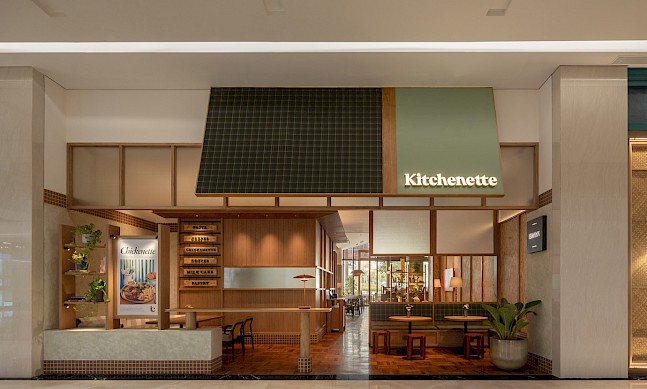
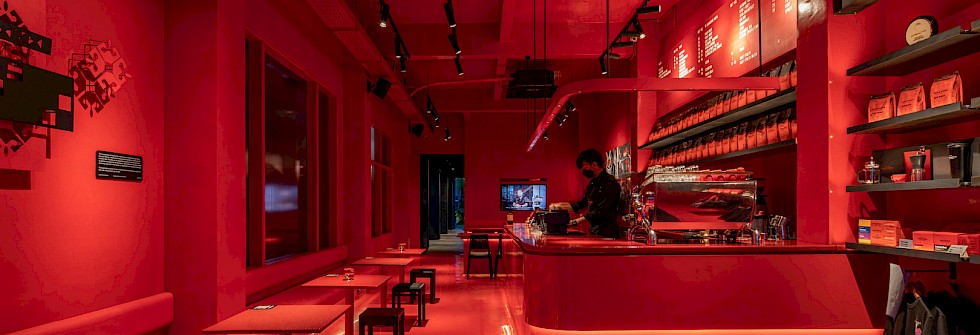
The company incorporates a café and events division and a dedicated B2B arm; the latter serves over 500 clients across 1,000 outlets, including Hyatt, Four Seasons, and Marriott Bonvoy. On the retail side, the group plans to continue opening more outlets.
Grower partnerships support producers through funding, training, and on-farm processing – strengthening community wellbeing. By managing each stage, Tanamera delivers consistent quality that has earned international recognition and fueled expansion – creating opportunities for like-minded investors.
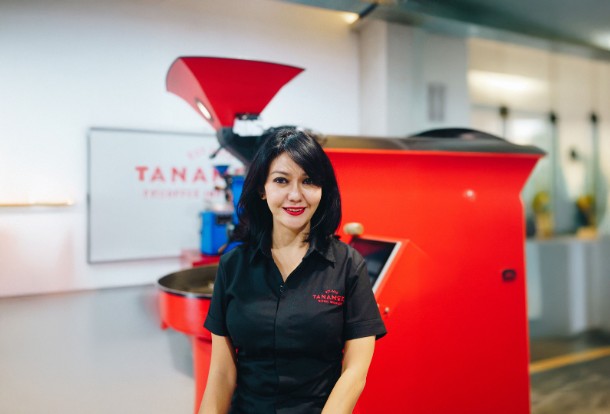
“We have full control, from coffee cherry processing through to roasting.”
Dini Aryani Criddle Founder
Post ThisRead selected extracts from the interview below.
Q: What has held the country back from translating its reputation as one of the world’s most recognizable coffee origins into stronger international visibility?
Ian Criddle: In markets like the U.S., ‘Java’ is almost a generic word for coffee—yet many consumers don’t connect that back to Indonesia. While origins like Sumatra are widely recognized on major café menus, the broader ‘Indonesia’ coffee story isn’t consistently told. Internationally, Indonesia is often associated primarily with Bali, and coffee doesn’t always travel with that narrative. The result is that we have extraordinary diversity of origins, but less cohesive global visibility as a single coffee identity.
Q: How has your move into overseas markets unfolded so far, particularly in Southeast Asia?
Ian Criddle: Singapore was our first overseas step, and it’s been a strong proof point for Tanamera. From day one we built for wholesale, quality, consistency, and systems that scale, so Singapore’s fast, grab-and-go rhythm was a natural fit. Indonesia has been different. Early on, people spent more time in cafés, so we expanded our own café footprint to stay close to customers and build the market together, collaborating, sharing knowledge, and refining the café experience, while growing wholesale. Over the past four years we’ve doubled down on B2B and now serve hundreds of partners, including international five-star hotel groups. The pandemic was tough, but growth has remained resilient.
Dini Aryani Criddle: At the height of the pandemic, we developed Tanamera Coffee products for home use so people could still enjoy our coffee at home.
Ian Criddle: During and after COVID, we deliberately eased café capex, still opening a handful of sites and shifted more energy into building our B2B platform. We’re now closing an investment that will let us accelerate expansion in Indonesia, with a plan to open 120 new stores nationwide over the next four years. In Singapore we expanded, but we also closed some outlets: we secured attractive pandemic-era rents, then renewals reset sharply higher, and labor costs remain a major pressure. We’ve stayed disciplined on unit economics and kept scaling where the model works best. The B2B business in Singapore is performing well; it’s a market where selling prices are high, but so is the cost base.
Q: How is Indonesia's specialty coffee scene regaining momentum today, despite global uncertainty?
Ian Criddle: Despite global uncertainty, Indonesia’s specialty coffee scene is clearly building momentum again. You could see it in the energy around World of Coffee Jakarta last May, and in the international mix of trade exhibitors, competitors, and visitors who made the trip. Even though it was a paid-entry event, attendance far exceeded expectations: organizers were planning for around 12,000, and it landed closer to 30,000 over three days. That kind of turnout is a strong signal of renewed confidence and curiosity in Indonesian coffee, both from the domestic community and from the global industry.
Q: As you scale domestically and internationally, how do you think about capital, investment, and the constraints around quality and logistics?
Ian Criddle: For specialty coffee, quality and logistics are inseparable from capital decisions. We can export roasted coffee at both entry and premium levels, but you have to be obsessive about handling, packaging, transit times, temperature exposure, storage, and delivery, because any weak link shows up in the cup. To keep freshness and consistency at scale, we prefer to roast close to the customer; that local capability is what enables a true specialty coffee supply in each new market. So our expansion approach is to build the right infrastructure, country by country.
Q: How has Tanamera's philosophy of farmer relationships and origin control remained central to the business?
Dini Aryani Criddle: From the start, Tanamera was built on using only Indonesian specialty coffee. While it can be simpler to source green coffee from overseas, my focus has always been to prove Indonesia’s specialty potential—and to do that by putting farmer relationships and origin control at the center of the business. We work side-by-side with farmers, exchanging knowledge, refining processing, and continuously improving quality together, season after season.
We also wanted to benchmark ourselves against international peers. At the Melbourne International Coffee Expo, we entered to see how we compared, and we won Champion International Roaster out of 800 entries in 2015, and again in 2016. Those results reinforced what we already believed: the cup is won at origin. That’s why we keep investing in farmer partnerships and processing capability, securing quality, consistency, and traceability year after year across multiple regions in the archipelago.
Q: Beyond scale and recognition, what ultimately defines quality for Tanamera, both at the farm level and in the cup?
Ian Criddle: For Tanamera, quality is defined by control and consistency, starting at the farm and ending in the cup. At origin, it means selecting the right lots, supporting good agronomy and harvesting practices, and tightening processing so the coffee is clean, traceable, and free of defects. Indonesia is extraordinary because it’s not one flavor profile: with an archipelago of thousands of islands and a wide range of microclimates, varieties, and processing styles, Indonesian specialty coffee can be full-bodied and intense, but also smooth, sweet, syrupy, and fruit-forward—with notes that range from chocolate and caramel to spice, herbs, citrus, and jammy fruits. The job is to preserve that character, not flatten it.
Dini Aryani Criddle: In the cup, quality is clarity, balance, and natural sweetness, coffee that tastes complete without needing sugar. We focus on roasting to bring out body and sweetness while keeping flavor definition and a clean finish. We share that experience by working with customers and peers, through workshops, tastings, and collaboration with local roasters, so more people can explore the diversity of Indonesian beans. Ultimately, quality is when the farmer’s work is honored transparently, and the coffee is delicious, consistent, and memorable every time.