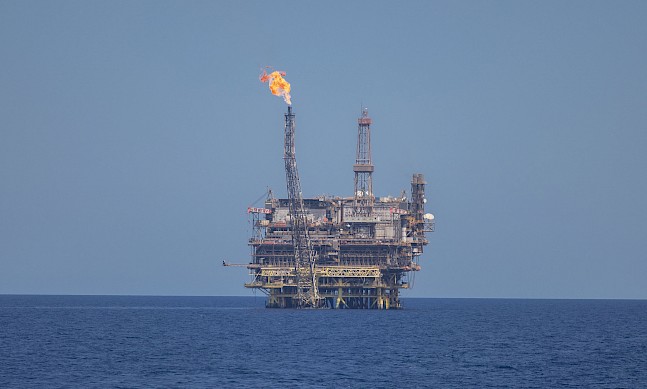









The National Oil Corporation (NOC) is the state agency charged with managing a resource base that underpins Libya’s economy. As the nation reasserts itself in international energy markets, NOC is pursuing its mandate to maximize the sector’s potential across a range of operational priorities. “Our goals are to increase production, expand gas exports, rebuild infrastructure, and strengthen international engagement,” says NOC Chairman Masoud Suleman Mousa. In June, the company reported crude oil output of 1,438,560 barrels per day (bpd), with condensate production reaching 49,163 bpd, bringing total daily output to 1,487,723 bpd—the highest since 2013. That achievement reflects where Libya stands: a producer with substantial assets and a clear commercial direction, at a time when governments and global energy companies are seeking reliable supply partners.
That’s evident in NOC’s renewed engagement with global energy players. The corporation is working with major names including Chevron, BP, and Shell, with more than 40 firms expressing interest in recent bidding rounds. Those partnerships are central to NOC’s push to boost recovery from existing fields and infrastructure, while helping to drive expansion in exploration.
At the same time, NOC is focusing on alleviating structural constraints that have limited the sector’s performance. The country continues to import significant volumes of refined fuel, reflecting limited domestic refining capacity. As a result, a large share of oil revenues is absorbed by fuel imports and subsidies, reducing the capital available for reinvestment. A major refinery project is planned to increase capacity by around 220,000 bpd, strengthening domestic supply and security. Upgrades to pipelines and existing facilities represent a similar opportunity to enhance efficiency and output, while offering scope for international investment partnerships.
A major refinery project is planned to increase capacity by around 220,000 bpd, strengthening domestic supply and security.
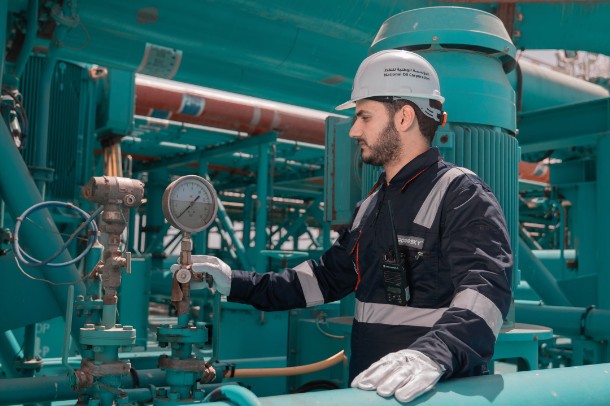 Routine monitoring of pressure systems at the Bouri offshore platform. National Oil Corporation (NOC)
That engagement with international partners is being supported with improved governance and greater transparency. “We now publish monthly data including production, revenues, and exports and imports. We are also improving contract terms and fiscal regimes to make Libya more attractive,” says Mousa, highlighting a commitment to investor confidence that sits at the heart of NOC’s strategy.
Alongside oil, gas is playing an increasingly prominent role. Libya’s reserves offer scope to meet domestic electricity demand, reduce fuel imports, and enable exports to Europe. The existing Greenstream pipeline provides the shortest transmission route from North Africa to Europe but is currently underutilized. In February, NOC announced a new supply target of 1 billion cubic feet daily by 2030, a significant uptick which, combined with plans to commence shale gas drilling in 2026, highlights the renewed focus on gas.
In numbers
Fast Facts
barrels of proven oil reserves
barrels per day current total output
barrels per day production target
expressed interest in recent bidding rounds
Operationally, modernization is also gaining pace. The introduction of digital systems and artificial intelligence is enabling real-time monitoring of production and more responsive management across fields and facilities, supporting both efficiency and output growth. That’s allied to sustainability initiatives that include reducing gas flaring by 60%, water treatment and reuse programs, and the planting of one million trees. In addition, the development of renewables is ramping up, with early-stage solar projects underway. “I want to ensure sustainable production, increased output, and a stronger, more transparent oil sector that supports Libya’s economy and future,” says Mousa.
For international partners, NOC’s agenda creates a range of entry points. From production growth to refining capacity to gas development, Libya offers opportunities across the energy supply chain, backed by strengthened governance frameworks, a focused commercial outlook, and a supportive government. For NOC, meanwhile, the task is a pivotal one for Libya’s future: to translate national potential into long-term sustainable growth.