







As global dynamics shift, Dr Abdulsadek outlines the structural advantages and long-term strategic framework driving Libya’s emergence as a key player in the energy sector.
Q: How would you define Libya’s role within the global energy landscape?
Libya is uniquely positioned as a strategic energy hub at the crossroads of Africa, Europe, and the Middle East. Our geography is one of our greatest competitive advantages—particularly our nearly 2,000-kilometer Mediterranean coastline, which provides unrestricted access to global shipping routes without chokepoints.
This allows Libya to export oil and gas efficiently to international markets, especially Europe, which is only a few hours away. Furthermore, Libya sits at the top of Africa, positioning us as a natural gateway for energy flows from the continent to European markets. Combined with our substantial natural resources, this makes Libya a highly attractive and competitive destination for global energy investment.
Q: What are Libya’s key competitive advantages for international investors?
Libya offers a compelling combination of scale, accessibility, and opportunity. We hold approximately 50 billion barrels of proven oil reserves, alongside significant gas potential, much of which remains underdeveloped. In addition, our infrastructure provides a strong base for rapid expansion. We also offer flexibility, with minimal export constraints and direct access to Mediterranean markets.
Most importantly, Libya is re-emerging as a stable and reliable partner. We are actively working with international oil companies and creating the right conditions to attract foreign direct investment and long-term partnerships.
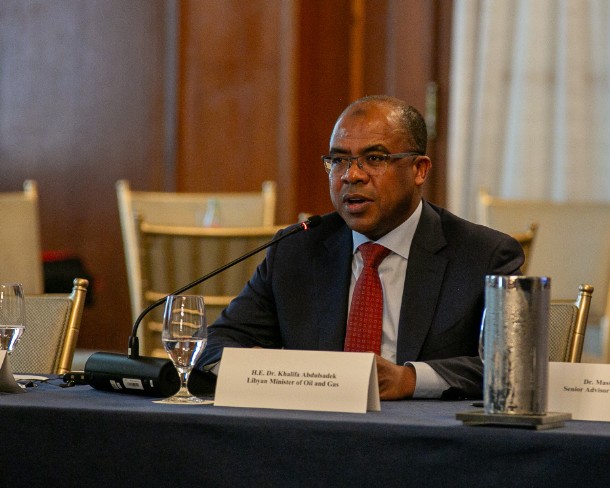
“Libya is re-emerging as a stable and reliable partner”
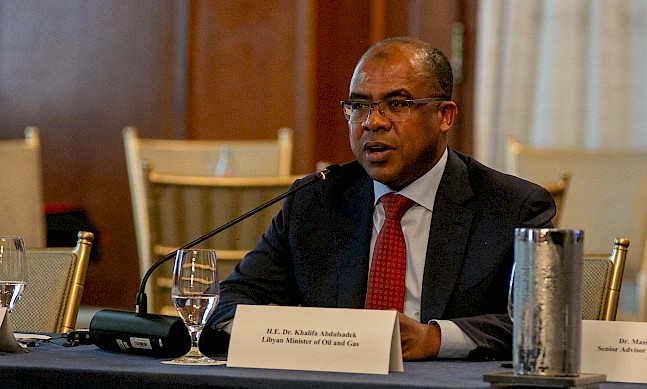
H.E. Dr Khalifa Rajab Abdulsadek, Minister of Oil and Gas, Libya
Post ThisQ: What are the components of Libya’s “multi-lane highway” strategy in energy?
We frame Libya’s energy development as a multi-lane highway, with the National Oil Corporation (NOC) as the main driver of growth. Each lane represents a distinct segment of the energy sector, moving at different speeds according to maturity and potential.
Brownfields (160 mph) are the fast lane, covering existing producing fields, where infrastructure is in place. The focus here is on upgrading facilities, applying enhanced recovery technologies, and optimizing production efficiency. This allows us to rapidly increase output toward 1.6 million barrels per day in the near term.
Greenfields (140 mph), meanwhile, are discovered but not fully developed fields. These require new investment, strong international partnerships, and streamlined fiscal frameworks. Progress here ensures sustained production growth beyond initial gains from brownfields.
Marginal and complex fields (120 mph) are smaller or technically challenging reservoirs, including heavy oil deposits and fields needing advanced extraction techniques. Individually smaller, they collectively offer substantial untapped value and contribute to overall output.
The exploration acceleration (100 mph) segment involves restarting exploration activities, attracting international oil companies, and launching new licensing rounds. This lane replenishes reserves and demonstrates renewed confidence in Libya’s energy potential.
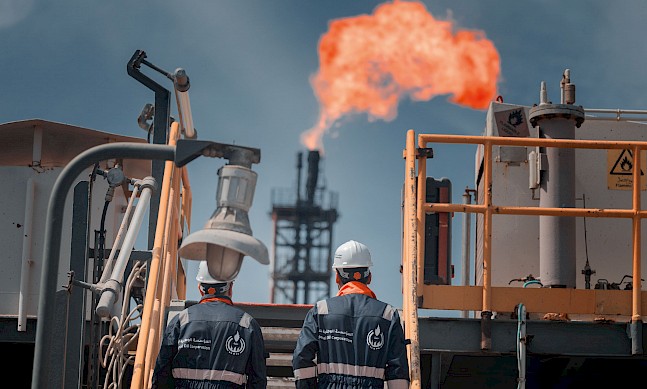
Gas (80 mph) centers on capturing flared gas and accelerating field development, shifting domestic energy use toward gas and freeing up liquids for export—which has direct impact on GDP.
The renewables (60 mph) segment focuses on integrating solar, wind, and other sustainable energy sources into the mix, targeting 20% renewable energy by 2035 and expanding further beyond 2040. This lane supports emissions reduction and diversification.
The unconventional lane (40 mph) covers significant untapped shale and non-conventional resources and long-term strategic upside, while the frontier lane (20 mph) runs in parallel, enhancing both domestic energy security and export potential, particularly to Europe.
Another major priority is strengthening domestic refining capability. By expanding our refineries from 120,000 to 340,000 barrels per day, we are turning Libya into a self-sufficient, value-maximizing energy powerhouse.
This “multi-lane highway” ensures Libya is not dependent on a single track of development, but instead builds a balanced, diversified, and future-proof energy sector—positioning the country as a reliable energy hub for Europe and beyond.
Q: What initiatives are in place to attract international investment in oil and gas?
We are creating a competitive fiscal and operational environment for international oil companies, removing previous barriers. We are providing structured financing packages for greenfield and brownfield projects, streamlined regulatory coordination, and support for technological transfer and infrastructure development. Investors now have clear visibility on opportunities in Libya, including fields capable of producing 50,000–100,000 bpd, ensuring both high returns and sustainability.
Q: How do you see Libya’s energy sector evolving in the next decade?
Libya aims to become a regional energy hub, combining traditional hydrocarbons with renewables, optimizing existing resources, and attracting foreign investment. We are open to collaboration and showcasing Libya’s sector while continuing to expand production, optimize energy use, and integrate renewables.