







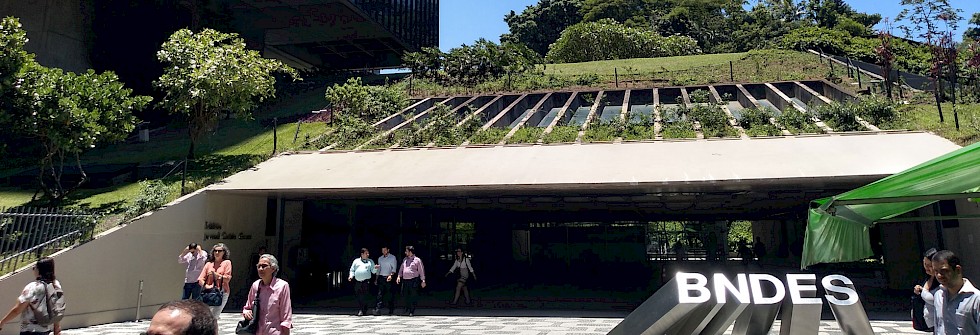
 Headquarters of Brazilian Development Bank (BNDES) in Rio de Janeiro. Doll91939
As Brazil aims to see infrastructure investment top R$1 trillion over President Lula’s administration, BNDES is playing a crucial role in financing and building Chinese partnerships. In this interview, Luciana Costa, director of infrastructure, energy transition and climate change, sets out the bank’s priority sectors and key opportunities for Chinese investors.

“We believe there is room for Chinese companies to come and produce in Brazil.”
Luciana Costa Director of Infrastructure, Energy Transition and Climate Change, BNDES
Post ThisQ: BNDES invests almost 2% of Brazilian GDP in infrastructure every year. How do you intend to support the entry of new investors in Brazil?
Luciana Costa, Director of Infrastructure, Energy Transition and Climate Change, BNDES: Over the four-year period of President Lula’s government we are going to mobilise up to BRL 300 billion in new projects.
Under President Aloizio Mercadante’s management, which began in January 2023, as soon as President Mercadante took over BNDES, before his administration there was a reduction factor in the TLP, so BNDES’s funding cost was cheaper and benefited from a Treasury subsidy. From January 2023, that subsidy ended, and BNDES no longer has a subsidy in its rate. We do have some subsidies, such as the Climate Fund and the Merchant Marine Fund, but these are very specific subsidies. In our area, which is infrastructure and energy transition, 90% of operations are carried out without subsidy.
Our strategy was to innovate in the financial structuring of projects. Non-recourse project finance had happened in the past, but it was not standard practice. BNDES had a lot of resistance. BNDES chose to structure more corporate financings and less non-recourse project finance. Then we started to work together with the capital markets and began to innovate in financial structuring.
First, by focusing more on using and structuring projects as non-recourse whenever possible. We launched several initiatives, we began coordinating debenture operations, so BNDES became much more active in the capital markets. It had done some capital markets work before we arrived, but capital markets operations were not part of the bank’s normal practice. Then we adopted the capital markets as an important ally for the bank, and we innovated in financial instruments. So we started coordinating capital markets transactions, coordinating debenture issuances, and we launched an interest rate stabilisation programme, because we are operating in a high-interest-rate environment.
Today, in very large projects, Brazil’s capital markets have developed significantly. A large part of the capital markets in infrastructure developed after the approval of the incentivised debentures law, which took place under President Dilma Rousseff’s government. So today the capital markets are a reality, because back then President Dilma had the vision to create an instrument. Today the main capital markets instrument for infrastructure is the incentivised debenture. And we entered that market.
Brazil needs all kinds of infrastructure. It is a country of continental dimensions with a very large population. It is the largest net exporter of food, but we still need to make major advances in logistics for the export of minerals and food. Our biggest gaps are in transport, logistics, urban mobility and sanitation.
Then the government began to work in a highly coordinated way. BNDES works together with the Ministry of Transport, the Ministry of Ports and Airports, and the Ministry of Mines and Energy. That is why I told you that whenever there is a transport roadshow, BNDES is always there as well. It is a bank with 73 years of history and deep sector knowledge across all infrastructure sectors. It is the largest financier of renewable energy in the world, as you know. That is BloombergNEF data.
The numbers are surprising. Why? Because the Ministry of Transport has driven a revolution in road concessions. Under this administration, under Minister Renan’s leadership, the ministry has been able to address the risk matrix of road concessions in a much more objective way and in a way that is more acceptable to the market. The Ministry of Transport avoids making the private sector take risks that are not typical private-sector risks. Demand risk in roads, for example, is now handled differently in the new risk matrix. It does not transfer all demand risk to the private sector. There is some cushioning. There is risk-sharing.
There has also been a maturation in the relationship among institutions — the TCU, ANTT, the ministry and BNDES. Infrastructure is a very complex sector. No one will do it alone. The ministry will not do it alone. The federal government has already held 22 auctions, with CAPEX of R$150 billion and more than 10,000 kilometres contracted. It is impossible to think of financing R$150 billion on company balance sheets alone. That is why we started structuring projects on a non-recourse basis.
But even that does not fit on BNDES’s balance sheet. And our capital markets, developed as they may be, still do not have the depth to absorb everything. So BNDES’s role is exactly this. We come in, take 30%, 40%, 50% — a share of the project — and the fact that we are in the project acts as a seal of quality, so that project becomes more attractive to capital markets investors, and that is how we have unlocked investment.
What we hear repeatedly is that without BNDES these highly successful auctions could face delays due to funding constraints. BNDES complements the capital markets and private banks very well when it comes to financing these complex projects.
Q: How has BNDES helped change the infrastructure investment landscape?
LC: In sanitation, for example, investment volumes were historically very low. Since 2025, we have an estimated R$35 billion in investment. In 2026, R$40 billion, potentially reaching R$45 billion. BNDES has already structured more than R$100 billion in sanitation investment.
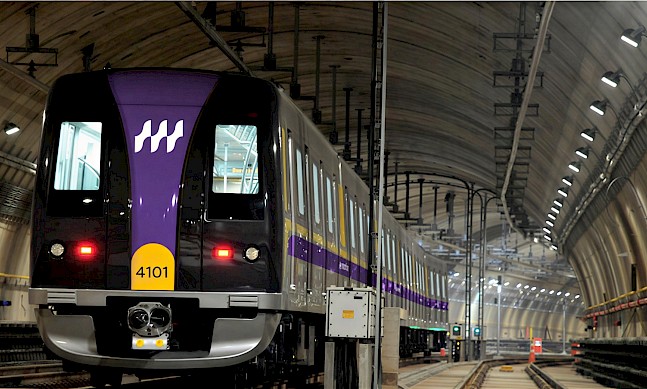
Urban mobility also reached record investment levels. BNDES structured Line 6, the TIC, Lines 8 and 9. We approved financing for electric buses in São Paulo. Infrastructure is like this — people usually ask me, Luciana, which sector will attract the most investment? It depends. It depends on the pipeline of auctions. But ports and airports have also grown a great deal. Brazil is experiencing a supercycle from 2023 to 2026. During President Lula’s government, more than R$1 trillion will be invested in infrastructure, and BNDES will approve more than R$300 billion. Because our role is catalytic. As I said, when we enter a project, we attract the private sector, and we are countercyclical. If at some point the capital markets close, we step in. When there was the Light and Americanas crisis, for example, we came in strongly at that moment and the market recovered very quickly. So we bring security to investors.
Q: How do you view the role of Asian companies in expanding collaboration in renewables in Brazil?
LC: We have a significant number of partnerships with Chinese companies in the renewable energy area. BNDES is a major financier of Chinese companies that are here in Brazil. We want to expand that partnership in this sector. In my view, China contributes greatly to the world’s energy transition because it has been able to scale electrification technologies and reduce the cost of those technologies.
So what we see today is that there is not only room for Chinese companies in renewables, but also, for example, in railways and rail transport. I see a lot of room there and for Chinese companies in rolling stock — on the Intercity Train (TIC) we are working with the Chinese, CPFL is a major company in the TIC.
Q: What are the main competitive advantages of operating in the Brazilian market with BNDES’s support?
LC: The first thing is scale. Brazil is a country of continental dimensions. When this government addresses risk allocation, creates a more favourable regulatory environment, and encourages more consensual decisions with less litigation — because we now have SESECS Consenso, a conciliation chamber where many problematic projects are renegotiated — when we improve the whole business environment, the regulatory environment and the institutional environment, we create an enormous pipeline of projects across different sectors.
That allows us to attract international players. International players will not come to countries that do not have scale. So, the first major advantage of the country is scale. The second major advantage is the business environment. By business environment, I include mature regulation, well-designed regulatory frameworks, and risk matrices. The Ministry of Transport is improving the risk matrices for roads and now for railways as well, applying what worked for roads to rail. We are doing the same with airports, many of which are also being optimised.
I would say that these are Brazil’s comparative advantages: regulatory environment, legal certainty, and obviously the country has a bank like BNDES. We have an excellent relationship with Chinese banks. Chinese banks, just like the capital markets, like to have BNDES by their side, because if we enter a project with our balance sheet, taking risk on that project, we are signalling to the market that it is a well-structured project and that the risk is lower. The same applies to Chinese banks. They know that if BNDES is supporting a project, structured that project and is participating in that debt, then we are a seal of quality. That is true for Chinese banks, other banks and multilateral organisations. This also aligns with BNDES’s role, because we are a long-term institution. We are a 73-year-old bank.
Q: Where do you think Asian investors could achieve the best returns and the greatest structural impact in logistics and energy?
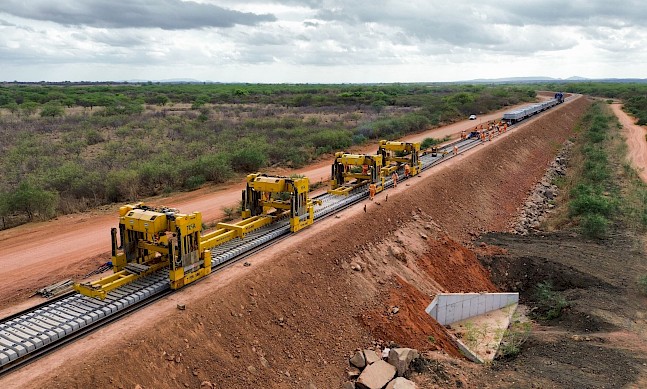
LC: I think railways are a major opportunity for Chinese investors. Ports too. Renewable energy, sustainable aviation fuel, electrification of every kind. We discuss the fact that we need to electrify buses, but we also need to electrify our motorcycles and cars. Together with the Chinese, we need to build a partnership, because we believe there is room for Chinese companies to come and produce in Brazil, and for Brazil to become an export platform for products made here.
We believe China has the technology and could produce electric motorcycles in Brazil, electric cars in Brazil, solar panels, batteries — anything China wants to produce here — and use Latin America as an export hub. I think that would be interesting. I think it would be a win-win. BYD is already here.