







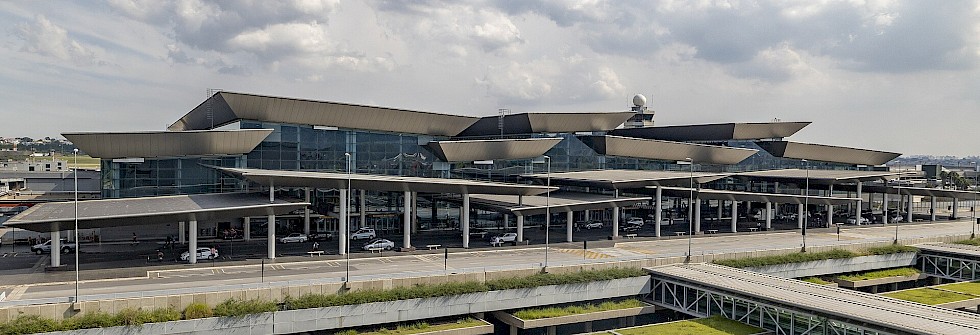
 São Paulo-Guarulhos International Airport, São Paulo, Brasil - Arne Müseler
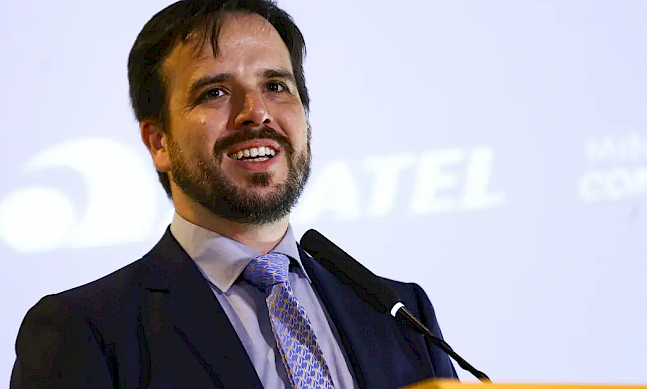
With trade between Brazil and China reaching a record $171 billion in 2025, Brazil’s transport infrastructure is key to growing the bilateral relationship. In this interview, Minister of Ports and Airports Tomé Franca discusses the booming investment levels in the sector, flagship projects including Tecon Santos 10 and Brasília airport, and the ongoing dialogue at the heart of the ministry’s strategy for engagement with Chinese counterparts.
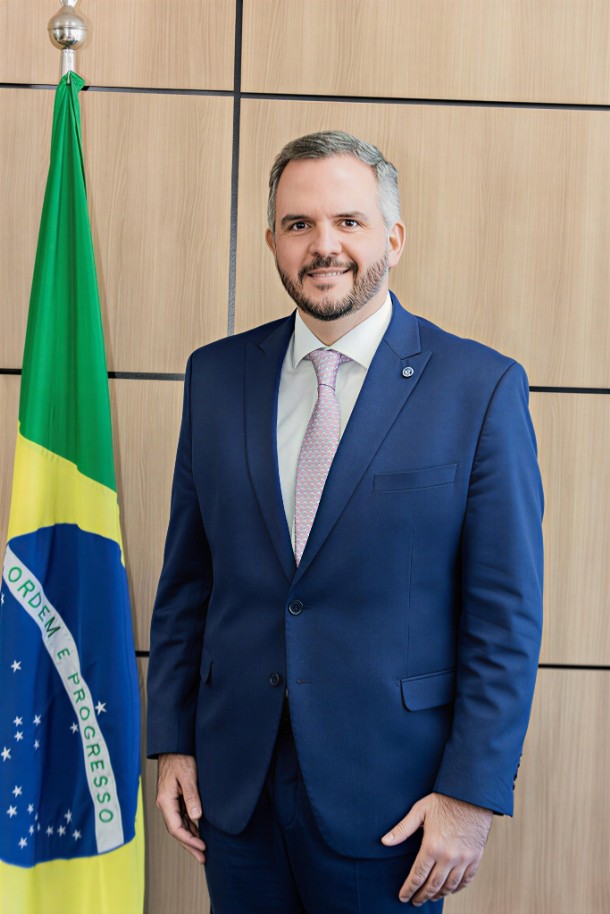
“Brazil is experiencing a very strong cycle of public and private investment in infrastructure.”
Tomé Franca Minister of Ports and Airports
Post ThisQ: How are you engaging with Chinese partners?
Tomé Franca, Minister Ports & Airports: We have been carrying out work across the Federal Government as a whole, with strong dialogue with China and Asian countries, including efforts to establish partnerships and exchange knowledge exchange so that we can improve the efficiency of our ports, our airports and transport infrastructure as a whole.
China has the world’s leading ports, the ports with the highest cargo movement. Without a doubt, it is an excellent example for us to establish this connection and bring some of the experience and efficiency of those ports to Brazilian ports.
This dialogue is always open and permanent. We have been carrying out several partnership initiatives between port authorities and Chinese ports, and we also intend, in the medium term, to visit China. We were unable to do so last year. We had an invitation, but because of the agenda we could not go. We want to strengthen this relationship so that we can share knowledge, share experiences and move forward, just as Chinese ports have advanced a great deal in the world.
Q: How is the ministry consolidating Brazil as Latin America’s leading hub?
TF: Brazil is experiencing a very strong cycle of public and private investment in infrastructure. When we compare the growth of these investments over the last three years, since our government took office under the leadership of President Lula, these investments have indeed grown significantly.
Comparing the first three years of the previous government with the first three years of this government, private investment grew from BRL 7 billion to BRL 40 billion in infrastructure investments in the port sector. This means new private-use terminals, new leased ports and the requalification of public works. There has been very significant growth.
In the port sector, private investments in the four years from 2019 to 2022 totalled BRL 7.4 billion. In the first three years of the Lula government, from 2023 to 2025, they reached almost BRL 40 billion. That is a jump of more than 400 percent. In public investments in the port sector, we went from BRL 1.4 billion to BRL 3.1 billion, which is also growth of more than 120 percent.
So there has been significant growth in public investment, more than 100 percent, and growth of more than 400 percent in private investment.
If we look at airports, the figures are also extremely positive. Public investments rose from BRL 600 million in the four years of the previous government to more than BRL 1 billion, comparing four years with just three years of our government. In private investments, we went from BRL 4.9 billion to almost BRL 9 billion, also comparing four years of the previous government with three years of this government.
What I want to do here is not make a political analysis of administrations, but an analysis of the scenario we have in Brazil, which promotes this kind of investment growth. We are currently experiencing a major moment for infrastructure investment, whether public investments, which are necessary, or private investments, which are fundamental if we are to meet Brazil’s infrastructure capacity needs.
Q: What are the key factors behind this momentum?
TF: This is happening because we are living through a moment of institutional stability. Brazil is a country that respects institutions, wants to guarantee its sovereignty, dialogues with the world and speaks to the world on equal terms, while respecting differences and opening our market. President Lula has opened hundreds of markets over the last three years.
More than that, Brazil has good projects. To maintain and even expand this investment cycle, we need to guarantee institutional stability, legal certainty and regulatory security. Our agencies are very well structured for that. In our sector, ANTAQ and ANAC are specialised agencies with independent technical staff that can guarantee this regulatory stability and deliver good projects.
The good projects are reflected in the number of auctions we have carried out. There were 29 auctions in the port sector in these first three years. We have already held three auctions at the beginning of this year, and we have another 15 planned by the end of 2026 in the port sector.
In airports, we held the Galeão auction, which was a success, with a 210 percent premium. Invepar won, so there will be a change in the controller of Galeão Airport in Rio de Janeiro. We also held the auction for the AmpliAR programme, covering regional airports and offering 13 assets. That makes 14.
We will also hold the Brasília auction at the end of the year, which includes Brasília and another 10 regional airports. That means 11 airports, totalling 25 assets. The 14 already completed, plus another 11 that will be included in this airport auction by the end of the year.
So, there will be 25 airport assets and another 15 port assets. That means 40 new ventures, 40 new projects that will be offered to the market in 2026 alone. That is a record for this ministry. If we add the 29 already completed to the 40 ventures we will offer this year, that is almost 70 ventures, almost 70 projects that will be offered to the market. I would say that, setting modesty aside a little, because this is not me, this is the government team and the ministry team, it is a surprising number of projects being offered to the market.
Q: Where do you see the main opportunities for international investors?
TF: We have Brasília, which is one of Brazil’s main airports. What we are offering in Brasília is the result of a renegotiation with the concessionaire. It was already a very attractive airport in its first tender, and now we are offering the market a rebalanced project, with a new model, replacing the fixed concession fee with a variable concession fee and including investments in the equipment that will improve the airport. This includes a passenger terminal, an international terminal and a multi-storey car park, while incorporating 10 regional airports.
We also have Tecon Santos 10, which is the crown jewel of the port sector. The project proposal increases capacity by 50%. The port moves from 47th position to 15th, becoming one of the most important ports in the world, while also guaranteeing competitiveness in the process.
We are also building on the first auction for the access channel to the Port of Paranaguá, which is the first concession of a port access channel. We want to take this model to other ports as well, including the Port of Santos.