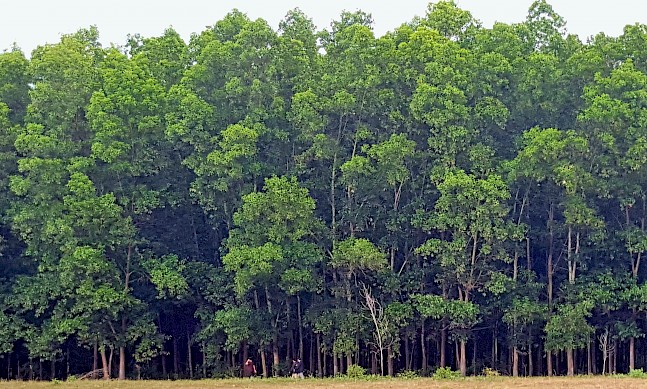







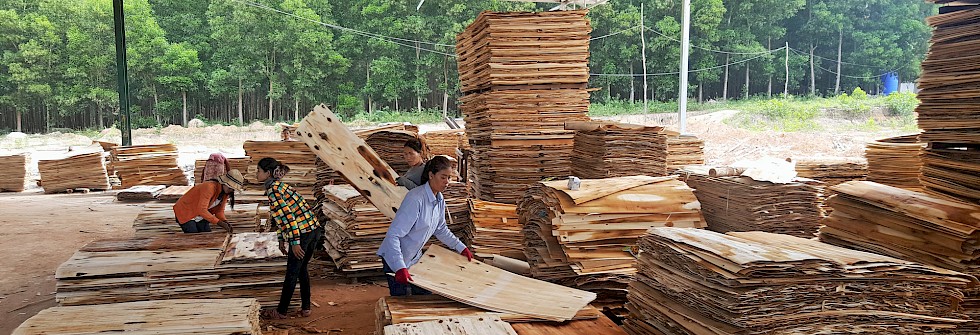
Cambodia’s lumber sector can grow through integrated reforestation, export ambition and community development. At least that is the view of CamAgra Investment Group. Built on a 7,000-hectare acacia plantation established through a reforestation program launched in 2003, the company has evolved from a short-term investment into a long-term forestry business focused on certified production, rural employment and sustainable land management. In this interview, Gil Livni, Founder and CEO of CamAgra Investment Group, explains the company’s long-term investment strategy and its role in national development as demand grows for traceable, environmentally responsible timber.
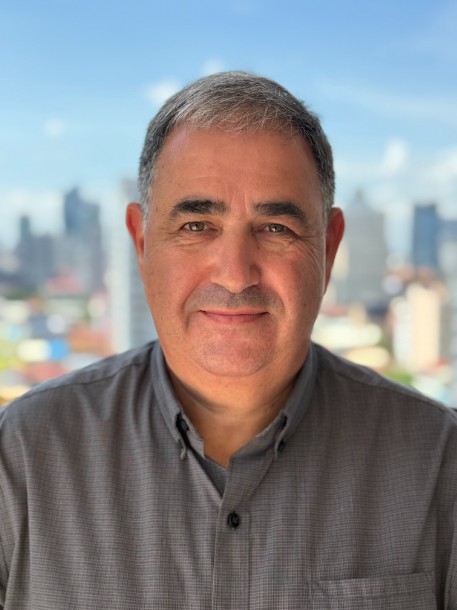
“We are positioned as one of the largest PEFC certified lumber operations in Cambodia”
Gil Livni, Founder & CEO, CamAgra Investment Group LTD
Post ThisQ: How has your vision for CamAgra evolved?
Gil Livni, Founder and CEO, CamAgra Investment Group: Initially, our investment in Cambodia was intended to be a short-term commitment. However, as conditions in Cambodia become more stable and secure, we shifted towards a long-term investment strategy.
Key factors that influenced this decision included improvements in safety, security, infrastructure such as roads and ports, the structure of the local economy, and improved workforce education.
For example, we adjusted our focus from producing wood chips for paper to manufacturing veneers for plywood and flooring and later expanded into lumber production. This shift required adding years to the rotation cycle, extending tree rotation and investing in factory infrastructure.
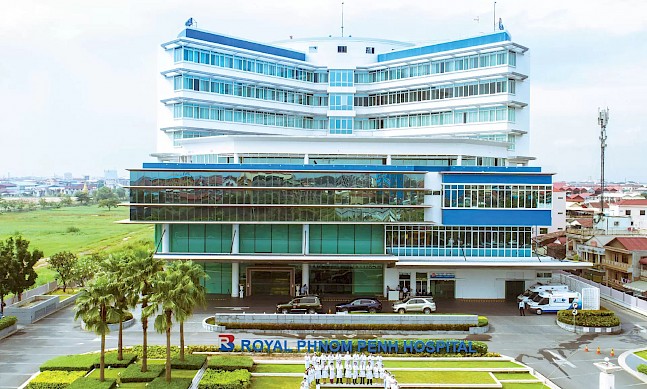
I first came to Cambodia in 1999. There was very limited electricity, generators for electricity, safety issues, limited banking options and bad roads. The prime minister did a very good job in keeping the peace and developing Cambodia. Just look at the Phnom Penh skyline.
I aim for CamAgra to be seen as a reliable partner that both understands how to navigate the complex world of international lumber and cares for both the environment and the community it resides in.
Q: Where does CamAgra stand in Cambodia’s lumber industry?
GL: We are positioned as one of the largest PEFC certified lumber operations in Cambodia. This provides us with many more export opportunities due to the fact that this type of environmental certification is required by most, if not all, Western countries. Furthermore, our large seedling production enables us to guarantee ourselves as a long-term supplier, providing consistency and large quantities of material.
Q: What is driving Cambodia’s building materials growth?
GL: There are a few key drivers behind the recent growth. First, there are government investments and infrastructure projects. This includes things like new expressways, the new canal and logistics hubs. The Transport and Logistics System Master Plan 2023–2033 alone outlines 174 priority projects worth $50 billion. In addition, the Cambodian government approved over $23 billion in fixed-asset investment projects in 2024.
Second, there is a rising middle class, which has caused rapid urban expansion in cities like Phnom Penh and Siem Reap. And third, there is a healthy credit market. In 2023, bank credit to the construction sector grew by 12%, which continues the trend of financial support for developers. Mortgages are available.
Q: How are you planning to capitalize on that growth?
GL: I plan to capitalize on this growth in three ways. First, this is achieved through local partnerships and distribution, which involves collaborating with Cambodian contractors and distributors to establish a reliable supply chain and educating local builders on the use of sustainable materials.
Second is product differentiation by focusing on eco-friendly, durable and cost-effective materials to meet evolving regulatory and consumer preferences. Third is investing in digital marketing channels. This includes initiatives such as launching an online platform for material sourcing and utilizing digital tools to showcase product specifications, certifications and case studies.
I hope the government will encourage factories in the special economic zone (SEZ), to purchase more materials from the local market, particularly raw materials. This will not only provide valuable insights and knowledge from these partnerships but also encourage investors to invest in the Cambodian market and increase the capability of Cambodia to supply raw materials, like establishing more plantations. An increase in domestic consumption is very important for economic stability.
Q: Why is the U.S. such an important export market?
GL: The United States accounts for over 90% of our wood exports. Currently, most of our direct customers ship their final product to the U.S. However, we are in the process of establishing partnerships to export directly.
The ease of doing business with Cambodia, the product quality, using dollar as currency and the friendly nature of the Cambodians make long-lasting partnerships.
Q: How do you approach environmental sustainability on the ground?
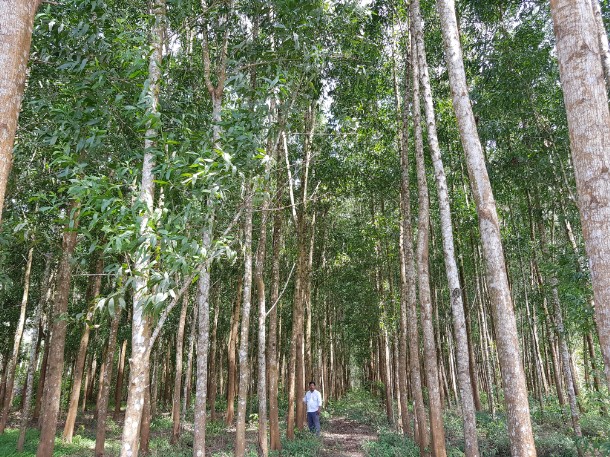
GL: Our approach to sustainability is based on a regenerative forestry model that involves two main pillars, ecosystem protection and soil and land management.
We maintain protective buffer zones along rivers and streams to prevent runoff, preserve water quality and support aquatic biodiversity.
Our plantation design includes uninterrupted corridors that allow wildlife to move freely, supporting habitat connectivity and reducing human-wildlife conflict. Hunting is strictly prohibited within our plantations. Native species are respected and allowed to traverse the land undisturbed.
Soil and land management include practices such as using nutrient-rich organic compost to maintain soil fertility, reduce chemical dependency and promote long-term productivity.
To prevent soil degradation, we avoid uprooting the root systems of harvested trees. This stabilizes the soil and preserves microbial life. Sites are replanted promptly at the onset of the rainy season, ensuring rapid recovery and minimizing land exposure.
Q: Why should U.S. investors look at Cambodia now?
GL: Now is a good time to invest in Cambodia, thanks to the pro-business climate the government is promoting, the recent momentum in infrastructure projects that are bringing transportation costs down, tourism bouncing back from pre-pandemic levels, a growing educated workforce and Cambodia’s strategic location in Southeast Asia.
Examples of government action contributing to this climate include, but are not limited to, Cambodia offering 100% foreign ownership, low corporate tax rates, zero tax on some investments and streamlined investment procedures.
Trade agreements like RCEP and the Cambodia-China FTA open access to broader Asian markets. There is a 19% tariff with the U.S. Using the dollar as a legal currency in Cambodia, you can wire dollars. The government is digitizing records to streamline the process of dealing with licenses and other business and legal paperwork.
With a median age under 25, Cambodia’s labor force is adaptable, affordable and increasingly skilled, ideal for manufacturing, services and tech startups.
Cambodia sits at the heart of Southeast Asia, offering access to regional supply chains and trade routes connecting China, Vietnam and Thailand. Land is also available.
Q: What lessons have shaped your leadership over time?
GL: Over these 20-plus years, I’ve learned that resilience is everything. Agriculture is unpredictable. We’ve faced floods, droughts, market crashes and global disruptions. But each challenge taught us to adapt, to innovate and to stay grounded in our mission. Resilience isn’t just about surviving; it’s about evolving.
I’ve also learned that people come first, always. Our most significant growth came from trust, investing in farmers, empowering local talent and building relationships that last. When you put people at the center, everything else follows.
Another lesson is that sustainability is not optional. Early on, we saw the environmental toll of conventional practices. We made a shift toward regenerative agriculture and climate-smart methods. Today, that decision is paying off, not just in yields, but in long-term viability and global partnerships.
Finally, I’ve learned that partnerships drive scale. We’ve grown because we’ve collaborated with governments, NGOs and international buyers. Empathetic and grounded, I lead with empathy, listening first, especially to those closest to the land. Leadership isn’t about control; it’s about connection. Inclusive and empowering, I prioritize mentorship and decentralization. The best ideas often come from the field, not the boardroom.