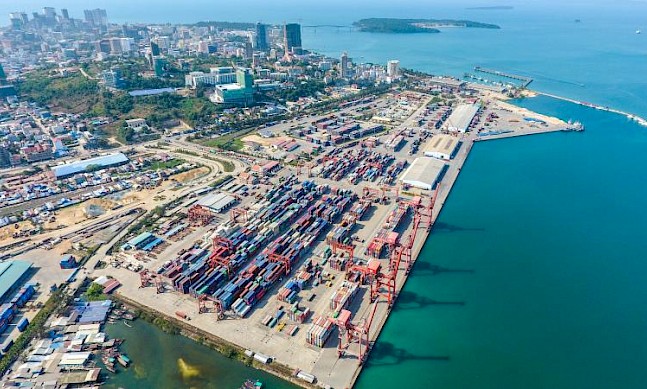








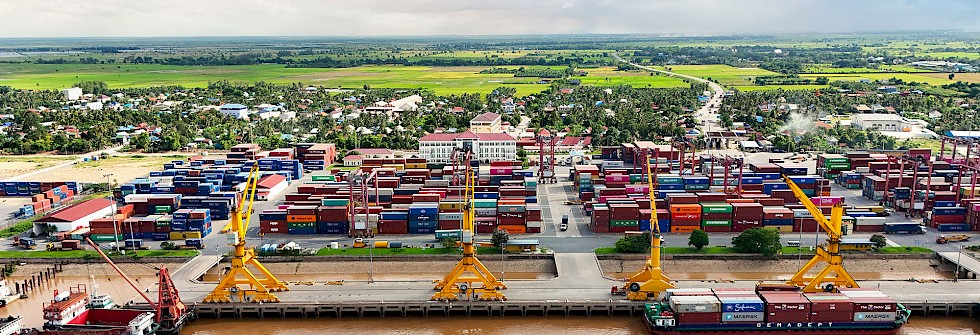
Phnom Penh Autonomous Port (PPAP) has become a key driver of Cambodia’s trade growth, expanding its role from river port to international gateway and playing an active role in the development of the Funan Techo Canal. In this interview, Chairman and CEO of the port, H.E. Hei Bavy, shares his vision for PPAP, recent progress and his strategy to cut logistics costs through new innovations.
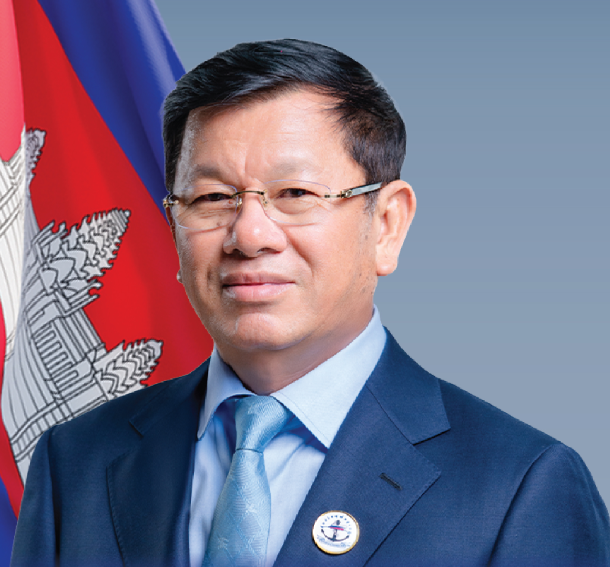
“Whenever we build a port, we also contribute to local communities, ensuring that development aligns with national priorities and the needs of the end user.”
H.E. Hei Bavy Chairman and CEO
Post ThisQ: What is your vision and leadership approach for PPAP?
H.E. Hei Bavy, Chairman and CEO: For the Sihanoukville and Phnom Penh Autonomous Ports, we are actively involved in the development of the Funan Techo Canal. It is under the direction and guidance of our parent ministries, the Ministry of Public Works and Transport, the Ministry of Economy and Finance, and our Prime Minister. The Funan Empire used this canal to trade with Rome 5000 years ago, which makes it a crucial trade route.
This peace policy was initiated by our former Prime Ministers and continued by our current Prime Minister. The peace mindset guides us as we move forward, and we apply it as our principle and mentality in addressing the country’s issues. The word “peace” is embedded in the mindset of all Cambodians, not just government officials, but ordinary citizens and students. This mindset is taught at an early age, and we all want to embody this value. Cambodia has gone through many conflicts in the past, and under the former Prime Ministers, people realized that the end of internal conflict marked the beginning of development through peace.
Going through these conflicts, the Cambodian people learned what slows down our development, which includes conflicts with neighboring countries and not having internal stability. Since 1998, all Cambodians have acknowledged that we need to strive for peace to move forward and are supportive of the government’s peace initiative. We continue what has been created and push through with new developments.
Q: What recent progress best reflects PPAP’s growth strategy?
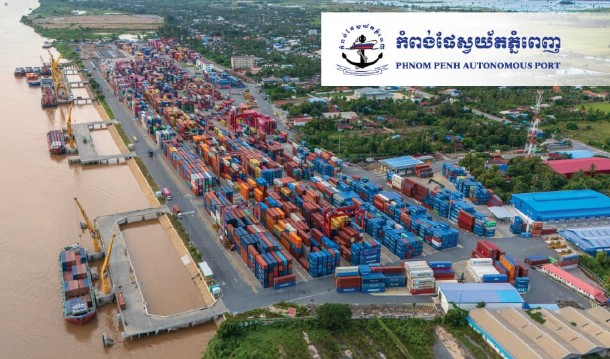
HB: This PPAP development has been under the principal order guidance of the government, especially the two government ministries, the Ministries of Public Works and Transport and the Ministry of Economy and Finance. This project aims to boost inland waterway transportation because this has not been fully utilized. PPAP has requested the creation of new feeder multipurpose terminals—such as Sub-feeder Multipurpose Terminal UM2, Container Terminal LM17 and Sub-feeder Multipurpose Terminal TS11—which are now operational. We will invite His Excellency Ponea for the inauguration of UM1 in October this year. The purpose of creating many sub-feeder terminals is to encourage the use of inland waterway transportation and to be closer to the user. This development plan was also aligned with the government’s decision to create the Funan Techo Canal, as these terminals can support the project by increasing water transportation and helping to provide door-to-door service.
In 2026, we plan to request the development of three more sub-feeder multiple terminals in Prek Kdam, Kampong Khleang and Chong Kneas. We want to take advantage of development in those areas, particularly to enable farmers and investors to capture their cargo. This is in line with the Pentagonal Strategy, which aims to improve logistics and give farmers and producers better access to transportation and customers. It also aligns with government policy, particularly the Prime Minister’s vision to help farmers and producers transport their harvests more easily and cost-effectively to end users. The government will reduce taxes for imports and exports for farmers and producers, so we will also help reduce logistics costs.
Q: How does the canal strengthen sovereignty and self-reliance?
HB: This sovereignty and self-reliance are principles the Prime Minister has always emphasized. Our leaders intend to create opportunities for our importers and exporters to have a smooth flow and meet the needs of the users. For example, if they intend to transport for five days, then there are no further obstacles that would restrict the cargo flow. As a port operator, PPAP prioritizes our customers’ time. If they are in a hurry, we accelerate operations to ensure they depart on schedule, since missing the border operation window by just 30–40 minutes would mean waiting until the following morning to continue. This project will help exporters and importers to fully export and import their goods on time before the borders close at 5:30 PM.
Q: How are you leveraging digital tools to manage logistics?
HB: We are developing this trucking app, to be completed soon, that will benefit all trucking companies regardless of size. For example, if someone has cargo to be transported from Siem Reap to Tboung Khmum, they can simply register it and all trucking companies on the app will be able to offer their services. It will operate on a first-come, first-served basis, reducing coordination time and enabling better utilization of fleet resources. It also creates more opportunities for trucking companies to provide their services. Currently, someone with a few trucks would need to work with an intermediary to help find cargo for them, but this app will allow more visibility between the customers and the trucking companies to facilitate the transaction. This will also help with the logistical costs.
Like the trucking app, which will help lower logistics costs, PPAP has also requested approval from the board of the Funan Techo Canal Project to study and establish a barge service between Sihanoukville Port and PPAP. This barging service will help utilize the canal between the two ports and reduce logistics costs through the use of electric vessels. We also plan to build charging stations along the canal.
To support the canal project, we are also planning to establish a shipbuilding facility, docking for repairs and charging stations for barge vessels. We hope that at the beginning of the canal operation, we can deploy these electric barges that could navigate the rivers and the sea.
Q: What should international investors understand about PPAP?
HB: Sihanoukville and Phnom Penh Autonomous Ports are often perceived as only river or regional ports, rather than international ports. However, the two ports have the same function, which is to serve as international ports. For example, goods received from farmers and producers are packed in containers that are exported not just within the region, but internationally to places like the U.S. and Europe. If a vessel’s final destination is the port, then both ports offer the same level of accessibility.
In developing PPAP, we serve not only users in the region but also those from across the continent. In addition, we develop many terminals to not only provide logistics and port operations, but also social work. Whenever we build a port, we also contribute to local communities, ensuring that development aligns with national priorities and the needs of the end user. Peace is especially important for the port because if there is no peace, there is no development, and if there is no development, then there is no need for a port either.
In developing a port, especially as a state-owned enterprise, we begin by recruiting strong human resources, followed by fostering good teamwork among our employees. We also need to learn from others, and we do this by sending our staff to pursue further education or gain work experience through technical exchanges. As for our development, we need to be in line with the government's policy and mandates. We are fortunate to receive support from development partner countries, including training.