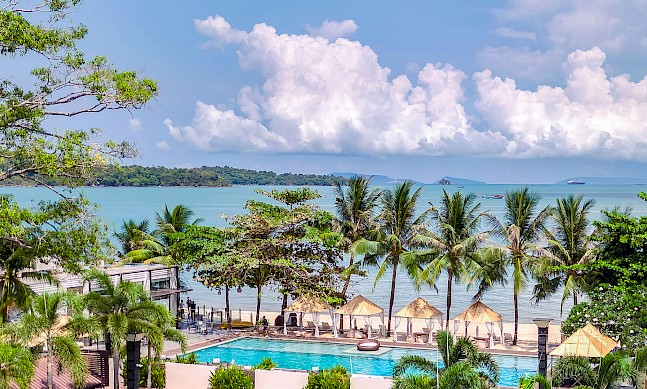








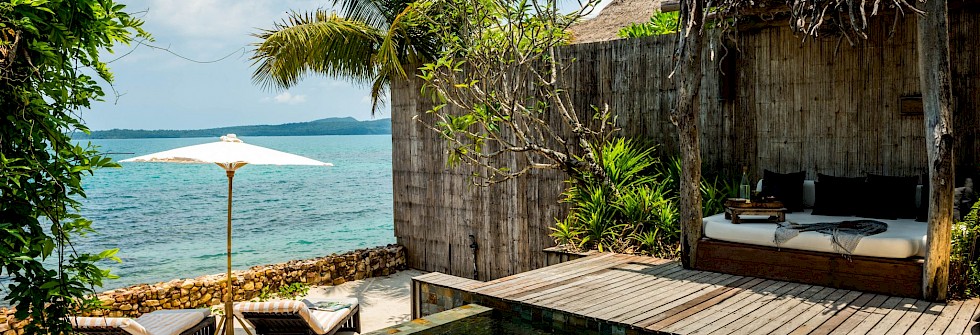
Situated in the turquoise waters of the Koh Rong archipelago, Song Saa is a luxury private island designed for guests seeking to reconnect with nature—and themselves. Meaning ‘sweethearts’ in Khmer, the resort has become a standard bearer for regenerative tourism, combining world-class facilities with heartfelt Cambodian hospitality and authentic local experiences.
Formed by two islets joined by a footbridge spanning the reef corridor between the islands, Song Saa was recognized in the 2025 Condé Nast Traveler Readers’ Choice Awards, the latest in a growing list of accolades from the global travel community. In this interview, Founder Melita Koulmandas explains how Song Saa is shaping sustainable luxury travel in Cambodia.
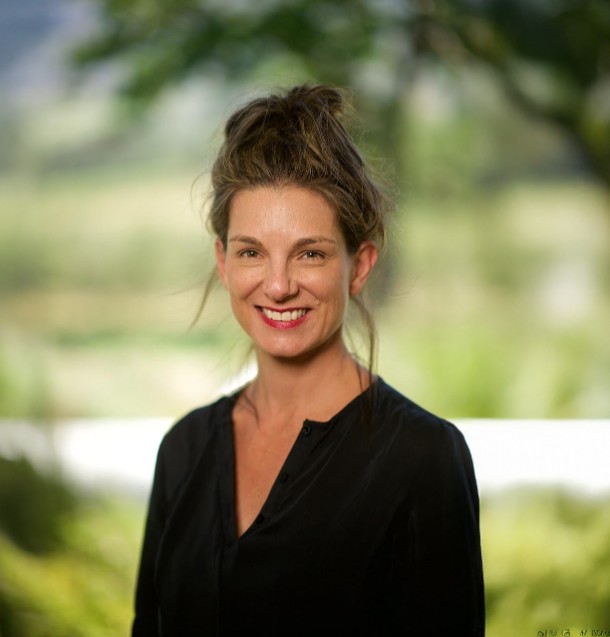
“Luxury has evolved—it’s no longer about gold taps or marble; it’s about authenticity, emotion and connection with people and place.”
Melita Koulmandas Founder
Post ThisQ: What first drew you to these islands?
Melita Koulmandas, Founder: That was in 2006. There was no tourism back then, no infrastructure—people only knew Cambodia for Angkor Wat and the Khmer Rouge. But I had heard about islands off the coast, over the horizon, that few people spoke about. I went to Sihanoukville, convinced a fisherman to rent me his boat for two weeks and explored the archipelago.
On the last day, I stopped by two tiny islands looking for lunch. One island had been cleared of forest; a fisherman lived there and shared how hard it was to feed his family. He wanted to return to the mainland, so I stayed and began cleaning up rubbish. The reef system was dying, and over time, working with the local village chief, I realized how fragile the ecosystem was. Fish stocks were collapsing. These were new communities, only recently resettled after the Khmer Rouge. They told stories of abundance—dolphins, dugongs—all gone due to illegal fishing and destructive practices.
We set up Cambodia’s first protected marine park around the two islands, now known as Song Saa, starting as an experimental no-take zone. Within 18 months, hornbills, fish and stingrays began returning. It was extraordinary to witness such rapid regeneration.
At the time, I wasn’t planning to build a hotel. But over time, in collaboration with the Ministries of Fisheries and Environment, that small no-take zone grew into a 524 km² national marine park—the catalyst for Song Saa as we know it today.
Q: How did you balance development with preservation?
MK: When I approached the Cambodian government, they granted a 99-year lease over the islands, with the condition that development must contribute positively. That led to our high-value, low-impact model—the foundation of Song Saa.
Everything we’ve done has been community-led and co-created. Programs are developed from the ground up in partnership with local people, never imposed top down. I see my role as serving the community, not the other way around. That philosophy is why we continue to win awards and are recognized globally as a model for regenerative tourism.
As the resort developed, I wanted to formalize the work we were already doing. That’s when we created the Song Saa Foundation, an international non-profit enabling us to apply for grants and deepen our impact.
It operates on a blended finance model: donations from guests, CSR funding and grants work together to create and sustain impact.
Q: How do you reach today’s conscious traveler?
MK: Our team sees themselves not just as hospitality staff, but as conservationists and stewards of the island. That mindset runs through everything we do. We share our story via social media, newsletters, panels and I often speak about regenerative tourism and the “new luxury.”
They’re looking for connection, not escape. Luxury has evolved—it’s no longer about gold taps or marble; it’s about authenticity, emotion and connection with people and place. Travelers want meaning; they want to feel something.
About 97–98% of our team is Cambodian, and around 35% come from the local community. Our chefs and staff all have stories rooted in this place. Everything is locally sourced and deeply connected to the surrounding culture.
We’re seeing a major shift away from big global brands toward independent, purpose driven hospitality. Guests want to know their stay supports local communities and ecosystems. That’s the future of tourism—reciprocal, not extractive.
Q: What has leadership taught you most?
MK: First and foremost, I listen—to the community, my team and the environment. I believe in co-creation. Wisdom comes from everywhere, not just the top.
That’s why we have long-term staff with ownership and a voice in the company. I also believe business can be both profitable and purpose-driven—it’s not one or the other.
Q: Which initiatives make you most proud?
MK: Definitely the restoration of our marine park, now the most biodiverse in Cambodia. Also, our reforestation project near Banteay Srei, where we’ve planted nearly 195,000 native trees grown from temple seeds.
We’re developing conservation-led lodging where guests participate in restoration and cultural exchange—tourism as education and restoration combined. It’s still in early stages, but pilot experiences will begin soon. It’s an organic process, growing naturally, just like Song Saa did.
We embrace gratitude. I hope our work continues to show that Cambodia can stand alongside Bhutan and other destinations for meaningful, regenerative travel.
Cambodia is my adopted home, and everything we do—preserving, restoring, protecting—comes from love for this country. “Preserve, restore, protect” is truly powerful.