






Indonesian President Prabowo Subianto has set a target of 8 percent growth as the centerpiece of his economic agenda, with his government’s spending plans central to that ambition. “Our social policies must expand productivity and produce growth,” he said at the World Economic Forum in Davos. Programs such as free school meals, investments in cooperatives and nationwide medical checkups reflect Prabowo’s policy priorities of food security and human capital development, alongside ambitions for energy self-sufficiency and greater trade integration.
That agenda rests on the foundation of fiscal discipline. The nation’s economy has expanded at more than 5 percent annually for much of the last decade, unemployment continues to fall and the fiscal deficit remains under the 3 percent cap. “Indonesian fundamentals are strong because we maintain macroeconomic stability,” says Coordinating Minister of Economic Affairs Airlangga Hartarto. “Inflation remains low and public debt stands at roughly 40 percent of GDP, well below the legal ceiling of 60 percent.” In that context, the government’s major initiatives complement the national development strategy through a focus on human capital. “Building hospitals and education facilities is an investment, not simply expenditure,” says Vice Minister of Finance Suahasil Nazara.
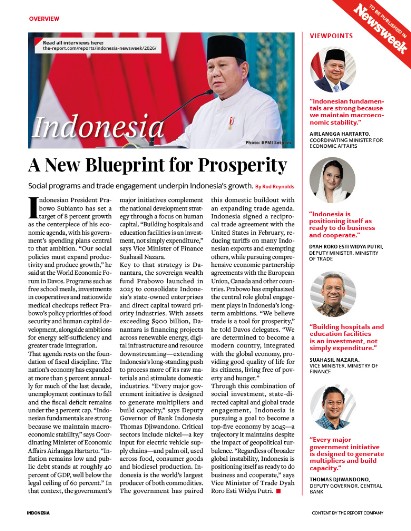
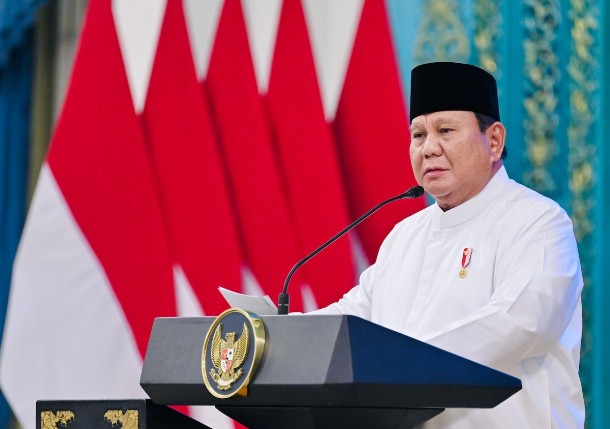 BPMI Setpres
“We are determined to become a modern country, integrated with the global economy, providing good quality of life for its citizens, living free of poverty and hunger.”
Prabowo Subianto Indonesian President
Post ThisKey to that strategy is Danantara, the sovereign wealth fund Prabowo launched in 2025 to consolidate Indonesia’s state-owned enterprises and direct capital toward priority industries. With assets exceeding $900 billion, Danantara is financing projects across renewable energy, digital infrastructure and resource downstreaming—extending Indonesia’s long-standing push to process more of its raw materials and stimulate domestic industries. “Every major government initiative is designed to generate multipliers and build capacity,” says Deputy Governor of Bank Indonesia Thomas Djiwandono. Critical sectors include nickel—a key input for electric vehicle supply chains—and palm oil, used across food, consumer goods and biodiesel production. Indonesia is the world’s largest producer of both commodities.
The government has paired this domestic buildout with an expanding trade agenda. Indonesia signed a reciprocal trade agreement with the United States in February, reducing tariffs on many Indonesian exports and exempting others, while pursuing comprehensive economic partnership agreements with the European Union, Canada and other countries. Prabowo has emphasized the central role global engagement plays in Indonesia’s long-term ambitions. “We believe trade is a tool for prosperity,” he told Davos delegates. “We are determined to become a modern country, integrated with the global economy, providing good quality of life for its citizens, living free of poverty and hunger.”
Through this combination of social investment, state-directed capital and global trade engagement, Indonesia is pursuing a goal to become a top-five economy by 2045—a trajectory it maintains despite the impact of geopolitical turbulence. “Regardless of broader global instability, Indonesia is positioning itself as ready to do business and cooperate,” says Vice Minister of Trade Dyah Roro Esti Widya Putri.
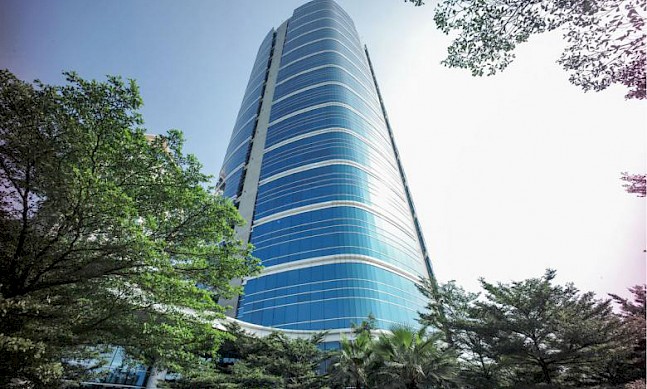
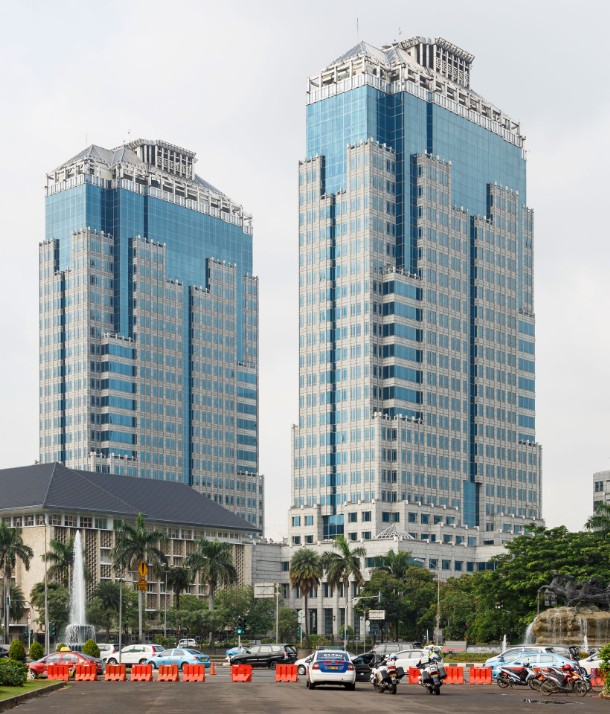 Jakarta, Indonesia: Central Bank of Indonesia - Photo by CEphoto, Uwe Aranas / CC-BY-SA-3.0
Stability Backs Growth Target
Indonesia is using stability as the base for faster growth, with Bank Indonesia Deputy Governor Thomas Djiwandono stressing closer fiscal-monetary coordination as the country pursues President Prabowo’s 8 percent growth target. He says the central bank’s role is not to choose the engines of growth, but to protect conditions that allow them to function. “Stability and growth are not in conflict; one enables the other.”
With inflation contained, the trade balance in surplus and the fiscal deficit kept within 3 percent of GDP, Djiwandono says Indonesia can now move from resilience to a new acceleration, with government programs in nutrition, housing, education, health and energy security designed to create local multipliers. “Indonesia has been through periods of volatility, and the economy has proven resilient every time. That is why investors should believe in long-term growth,” he adds.
Indonesia’s Push for Grassroots Growth
Targeting faster economic expansion, Indonesia is building from the ground up.
Indonesia’s long-run growth trajectory has hovered around 5 percent. Now the government aims to break through that ceiling, focusing on measures to stimulate grassroots economic activity. Here, Vice Minister of Finance Suahasil Nazara explains the key role the ministry plays in balancing economic acceleration with the stability that has long been the foundation of the nation’s fiscal strategy.
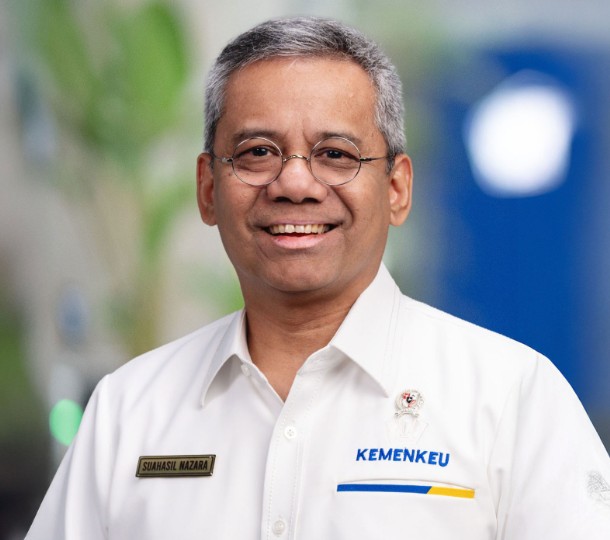
“Fiscal policy is always an anchor for a country—an anchor for stability.”
Suahasil Nazara Vice Minister, Ministry of Finance
Post ThisQ: What are your aims for Indonesia’s economy?
After COVID, we have been growing at a steady 5 percent—stable. The president understands this, but we aspire to a higher number. Not only growth that is higher, but growth that is stable in terms of prices and inflation.
President Prabowo has come forward with big ideas on how to unlock the country’s potential. He believes that grassroots-level economic activity is a source of growth. The free meal program and the cooperative program are foundational to growth from the ground up. That is the transformative vision that, if executed correctly, can propel Indonesia’s economic growth well above 5 to 6 percent.
Q: What role does fiscal stability play?
Fiscal policy is always an anchor for a country—an anchor for stability, because everyone looks at the budget. A stable budget means a stable anchor. At the same time, fiscal policy is critical for promoting growth: through revenue policy, through spending policy and through financing decisions that affect the financial sector.
Q: Which sectors hold the greatest investment potential?
First, food security. This is a country of 280 to 290 million people. They need food, and we must ensure it is available. Second, energy security. Third, human capital—social spending on health can itself be a source of economic growth. Fourth, MSMEs. The president is focused on the cooperative approach to micro and small business development.