







Under a new policy cycle since 2024, Indonesia has been repositioning itself as a strategic manufacturing and digital economy hub in Southeast Asia. From special economic zones and semiconductor ambitions to critical minerals, food security, and digital infrastructure, the government is reshaping industrial policy to attract global investments. In this interview, H.E. Airlangga Hartarto, Coordinating Minister for Economic Affairs of Indonesia, explains the country’s industrial strategy and investment priorities under President Prabowo’s administration.
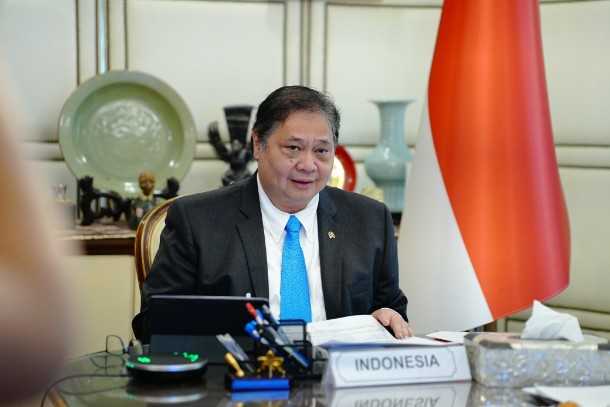
Q: What new policy directions should investors expect from your ministry?
H.E. Airlangga Hartarto, Coordinating Minister, Economic Affairs Indonesia: President Prabowo’s priority programs include food security through food estates and a free meal program. The second focus is renewable energy and energy resilience, with an emphasis on accelerating the 2060 net-zero target through geothermal, solar, and hydropower, as well as expanding biodiesel (B40). These initiatives aim to meet domestic energy needs.
The government also seeks to expand access to global markets. Within the first 10 months of 2025, Indonesia joined BRICS, began the OECD membership process, expressed interest in joining CPTPP, and finalized CEPA agreements with Canada and the EU. These steps will allow Indonesian products to enter European, Canadian, and Mexican markets with zero tariffs, strengthening manufacturing exports.
Q: What competitive advantages does Indonesia offer?
AH: First, supply chain availability. Second is the pool of talent and labor. Third is the domestic market. Fourth, a survey by Japan’s JICA shows Indonesia provides strong returns for investors, making profitability the most attractive factor.
Indonesia’s special economic zones and industrial zones on Java are attractive to industry due to established supply chains and a strong domestic market. Unlike Singapore or Vietnam, which rely heavily on exports, Indonesia’s economy is 60% domestic and 40% export-driven, providing resilience. During COVID, Indonesia maintained supply chains and kept production running without lockdowns, reinforcing its role as a reliable supplier for global manufacturing.
Q: How can Indonesia strategically position itself to attract investment?
AH: The U.S. is seeking production outside China, and Indonesia is a logical choice for investment. Indonesia aims to develop the semiconductor industry, working with U.S. counterparts to build on upstream silica resources and current capabilities in assembly, fabrication, and testing. Within a few years, Indonesia could establish an integrated semiconductor project.
Indonesia also has strong domestic demand for electronics and the capacity to produce up to 2 million cars annually, exporting about 400,000 to 70 countries. To expand further, Indonesia needs a CEPA or CPTPP with Mexico, which currently imposes quotas on Indonesian cars. Joining the CPTPP would unlock this potential, and Indonesia could also serve as a hub for right-hand drive automotive production.
To achieve President Prabowo’s goal of 8% economic growth by 2028, Indonesia will push trade to attract investment, develop labor-intensive projects, and create about 4 million jobs annually to meet population growth.
“To achieve President Prabowo’s goal of 8% economic growth by 2028, Indonesia will push trade to attract investment, develop labor-intensive projects, and create about 4 million jobs annually to meet population growth”Post This
Q: How do you see special economic zones evolving?
AH: Indonesia has been utilizing special economic zones to develop manufacturing, particularly in resource downstreaming such as minerals. Locating industries near mines increases efficiency by reducing logistics and transportation needs while supporting sustainable development. For example, rare earth minerals yield only about 20 kilos per ton of earth, making it unwise to export raw material; processing into concentrate before export is more practical.
Agriculture is another focus, with efforts to rejuvenate cacao, coffee, tea, and palm oil plantations. These commodities, known globally for centuries, hold strong export potential.
Labor-intensive industries such as textiles, garments, apparel, and shoes are also being prioritized, supported by abundant raw materials, especially polyester, which dominates modern fashion. Rubber-based manufacturing is another strength, as Indonesia is a leading producer along with Thailand. The tire industry is expanding, and electric vehicles increase demand for natural rubber due to heavier vehicle loads.
Another priority is silica-based downstreaming, which can produce floating glass, silicon wafers for semiconductors, and solar panel cells. These industries are targeted for development in the next three to five years.
Q: What interests must Indonesia safeguard in ongoing trade talks with the U.S.?
AH: We are in discussion with the U.S. regarding products not available there, such as those based on crude palm oil (CPO), palm oil, rubber, tea, cacao, and certain wood products unique to Indonesia. We are also addressing components produced in Batam’s free trade zone for U.S. medical devices, such as micro-cables and micro-lenses used in operations. Lower tariffs on these components would benefit both countries, as the final products are made in the U.S. Achieving zero tariffs would strengthen supply chain stability.
Q: How is your ministry shaping the investment environment?
AH: First, we provide incentives in special economic zones and regulations that ease access to raw materials from the global supply chain. We also open markets and offer the domestic market as an incentive. With the U.S., we are in discussions concerning critical minerals. The first U.S. investment in this sector was in 1967 through Freeport-McMoRan, which became the world’s largest copper producer and a Fortune 500 company. Indonesia has supplied critical minerals since then. As President Trump noted, Indonesia is strong in copper, an essential material for electronics, EVs, airplanes, and batteries.
Q: What economic sectors are your top priorities to sustain growth?
AH: First, we must maintain domestic economic resilience. Second, expand and open more export markets. Third, deepen the financial sector, which will also require U.S. financial support.
In agriculture, we need seed development, genome sequencing, and technology to produce higher-yield, climate-resilient seeds, ensuring stable output despite climate change.
Tourism is another priority and a source of foreign exchange. President Prabowo plans to expand the open sky policy to allow more direct international flights to destinations such as Labuan Bajo and Tanjung Pandan in Bangka Belitung, improving accessibility.
Indonesia’s digital economy is valued at about USD 130 billion in 2024 and is expected to contribute 40% (USD 600–800 billion) of ASEAN’s projected USD 2 trillion digital economy by 2030. ASEAN is advancing a Digital Economic Framework Agreement that will reduce reliance on tariffs as trade increasingly shifts online.
The digital economy, including AI and data centers, is expected to drive non-linear growth. Data centers, which require significant power, align with Indonesia’s green economy agenda. Major U.S. companies such as Amazon, Microsoft, Apple, and Oracle are already present, building data centers, and further investment is needed to accelerate growth.
We have experience with business-to-business and private sector investment. In 2016, mineral and metal exports were only USD 4 billion, but by 2024 exceeded USD 32 billion, showing how investment boosts exports. This model can be replicated in other sectors.
“Major U.S. companies such as Amazon, Microsoft, Apple, and Oracle are already present, building data centers, and further investment is needed to accelerate growth.”Post This
Q: Which areas of infrastructure development do you see as most significant?
AH: Infrastructure is key, as Indonesia’s 17,000 islands cannot all be linked by fiber optics. Indonesia was among the first to use low Earth orbit satellites to connect remote islands, boosting digital economy growth. A digital special economic zone has been established in Nongsa, Batam, serving the Singapore market through direct connectivity. Indonesia is also well connected globally, including with the U.S.
Q: How are you supporting Indonesia’s energy security?
AH: We are planning smaller refineries in 17 locations across Indonesia’s main and smaller islands. This reduces logistics, avoiding the need to transport from Java to Kalimantan or Papua. The 17 refineries have been designed in collaboration with Kellogg Brown & Root (KBR). As part of this plan, Indonesia has offered to purchase an EPC from the U.S. valued at about USD 8 billion.
Q: Why should investors consider Indonesia?
AH: U.S. companies such as Freeport, operating in Indonesia since 1967, have consistently profited, expanded, and last year built the world’s largest refinery. This shows profitability, public support, and clear government regulations. Indonesia assures investors of certainty and transparency, with rules developed through stakeholder discussions and opportunities for deregulation.
Other extractive industries are also established. ExxonMobil operates refineries in Java and plans further investment in carbon capture, storage, and a new petrochemical company. The green economy and renewable energy sectors are open, with MOUs in place between state electricity and partners to study small modular nuclear reactors.
Indonesia is committed to attracting more technology-driven investment.