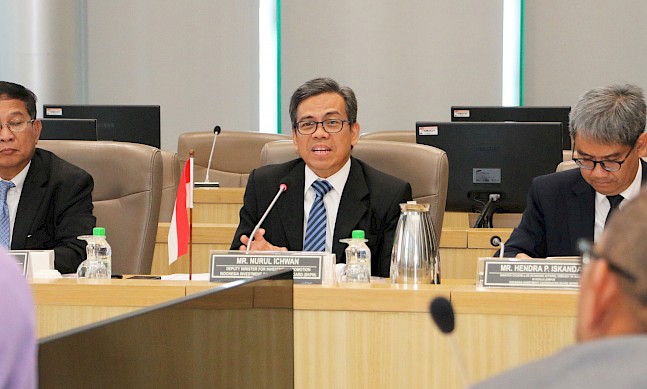








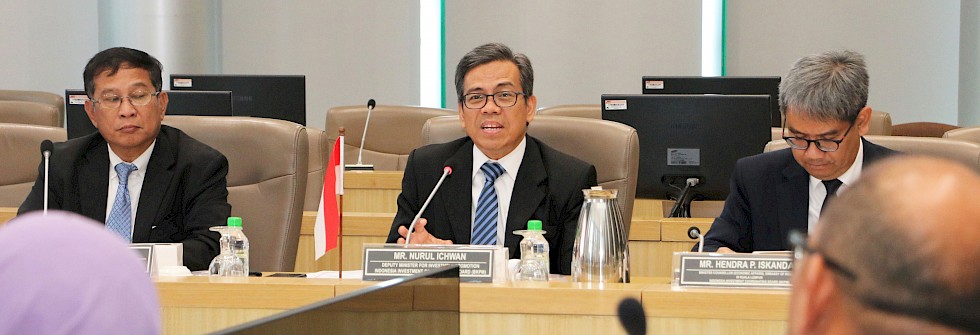
Indonesia’s investment push is entering a new phase as the government seeks to attract more capital into downstream processing, renewable energy, digital infrastructure and higher-value manufacturing. With realized investment surpassing IDR 1,400 trillion in 2025 and new targets set for 2026, policymakers are increasingly focused on how to position the country as a long-term hub for global investors. In an exclusive interview, Nurul Ichwan, Indonesia’s deputy minister for investment promotion, discusses what is driving Indonesia’s investment strategy.
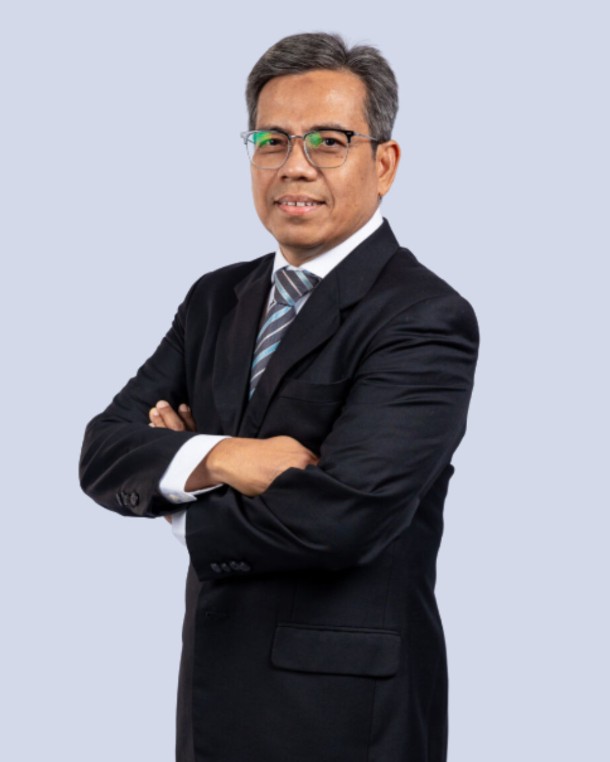
“For Indonesia, the U.S. is not only the government; it is also its people and entrepreneurs.”
H.E. Nurul Ichwan Deputy Minister
Post ThisQ: How are you positioning Indonesia for foreign investment?
Nurul Ichwan, deputy minister for investment promotion: Attracting U.S. investment has specific challenges: distance, different market orientation and strong competition from countries closer to Indonesia. However, U.S. participation is important because the United States leads in advanced technology, including artificial intelligence, computing and future-oriented design.
For Indonesia, the U.S. is not only the government; it is also its people and entrepreneurs. Economic relations with the private sector can remain steady even when broader relations face ups and downs. We see persistent interest from both U.S. private sector players and Indonesian domestic businesses seeking closer ties with U.S. companies.
At both government and business levels, Indonesia wants to be a strong partner to the U.S. Whatever decisions the U.S. makes within its own system are its internal matters. We will follow developments, adjust as needed and pursue a win-win approach.
Q: Which sectors offer the strongest investment opportunities?
NI: To promote priority sectors effectively, we must strengthen the foundations that attract investors. Indonesia needs foreign capital because domestic capital is not sufficient to support the growth required for greater prosperity. Investment also creates jobs.
For U.S. investors in particular, the value is not only capital, but technology, international networks and access to global markets. Their presence can help integrate Indonesia into global supply chains and enhance international credibility.
In downstream processing, Indonesia has identified 28 commodities and 15 destinations. Nickel is a clear example. Today, many investors in Indonesia’s nickel smelting and battery manufacturing are from China, largely because Chinese technology is currently the most efficient at scale. End users still include companies such as Tesla and buyers in Europe. Business decisions follow efficiency and cost. If U.S. technology becomes competitive in this segment, I believe U.S. investors will come to Indonesia.
Q: How can Indonesia deepen its role in global supply chains?
NI: In the Apple ecosystem, Indonesia is hosting a vendor producing accessories, not devices such as iPhone or MacBook. Accessories still contribute to overall product value and brand perception.
Apple builds a global ecosystem based on efficiency and each country’s strengths, workforce capacity, resources, regulations and incentives. Apple cannot build manufacturing in every country, so it relies on partners. Our role is to help attract that ecosystem to Indonesia in ways that support Apple’s strategy.
Apple has established Apple Developer Academies in several Indonesian cities. These programs contribute to innovation and connect young Indonesians with digital skills, including computing and artificial intelligence, at no cost. This strengthens Indonesia’s human capital and supports long-term technology development, while linking Indonesia more closely to Apple’s global community.
Sustainability, green, blue and circular economic principles, is a global reality. Indonesia also recognizes that environmental harm will directly affect Indonesians. We have the world’s second-largest tropical forest after Brazil, and together Brazil and Indonesia contribute around 15% of global oxygen production.
“Indonesia has enjoyed long-term stability, and democracy has been proven through experience.”Post This
Q: How is Indonesia building a green investment framework?
NI: To build an ecosystem for climate-related investment, Indonesia has developed carbon trading regulations and established a carbon exchange. Current volumes remain limited, but the potential is significant. Realizing that potential requires science and technology at a higher level, which is why Indonesia positions itself as a platform for collaboration: countries with comparative advantages such as natural resources working with countries that have competitive advantages in capital, technology, education and human capital.
Indonesia has major opportunities in carbon and nature-based solutions. We have carbon capture and storage potential of at least 577 gigatons. We have the world’s second-longest coastline, and extensive mangroves that absorb large amounts of carbon dioxide. With two seasons rather than four, absorption productivity can be higher. Indonesia also has the second-largest peatland area, where preservation can reduce emissions.
In 2025, Indonesia issued Presidential Regulation Number 110 of 2025 on an integrated carbon market, streamlining international carbon trading and allowing investors to trade units ahead of Indonesia’s Nationally Determined Contribution (NDC) target. One remaining priority is mutual recognition of Indonesia’s carbon certifications internationally, including with global standards such as Verra.
Indonesia also has renewable energy potential of at least 3,687 GW, but only about 15 GW has been utilized, less than 1%. This includes hydro, geothermal, solar, wind and ocean currents. We are also advancing waste-to-energy, given Indonesia’s large population and waste volumes. The President has directed Danantara, Indonesia’s sovereign wealth fund, to lead waste-to-energy development across provinces. Danantara has launched six projects so far, with more planned. This can reduce plastic pollution and produce cleaner energy.
Q: How are you aligning skills with investor needs?
NI: The triple helix model connects government, the private sector and academia or research institutions. We use it to prevent skills mismatches, when education produces graduates whose capabilities do not match industry demand.
Our ministry is working with the Ministry of Higher Education, Science, and Technology, and with industrial estate associations representing industry and investors. Investors consistently ask about production factors, including workforce capability. We have lost potential investments because companies assessed Indonesia as lacking enough qualified talent, such as advanced degrees or sufficient undergraduate capacity in information technology.
Our approach is to expand practical capability at scale: coding, artificial intelligence, robotics, sensing technologies and related skills. When investors build facilities, often six to 24 months depending on complexity, we ask them to use that time to train Indonesian talent. We invite them to bring experts and operators to work with universities and vocational schools, using campus facilities and government workshops, so trainees can become future employees capable of operating the company’s technology.
Indonesia also provides incentives through a super tax deduction. For training and vocational programs, eligible costs can receive up to a 200% deduction against corporate income tax. For research and development conducted in Indonesia, eligible costs can receive up to a 300% deduction, subject to requirements. These policies support sustainability goals while expanding jobs and technology transfer.
Q: Why should global investors choose Indonesia?
NI: Investment follows the market. Capital flows into markets that are not yet saturated and still have room to grow. Indonesia offers natural resources, investment-friendly regulations, strong incentives and a large, growing market. Through ASEAN agreements, investing in Indonesia also provides access to broader ASEAN markets.
Indonesia has enjoyed long-term stability, and democracy has been proven through experience. We have adopted many good practices from the United States and other Western countries, including openness in public expression and discussion.
Indonesia is far from the United States and may be less familiar, but investors should focus on growth potential supported by stability, resource strength and a government that is increasing innovation and developing more environmentally friendly solutions. Credible projections suggest Indonesia could become a top five or top six global economy by 2050. Indonesia offers a strong opportunity set; if you do not enter, others will.
Indonesia’s government and business community want close, constructive relations with the United States. We value engagement with U.S. government counterparts, associations and stakeholders. Do not miss the opportunity. If other investors enter first, it is not because we prefer them, it is because they came. If the United States comes, that is even better for Indonesia.