







Amid rising demand for connectivity and AI-driven services across Indonesia, Indosat Ooredoo Hutchison (IOH) is seeking to strengthen its position not only as a telecom provider but as a wider digital and technology player. In an exclusive interview with The Report Company for Newsweek, CEO Vikram Sinha outlined how the company is repositioning itself beyond traditional connectivity.
Established in 1967, PT Indosat formed the foundation of the company. In its current form, however, IOH emerged from the 2021 agreement between Ooredoo Group and CK Hutchison to combine their Indonesian telecom businesses into a consolidated digital telecoms and internet company. The merger was completed in early 2022, creating Indonesia’s second-largest mobile telecom operator. “When I was given the mandate to run the merged company as CEO, our market position improved by almost 40%,” says Sinha. “This merger has become a global success story in telecom.”
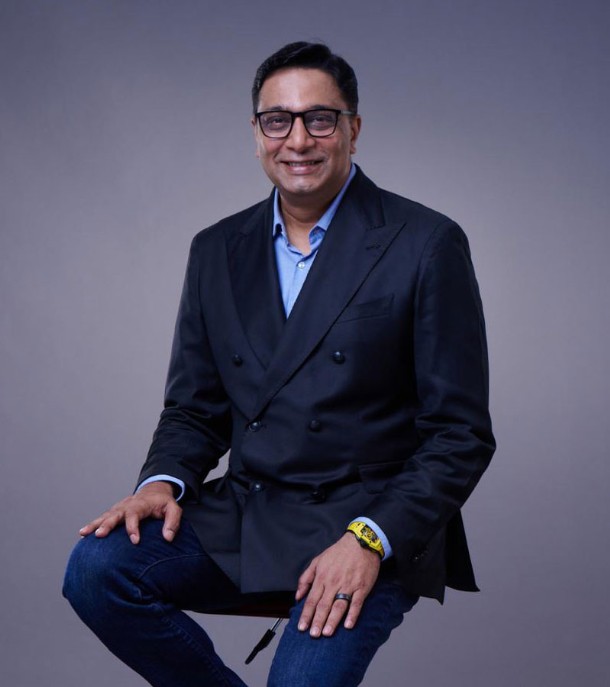
“When I was given the mandate to run the merged company as CEO, our market position improved by almost 40%”
Vikram Sinha CEO
Post ThisIn 2025 alone, the company recorded approximately $3.4 billion in total revenue and the equivalent of $350 million in profit. The business entered 2026 building on a post-merger footprint that spans mobile, enterprise, data, digital services, and a broader technology ecosystem. That makes IOH more than a conventional mobile carrier and places it at the forefront of Indonesia’s next round of digital infrastructure spending.
According to a joint study by Google, Temasek, and Bain & Company, Indonesia’s digital economy is estimated to have exceeded $130 billion in 2025, while the country’s mobile market remains one of the largest in the world, with more than 355 million mobile users. Against that backdrop, the telecom story is increasingly about more than coverage alone. It is also about data traffic, enterprise demand, cloud architecture, cybersecurity, and AI-related infrastructure.
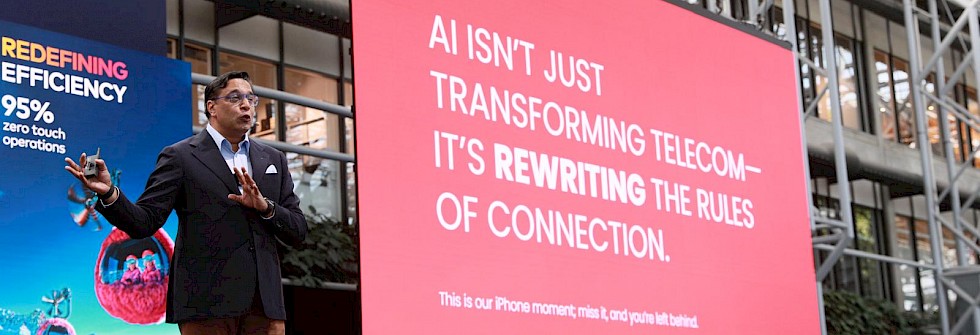
Sinha frames Indosat’s role in that next phase in broad strategic terms. “Indosat aims to become an AI-native telecom company,” he says, presenting that ambition as part of a wider repositioning of the business. “At IOH, you will increasingly see us not only as a telco but as a TechCo.”
Rather than moving away from its current operations, the company’s direction is to build additional services and capabilities on top of its core network business. Connectivity remains the foundation. “Our future is connectivity plus compute, intelligence powered by AI, delivered in a sovereign manner and at the edge,” says Sinha. “That is the opportunity we have, and we are fully committed to it.”
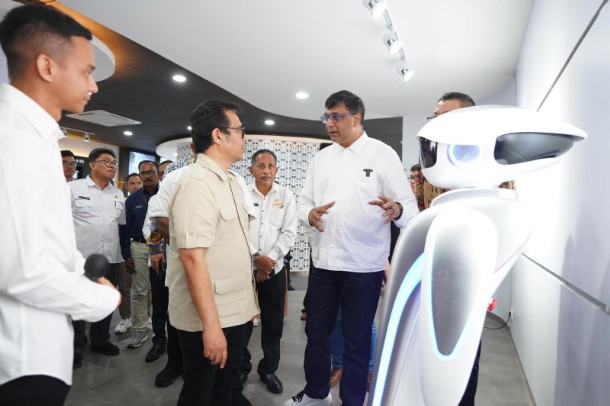
For Indosat, that strategy is closely tied to the structure of the Indonesian market itself. Sinha argues that the country’s size, geography, and demographics still tend to be underestimated abroad, particularly by investors and companies that focus too narrowly on Jakarta. “Indonesia is much more than Jakarta,” he says. “Many outsiders simply do not grasp the magnitude of the opportunity here.”
That perspective also helps explain why the company continues to emphasize nationwide reach. Rather than treating rural and outer-island markets as peripheral, IOH positions them as central to the long-term business case for digital infrastructure. Sinha points to locations such as Tarakan and Jayapura as evidence of the breadth of demand across the archipelago. “That is what I mean when I say Indosat carries deep meaning for people,” says Sinha.
The central pillar of the company’s evolution is its AI push. In July 2025, Indonesia’s Ministry of Communication and Digital Affairs (Komdigi) launched the Indonesia AI Center of Excellence with Indosat, Cisco, and NVIDIA, a move designed to support national AI competitiveness and transformation. IOH links that initiative to a wider buildout around AI cloud, security, and ecosystem development.
Sinha describes those partnerships as part of an effort to shift Indonesia’s role in the regional technology landscape. “We do not want Indonesia to be only a consumption market,” he says. “We want to build infrastructure as well. Our goal is to learn from the best everywhere and build applications in AI for health, education, and transportation.”
That emphasis aligns with Indonesia’s broader digital policy direction. The U.S. Commercial Service notes that Komdigi is also supporting 5G development, AI policy, data center construction, and the expansion of digital public services, placing telecom operators and digital infrastructure providers at the center of the country’s growth strategy.
According to Sinha, Indonesia is a market that rewards early commitment and first-mover advantage. “Indonesia is not a ‘wait-and-see’ market. You only benefit if you commit early,” he says. For foreign investors, that means timing is critical. “If you want to invest in Indonesia, you cannot do it half-heartedly,” he adds. “The potential here is enormous.”
That leaves Indosat positioned at the junction of two significant trends in Indonesia’s economy: the continuing expansion of mobile and digital services, and the effort to build more local capacity in AI, cloud, and secure digital infrastructure as a provider. “Telco capabilities are now basic hygiene,” says Sinha. “AI is the pivot point.”