







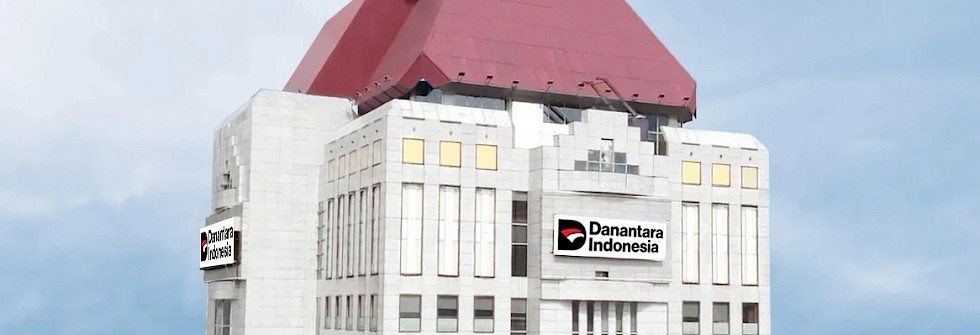
The Indonesian sovereign fund Daya Anagata Nusantara (Danantara) is presenting itself as one of the most consequential vehicles in Indonesia’s investment landscape. Led by Chief Investment Officer Pandu Sjahrir, the entity sits at the intersection of state-owned enterprise reform, capital market development, and long-term industrial policy, with a mandate that blends commercial discipline with national economic priorities.
“Danantara’s long-term goal is to build wealth for future generations, while in the short term, we aim to create jobs, restore confidence, and attract foreign capital to drive investment and capital formation in Indonesia,” says Sjahrir.
In operation since February 2025, Danantara has prioritized downstream industries, food and energy security, and digital infrastructure within its portfolio. Data centers, in particular, have been at the center of its IT strategy, as they are viewed as essential to support AI and make applications faster, more affordable, and more useful for Indonesian consumers and businesses. "Our role is to retrain our people to become not just digitally native but AI native," says Sjahrir.
From an early stage, those priorities have been visible. The first investment was in waste-to-energy, designed to address pollution and environmental management. The second, announced with South Korean biotechnology company SK Plasma, is a plasma bank project intended to end Indonesia’s dependence on imported plasma. The third is a Hajj Village project in Makkah, which is already in construction stage.
The waste-to-energy pipeline is particularly notable for U.S. and global infrastructure investors because Danantara is explicitly structuring it for private-sector participation. Around 200 groups initially expressed interest, split between domestic and international players, with 24 companies advancing to the late-stage bidding round.
As a guideline, Danantara’s minimum equity position is 30%, though the structure is flexible. Both local and international banks are competing to finance the projects. The initial batch is expected to include seven projects, each valued at roughly $150 million to $200 million, for a total of about $1.4 billion.
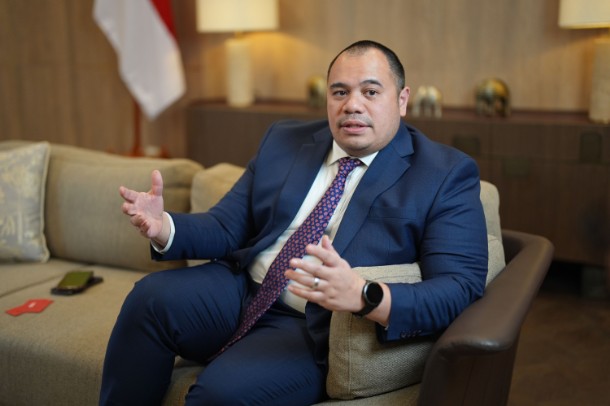
“Indonesia’s biggest challenge is improving productivity per capita. For Danantara, that means strengthening human capital”
Pandu Sjahrir Chief Investment Officer, Daya Anagata Nusantara (Danantara)
Post ThisAt the center of that investment thesis is a broader productivity agenda, and talent has emerged as a strategic asset, not a supporting function. “Indonesia’s biggest challenge is improving productivity per capita. For Danantara, that means strengthening human capital,” Sjahrir says. " We see ourselves as a human capital bank."
Danantara began operations with three members and has scaled to roughly 300 employees from eight or nine nationalities, mostly from the private sector. Recent policy changes now allow foreigners to work in and lead state-owned enterprises, allowing the fund to make international hires in risk, credit, and digital functions.
For public market investors, Sjahrir is equally direct about Danantara’s role. In the executive's perspective, the stock exchange remains the first and most liquid expression of foreign investor's confidence in any economy. "We should be active participants and a stabilizing voice in the market. We also manage multiple asset management firms that are active buyers in the capital market," he notes. Currently, 18 Danantara-linked companies account for about one-third of the Jakarta Composite Index by value, giving the institution meaningful weight in Indonesia’s listed market ecosystem.
He also ties Danantara’s emergence to improved market sentiment. “Since Danantara’s launch, confidence in the market has improved," says Sjahrir. The Jakarta Composite Index has risen from below 5,000 to over 8,200 within the period.
On valuation, he believes Indonesia remains attractive relative to developed markets, citing earnings growth and dividend yield dynamics, while acknowledging liquidity as the major gap. In his view, Indonesia’s daily trading volume has room to multiply over the next decade if the market becomes more competitive and institutionally supported.
For U.S. investors, Danantara’s pitch is less about a single sector than about alignment with Indonesia’s broader transition. Sjahrir describes the country as politically stable, demographically young, and increasingly digital, with a consumer economy no longer defined only by commodities. “I am optimistic about Indonesia’s future. Beyond the traditional energy sector, we now have a thriving, digitally driven consumer economy.”
That optimism is paired with a performance standard that goes beyond financial returns. “What matters is that every investment must generate not only commercial profit for Indonesia but also economic value, through the transfer of knowledge, value, and technology,” says Sjahrir.
For Danantara, that principle appears to be the core of its institutional identity. Sjahrir acknowledges the trust deficit that often confronts new institutions, especially in emerging markets, and notes his goal is to build a general positive perception over the next five years through governance, transparency, and visible execution.
He also makes clear that international credibility will not be built through messaging alone. “Beyond communication, we must prove ourselves through action, by investing alongside U.S. partners both there and in Indonesia,” Sjahrir states. "Once you build trust, you create confidence. With confidence comes investment."