







As 5G technology rolls out more widely across Brazil and the country prepares for 6G, the local telecommunications sector is drawing closer attention from international technology and infrastructure investors. One of the central institutions in that process is Anatel, Brazil’s telecommunications regulator, which has been working to position the market as open, competitive and technically driven amid growing demand for connectivity in sectors such as agribusiness, mining and energy. In this exclusive interview, Anatel President Carlos Baigorri discusses the agency’s regulatory approach, the role of Chinese companies in Brazil’s digital economy and the opportunities he sees across connectivity, cloud, AI and digital infrastructure.
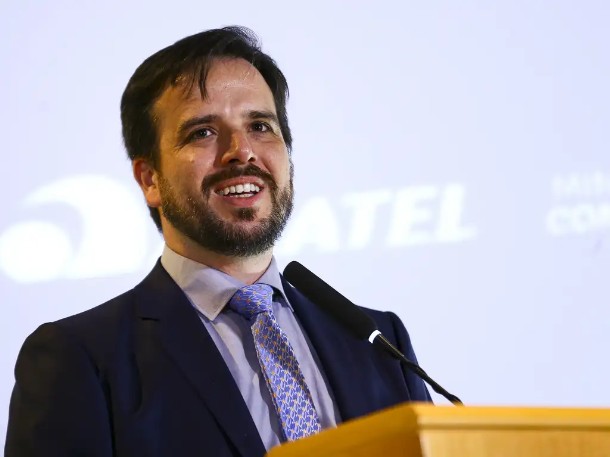
“As a result, Brazil today has the largest number of internet providers in the world.”
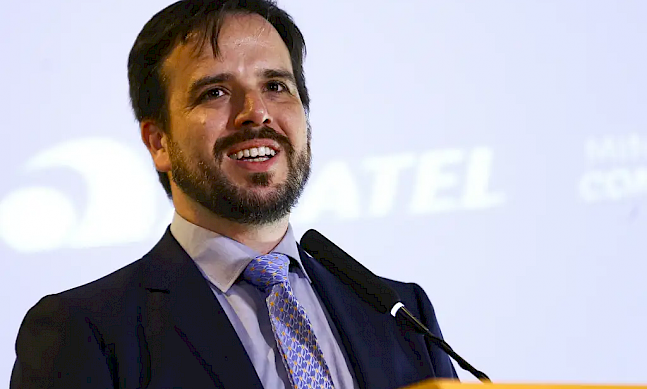
Carlos Baigorri president of Anatel
Post ThisQ: How is Anatel supporting foreign investors looking at Brazil's telecoms sector?
Carlos Baigorri, president of Anatel: Around 10 years ago, the role of Anatel changed from that of a simple regulator to an agency that also promotes and incentivises sector development and connectivity. The fundamental objective of our work is to ensure that citizens have more connectivity options, with better service and competitive prices.
Our view is that this does not happen because the state wants to control prices or quality, but rather by creating a competitive environment to ensure the greatest possible level of investment and the greatest possible number of operators. As a result, Brazil today has the largest number of internet providers in the world. There are around 20,000 internet providers in Brazil, and according to the latest PNAD data, 94% of households now have connectivity.
Q: Where do you see Chinese companies participating in this market?
CB: The main presence of Chinese companies in Brazil is among technology suppliers. Huawei is the largest telecommunications technology supplier in Brazil. It has a very strong presence in the mobile market and an important presence in the fixed line market. ZTE also has a historically very strong presence in the fixed-line market.
More recently, major e-commerce platforms have also entered the market – not specifically the telecommunications market, but the digital market. Shopee already has a very strong presence. Alipay, and now Alibaba, is coming to Brazil, not only with its marketplace but also with AI and cloud solutions. Huawei also has a very strong presence in cloud solutions.
More recently, Chinese companies have also entered the mobile phone market. Oppo entered Brazil this year. Since there is already a company called Vivo in Brazil, Asian Vivo could not enter under this name, so it came rebranded as Jovi, and then there is Xiaomi as well. Xiaomi, Realme, Vivo (or rather Jovi) and OPPO entered Brazil this year. They are manufacturing mobile phones in Brazil, on Brazilian soil, benefiting from the “Lei do Bem” and the information technology laws in order to be more competitive in the Brazilian mobile phone sales market.
Q: What opportunities do you see for tech companies, especially in the Amazon region?
CB: We recently had another company begin operating here in Brazil, FiberHome. It was already active in the fixed-line market, and it is now entering the mobile network market. FiberHome is a Chinese company entering precisely because it sees opportunities in these more remote areas, bringing equipment with a cost-benefit ratio that makes it viable to roll out these services in more remote regions.
When we talk about connectivity in the Amazon region, the great challenge, specifically, is satellite connectivity. Today, the Amazon region has several satellite options available, but Starlink stands out because of price and quality. We are working to bring SpaceSail’s operation online as quickly as possible. SpaceSail signed a memorandum of understanding with the Brazilian government precisely to support its launch in Brazil.
Another important point to highlight is that, here in the north, in the Amazon region, the Brazilian government has a project called "Connected North", under which infrastructure is being built, and fibre-optic cable networks are being laid along the bed of the Amazon River. The main manufacturers and suppliers of equipment for this network, and even of the cable itself, are Chinese companies.
Q: What does legal certainty mean in practice for investors?
CB: Legal certainty and predictability of the rules are among the crucial elements of our regulatory work in attracting investment, because all of these investments in digital infrastructure are long-term investments. Those investments will only come to Brazil if you have a predictable regulatory environment, with well-established rules, and even if those rules change over time – because nothing is written in stone, the rules can change – they must change through a transparent process, with public consultation and dialogue.
One sign of that stability is that even though Brazil has had governments of different ideological stripes in recent years, the agency’s overall line of action has remained the same. We have had governments further left, more centrist, further right, then left again, but telecommunications policy, investment attraction and competitiveness have always continued in the same direction, because we understand that this brings predictability and security so that investment can happen.
Our central mission is to create a stable and predictable rules-based environment so that investment comes and ultimately benefits the person who is our central objective – the citizen.
Q: How are you supporting digital solutions in agribusiness and industrial sectors?
CB: The main driver of growth in the Brazilian economy is agribusiness. And agribusiness takes place in rural areas, far from urban centres, where there is often no connectivity. So what we see is that there is enormous potential for the digitalisation of agribusiness, and this will certainly happen with the participation of Chinese companies.
Today, the major challenge we see is that while telecommunications companies that provide connectivity services understand everything about connectivity, they understand very little about agribusiness, and the people working in agribusiness understand a great deal about agribusiness but nothing about connectivity. There is a gap there. The same applies when we talk about mining or oil and gas. Oil and gas extraction takes place offshore and there is often no connectivity.
Whoever manages to bridge that gap by bringing cutting-edge applications tailored to agribusiness use cases will have enormous economic potential on both sides.