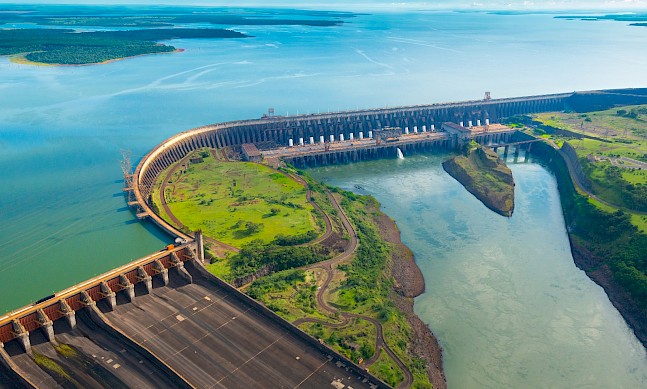








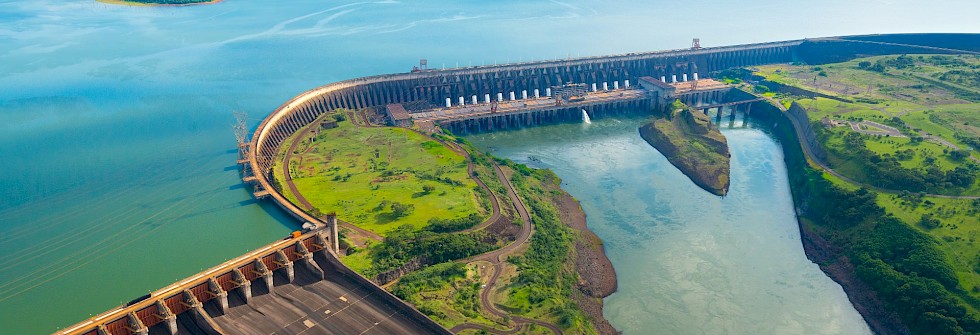
Itaipu Binacional remains a defining asset in Latin America’s power system. A joint enterprise between Brazil and Paraguay, the hydropower plant is the world’s largest outside of China and has delivered more than 3 billion megawatt hours since commencing operation in 1984. Today, under Director General Enio Verri, the facility continues to play a vital role in energy security within a changing supply mix.
As intermittent sources such as wind and solar power have grown, Itaipu’s role has shifted toward stabilisation and maintaining balance across the system. “We have become the great backup, the great battery of the Brazilian energy sector,” says Verri. “In moments when there is no sun or wind, Itaipu is what guarantees firm energy delivery to the Brazilian economy.”
That operational flexibility is key. Output can be increased rapidly when needed, allowing it to respond to fluctuations elsewhere in the system. “We have the capacity to double our energy delivery to the entire country within a matter of minutes,” Verri says. Equally significant is price. Electricity from Itaipu is currently supplied at R$222, compared with a national average of around R$300. The tariff has been fixed for four years and is set to remain unchanged until the end of 2026.

“We are an instrument that supports development, environmental policy and social inclusion, but we are not specifically an instrument for attracting investment through Itaipu itself”
Enio Verri Director General, Itaipu Binacional
Post ThisThe effect is most visible in sectors where energy costs are a major input. “Industries that establish themselves here have a major advantage: first, the guarantee of firm energy delivery, and second, a very accessible price with a downward trend,” he says.
While the plant’s founding treaty means it cannot enter into joint ventures directly, it nonetheless remains a key facilitator of the wider economy. “We are an instrument that supports development, environmental policy and social inclusion, but we are not specifically an instrument for attracting investment through Itaipu itself,” says Verri.
Long-term asset, ongoing modernisation
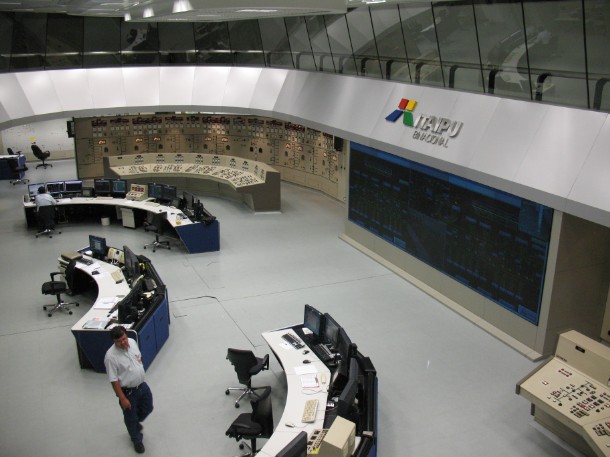
Itaipu is currently in the middle of a 14-year modernisation programme valued at US$5bn. The work focuses on upgrading systems originally installed in the 1970s, updating control and operational technologies while maintaining the plant’s core infrastructure.
The condition of that infrastructure remains strong. “A recent international consultancy reviewed all the data and found that our equipment has at least another 40 years of life without the need for any replacement,” Verri says. That points to the strength of Itaipu’s preventive maintenance over decades.
Beyond generation, Itaipu has developed a broader technical and innovation base through Itaipu Technology Park (ITP). The centre employs more than 800 people across areas ranging from supporting the plant’s operational needs to building major partnerships with universities, government ministries and the private sector, while also offering doctoral and master’s courses in innovation.
“This experience has been very positive, and it is a partnership space that interests us greatly,” says Verri. That includes collaboration with China, building on an already strong working relationship that sees teams from Three Gorges regularly visit Itaipu. For Verri, ITP offers a platform where joint ventures and other opportunities with Chinese partners can be developed, including ongoing discussions in areas such as green hydrogen, biofuels and biomethane.
Development, sustainability and regional impact
As a key renewable asset, Itaipu’s role extends beyond electricity production. Since 2005, a bilateral agreement between Brazil and Paraguay has expanded the company’s mandate to include socio-environmental responsibility, linking its operations directly to regional development. Water management sits at the centre of that approach. “Itaipu’s raw material is water. If we do not do a good job in the reservoir, it will silt up and the plant will die,” Verri says. Protecting the reservoir has driven a wider set of programmes across the surrounding region.
The company defines its area of influence as 434 municipalities, home to around 11.3 million people. Its work includes reforestation, recycling initiatives, rural infrastructure and support for sustainable agriculture, alongside solar energy projects for hospitals and public institutions. Over the past three years, those initiatives have accounted for around R$3bn in investment.
That activity has also shaped Itaipu’s international profile. The company is involved in knowledge exchanges with countries beyond Brazil, particularly in Africa, that are facing environmental challenges, and its wider efforts have attracted recognition from the UN and other multilateral bodies. “We are a reference point for COP30 here in Brazil,” Verri says. “Through this work we have gained global recognition and, naturally, attracted major partners.”
For Verri, that reflects Itaipu’s wider significance, anchored in its collaborative origins. Built and operated jointly by Brazil and Paraguay, it remains a working example of shared infrastructure delivering economic and social outcomes across borders – and how resources can drive cooperation rather than conflict. “Across the world, water has always been a cause of war,” says Verri. “In the case of Itaipu’s construction, it was a cause of peace and development.”