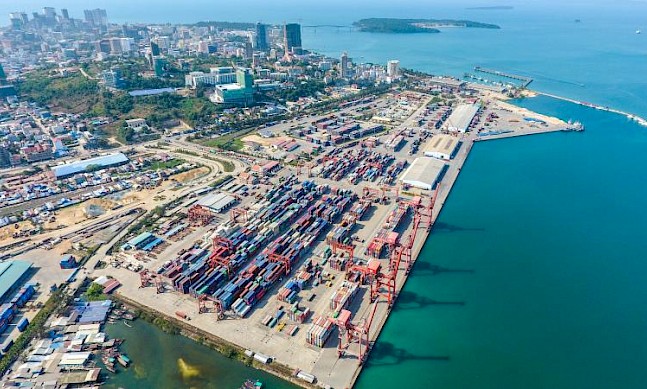








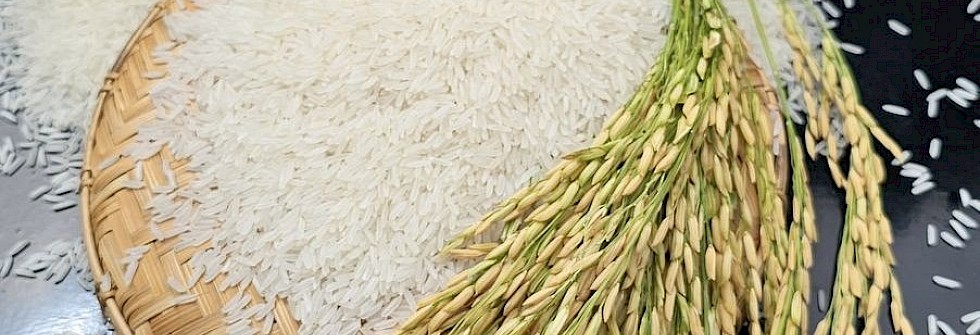
Cambodia’s Ministry of Agriculture, Forestry and Fisheries set strategic policy goals for the country’s agricultural development, including plans for sustainable forestry and fisheries resource management. The department is also responsible for promoting livestock farming and aquaculture, together with the sustainable management and conservation of these essential resources. In this interview, Minister Dith Tina talks about his vision for revolutionizing Cambodia’s agriculture sector by expanding opportunities in product processing.
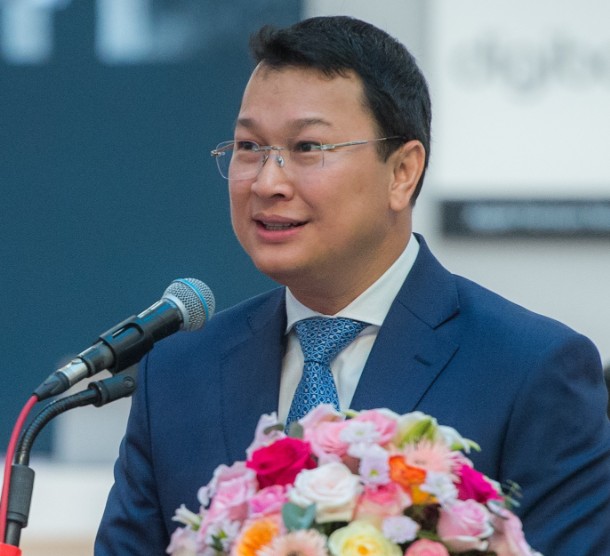
“Modernizing agriculture is no longer just about machinery—it is about economic sustainability. Reducing production costs increases efficiency and reduces waste.”
Dith Tina Minister of Agriculture, Forestry and Fisheries
Post ThisQ: How do you define Cambodia’s agricultural shift today?
DT, Minister of Agriculture, Forestry and Fisheries: We have experienced a major shift. We were once a country struggling with food shortages. For example, during the annual Royal Ploughing Ceremony, we traditionally cultivated rice only once a year, relying solely on the rainy season. The ceremony included a ritual to call for rain and a prediction of crop yield based on what the sacred cow chose to eat—rice, soybeans, grass, water or wine. It reflected our deep concern about food security.
Today, the situation has been reversed. Our food system is now highly resilient. We have withstood three major events without food security issues. First was COVID-19, with lockdowns and fears of inflation and shortages—yet we had no food crisis. Then came the war in Ukraine, which disrupted global grain and fertilizer supplies. Still, Cambodia maintained stability. Fertilizer costs rose slightly, but crop yields remained strong. We fed our population and continued exporting.
Most recently, during the El Niño scare, countries like India banned rice exports. In contrast, Cambodia kept exporting. Our farmers were pleased, as they sold large quantities of rice and paddy. We did not impose a ban because we could meet domestic needs while helping the region. Countries like Malaysia, Indonesia and the Philippines turned to us for rice. We supported them, strengthening regional food security.
Though our food system is resilient, we aim for sustainability. That means ensuring farmers have incentives to continue. Modernizing agriculture is no longer just about machinery—it is about economic sustainability. Reducing production costs increases efficiency and reduces waste. For instance, switching from gasoline pumps to solar irrigation saves farmers money and protects the environment.
Our modernization strategy focuses on reducing costs, stabilizing domestic prices, and adding value for exports. We support this with zero tax on agricultural imports like machinery, making modern tools more accessible. But modernization also means organizing farmers into communities—not just investing in equipment, but improving systems, thinking and cooperation.
Q: Why is scale so central to modernization?
DT: Farmers must work together to reduce production costs, as scale is crucial. Small-scale farmers working alone face higher costs. By forming communities with modern rules, they can see the benefits of collaboration, including efficient crop planning.
Crop planning is key to stabilizing domestic prices. We avoid populist measures, such as guaranteeing fixed prices regardless of market demand. For example, if farmers are guaranteed $20 per pig, they will overproduce, leading to unsustainable costs for the government. No country can maintain such a policy in the long term. Instead, markets must self-correct—if supply increases, prices fall; production adjusts, and balance is restored.
We work with communities to create objective production plans. If they raise pigs, they should understand market demand and avoid oversupplying. At the same time, if community supply is low and prices rise, independent farmers can step in. This voluntary, self-regulating system ensures stability.
This approach—modernizing agriculture through economic thinking—also supports environmental goals. Scaling up reduces waste and opens the door to modern technologies. For instance, lower costs mean more sustainable practices can be adopted.
Another key area is financial literacy. Many farmers and SME processors want to expand, often through loans. While borrowing is useful, mismanaging debt can cause problems. We help them avoid over-investing in infrastructure at the expense of everyday cash flow.
Some farmers consider buying more land but may lack the capital for seasonal investments. We address this by improving financial literacy across the sector. Modernizing agriculture means changing mindsets, work habits and financial understanding—not just adopting new technologies. All of these elements must work together.
Q: What scale works best for farming communities?
DT: It depends on the crop. Some require larger areas to achieve scale, others less. For example, 100 hectares is already a good starting scale for vegetable farming. There is no size limit—they can expand as needed. For rice, the target is over 1,000 hectares; for cashew nuts, a few hundred to a few thousand hectares.
We determine scale by calculating how to minimize costs. Once costs are reduced to their lowest, we know the optimal scale. We then help farmers reach that scale to benefit from cost efficiencies.
Q: Where do you see the biggest value-add opportunity?
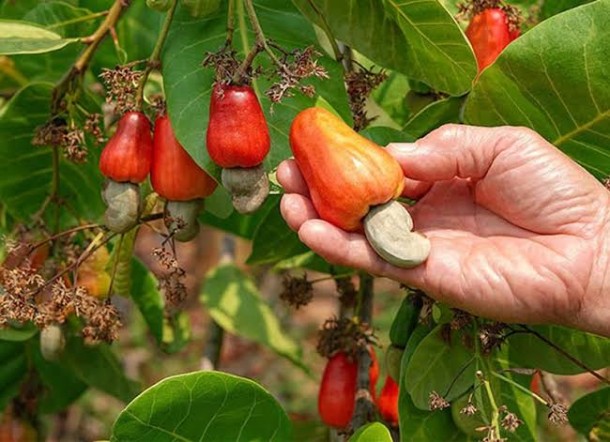
DT: For some crops, we are strong in upstream production. Take cashew nuts: traditionally, they were a minor crop—small and not part of daily diets like rice. Cashews were seen as a delicacy. But with market demand rising, farmers saw an opportunity. Instead of growing bananas, they switched to cashews for a better income.
As a result, cashew cultivation expanded to nearly 1 million hectares, producing close to 1 million tons annually. However, we cannot yet process all of it. Most raw cashews are sold to neighboring countries with larger industries and better logistics. Farmers continue to grow more, but now it is time to seize our own opportunities.
Rather than only exporting raw nuts, we can dry, store and sell them later at higher prices—or process them locally to retain added value. We take a balanced approach that respects all interests. We do not impose bans or enforce harsh transitions. Our economy remains open, aiming to raise living standards.
If companies invest in processing, they can pay farmers more and profit from higher-value products—a win-win. But if they cannot absorb enough, exporting raw nuts remains an option. This is our transition strategy: private-sector-driven, supported by incentives like tax breaks and improved logistics.
The Prime Minister prioritizes this sector, and we are working to attract investors to grow alongside our farmers. The target is set, and the plan is in motion. Already this year, prices for cashews have been strong, benefiting farmers.
Still, we aim for a balance. High prices can hurt consumers, while low prices hurt producers. Our goal is a fair price that benefits both sides—and that is what we are working toward.
Q: How can Cambodian products stand out globally?
DT: In agriculture, trade operates differently from industrial goods. Even under WTO rules, agriculture follows its own regulations and is not truly part of free trade. Sanitary and phytosanitary (SPS) measures and non-tariff barriers often limit trade more than tariffs themselves.
While free trade agreements focus on reducing tariffs, even a zero tariff does not guarantee market access. For example, if a country has never imported our bananas, they will not allow entry until they inspect our growing conditions. They check for potential natural contaminants—such as insects or bacteria common here but potentially harmful to their ecosystem. An insect harmless in our country may disrupt theirs due to the absence of natural predators. Similarly, local bacteria might become harmful in a new environment.
These SPS concerns make agricultural trade inherently difficult. Tariffs add another layer of complexity, but this challenge is universal. Even the U.S. imposes tariffs on others. Ultimately, it comes down to competitiveness. If our products are competitive, we can still succeed despite tariffs.
That is why our strategy goes beyond tariffs. We aim to produce high-quality agricultural goods—better in terms of safety, taste and overall standards. If consumers recognize the value, they will pay more, even with tariffs.
Take Kampot pepper, for example. Its superior quality commands at a premium price. Consumers pay not just for pepper, but for a distinct, high-end product. That is our focus—creating premium, niche products that stand out in global markets.
Q: Where should investors focus first?
DT: In processing, there is a lot to consider. Take cashews, for example—they are unique in our tradition. We do not pick up cashew apples from the tree; we wait for them to ripen and fall. Once they fall, we collect them quickly, separate the kernel from the fruit and either sell or dry them immediately. This method preserves the kernel’s high quality.
Variety also matters. We have selected a premium variety called M23, known for its large, creamy, great-tasting kernels—ideal for high-end markets. Our traditional harvesting and processing methods enhance the flavor and quality, making Cambodian cashews distinct.
This process is labor-intensive and more expensive. Picking fruit directly from trees is faster and cheaper but results in lower quality. Our method—daily collection of fallen fruit—requires more effort but yields better results.
Processing involves multiple steps: drying, steaming, re-drying, shelling, peeling and finally roasting. This dry-steam cycle is key to the flavor and quality of Cambodian cashews. It is our tradition, and it deserves recognition and a premium price.
In contrast, quicker methods skip these steps, lowering both cost and quality. We want people to understand the value of our traditional techniques.
This applies to other crops too, like mangoes. Larger mangoes are often preferred, but smaller ones can be tastier. We are developing Cambodian standards that highlight the true quality characteristics of our products.
We welcome investors to adopt and benefit from these standards. Processing cashews differently may save costs, but the flavor will not match Cambodian cashews made the traditional way.
Q: Where are Cambodia’s key crops grown?
DT: Cashew nuts grow mostly in highland or plateau areas, while rice is cultivated in lowland plains. Soil quality is crucial. Some soils support tree growth well, but they affect the taste of the nuts differently. We are studying this, and once standards are defined, we aim to register geographical indications based on soil types—such as white or red soil—to highlight distinct flavor profiles.
Q: How resilient is the M23 cashew variety?
DT: This is the result of excellent research—not by our institutes, but by passionate farmers. They selected and grafted local cashew varieties, choosing strong, high-quality trees and grafting their branches onto disease-resistant trunks. This led to the development of M23, a resilient, climate-tolerant variety that produces large, tasty nuts. It has proven stable and is now widely multiplied, becoming one of our best varieties. Credit goes to our dedicated farmers.
We also have strong research from institutes like CARDI (the Cambodian Agricultural Research and Development Institute), especially in rice. Our top rice varieties are resilient and yield high-quality fragrant rice. More varieties are coming.
We are strong in upstream production, but we still need investment in downstream processing. This is where foreign investors can play a key role—processing and marketing our high-quality products to benefit everyone.