








Backed by MUFG and other global funds, Akulaku Finance is expanding prudent digital lending in Indonesia. President Director Perry Barman Slangor explains its governance-led growth strategy.
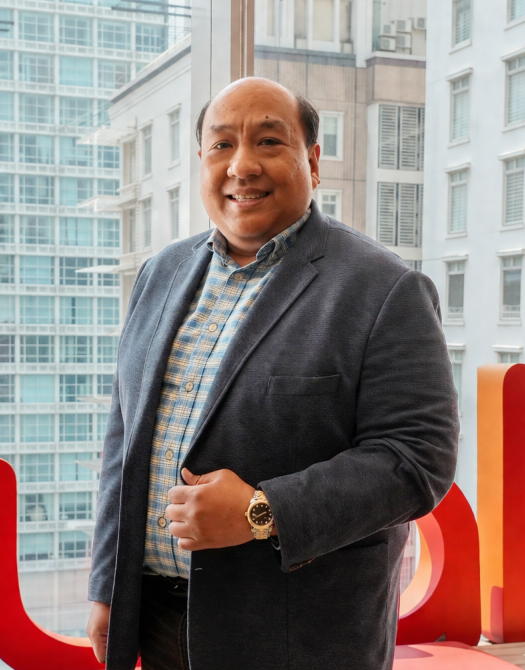
“AI-driven credit scoring and enhanced data analytics play a critical part.”
Perry Barman Slangor President Director, Akulaku Finance
Post ThisQ: What is driving your vision for Akulaku Finance Indonesia?
Perry Barman Slangor, president: Good governance, discipline in the underwriting process. We have a sustainable portfolio.
Over the past years, we have enhanced and strengthened our governance framework across multi-layers, that has been at risk management practices, compliance disciplines, and decision-making processes. This also reinforces internal controls so that it makes sure that the growth initiative is in line with defined risk.
We have the Akulaku Group, and we have also the MAFG group as well. With this, it allows us to scale up faster, accelerating growth, and it helps us to do a more competitive and optimal securing source of funding as well, and stronger risk insights, as well as penetrations to user financial journeys as well.
Looking ahead, we see the company's next phase as one defined by balanced expansion. Balanced means we continue broadening access to financial digital solutions while also maintaining prudent risk management practices, standards, and of course, with operational discipline. Our goal is to position Akulaku Finance Indonesia as a stable and trusted consumer finance platform that supports ongoing financial inclusion agenda as well.
Q: How does Akulaku Finance differentiate itself from competitors?
PBS: One of the key differentiators in this aspect lies in our credit scoring engine that is specifically designed to map out our risk, our risk analytics. That goes beyond the traditional financial parameters.
This is where actually the role of AI-driven credit scoring and enhanced data analytics play a critical part. So that's one of the key aspects.
That allows us to scale responsibly and expand credit while actually maintaining our asset quality to about one point one percent last year. We want to position ourselves as a technologically driven consumer financing platform focused on expanding access to responsible credit for underserved and emerging middle-class segments as well.
We want to have more bridges to the gap between conventional financial services in the rapidly growing consumer digital financing.
Q: How are technology and digitization strengthening the business?
PBS: That credit engine scoring needs also validation. It's not like creating a credit engine, and you just leave it. You have to continuously make improvements, continuously adapt to technology. For example, even the KYC process, make sure there's liveness with the current technology to detect any deepfakes.
We also partner with credit bureaus and data providers to actually look at the trends of behavioral analytics.
Q: How do your social initiatives encourage responsible financial behavior?
PBS: If we want to grow sustainably, of course, we need to create more impact beyond just financing. This is also reflected in our focus more on supporting economic empowerment, encouraging responsible financial behavior, and contributing to a more sustainable environment.
Over the past several years, we have implemented a series of financial literacy, inclusions, and CSR initiatives. That's like across 20 cities in Indonesia, with a clear focus on improving financial literacy as a foundation for sustainable financials inclusions.
We also have conducted a series of campus roadshows, community seminars, and collaboration within the ecosystem partners nationwide, to help better understand financial planning and use the digital financing solution more responsibly. In a nutshell, build a healthy and responsible financial ecosystem in the country.
Q: How have your experiences shaped your leadership at Akulaku Finance and the wider team?
PBS: All of these experiences actually foster my continuous learning process. That experience also, of course, besides the educational background, also helps in a way influences how I approach challenges today.
Learning from this experience, I tend to keep an open mind on perspective, but at the same time trying to stay focused and thoughtful in making decisions that is a balance, and also a forward-looking one as well.
I think it's more important to reflect that in day-to-day decisions and interactions, we show exemplary actions and behavior. Over time I come to see that actually consistency often speaks louder than direction by exhibiting exemplary behaviors and also actions.
I want to foster or create a working environment where people feel comfortable working here. A healthy environment, people tend to be more supportive, tend to perform better, and the company actually tends to perform sustainably.
This whole environment we hope this approach will foster better teamwork, which is important or critical for growing sustainably, because we want to have a super team, not a superman.