








Indonesia is turning macroeconomic stability into faster growth as it pursues President Prabowo’s target. Bank Indonesia Deputy Governor Thomas Djiwandono explains the strategy behind it.
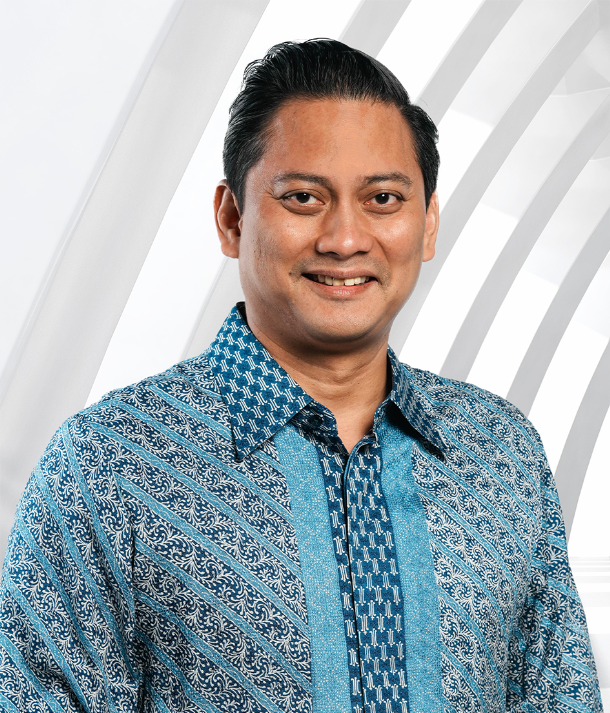
“Stability and growth are not in conflict here; one enables the other.”
H.E. Thomas Djiwandono Deputy Governor, Bank of Indonesia
Post ThisQ: How do you view Bank Indonesia’s economic responsibility?
Thomas Djiwandono, Deputy Governor, Bank Indonesia: My vision for Bank Indonesia is not an individual one—which is important to establish. The central bank functions as a board, unlike line ministries with more concentrated decision-making. Policy here is a collective process.
That said, the direction is aligned with the president’s vision for higher economic growth—that 8% target. Bank Indonesia has long described itself as having a dual mandate: stability and growth. My role is not to introduce a new vision but to reinforce and deepen monetary-fiscal policy coordination.
My predecessor at Bank Indonesia is now Vice Minister of Finance, and I came from that same position. The logic is to bring fiscal and monetary policy into even closer day-to-day alignment. I meet with the Ministry of Finance regularly—we discuss where the economy is progressing, what policy measures are in place, what needs to be recalibrated and communicated. That coordination is fundamental to what I am doing here.
Q: Why is Indonesia ready for faster economic growth?
TD: The fundamentals are demonstrably robust, and I say that based on comparative indicators, not optimism. Core inflation is well within our target range. Every inflation measure—core inflation, administered prices, and volatile food—is under control. Our balance of payments has been in surplus for more than 60 months. The fiscal deficit has been maintained at 3% of GDP, and the president has reiterated that commitment publicly and in government meetings.
What this means is that stability has already been established. The 5% growth trajectory held for a decade; inflation was tamed, and the fiscal space remains substantial. Now it is time to push forward. That is why we are talking about fiscal-monetary cohesion. That is why I changed roles.
Indonesia has been through multiple crises and periods of volatility, and the economy has proven resilient every time. That resilience is precisely why investors should believe in Indonesia’s compelling long-term growth story.
Q: What drives Indonesia’s national economic growth agenda?
TD: When you look at GDP, it is consumption, government expenditure, investment, and trade. Danantara is the investment vehicle—a tool to bring capital into Indonesia at scale. On the fiscal side, the president’s priority programs act as multipliers. The nutrition program creates supply chains across local economies—demand from centralized kitchens generates supply of chicken, vegetables, and fruit at the community level. Housing works the same way. Every major government initiative is designed to generate multipliers and build long-term capacity.
There is also a clear progression from the Jokowi era to President Prabowo’s agenda. Jokowi focused on infrastructure; President Prabowo is focused on human capital—education, health, food security, and energy security. These are long-term investments not only in growth but in sustaining that growth. The engine is being constructed for the longer haul.
Q: How does holding the policy rate balance stability and growth?
TD: Every central bank is monitoring external developments carefully: volatility in the Middle East, currency pressures, and changing trade dynamics. Stability is our first mandate, and without it the conditions for growth cannot be maintained.
The rupiah has been affected by global conditions, as have most emerging-market currencies. The dollar has strengthened at the expense of regional currencies across Asia. Holding the rate at 4.75% sends a direct signal to markets that we are prioritizing stability. But that decision does not negate our alignment with the government’s growth objectives—it is the foundation that makes those objectives achievable.
I think of our role as a balancing board—a safeguard that protects the conditions necessary for the growth agenda to advance sustainably. Stability and growth are not in conflict here; one enables the other.
Q: How does unanimous political support shape your mandate?
TD: The unanimous support was meaningful, and I was genuinely happy that no one in parliament disagreed with the direction I outlined. But I want to be transparent about what actually safeguards central-bank independence—it is not any individual, including me. It is the law. The 1999 independence law enshrines how Bank Indonesia operates. Governance is done by a board. Even if someone came in with a specific agenda, they could not impose it, struct urally, they would simply be outvoted.
What keeps me going is the conviction that I can play a consequential role in demonstrating how fiscal and monetary policy can work together. That is the contribution I intend to make.