






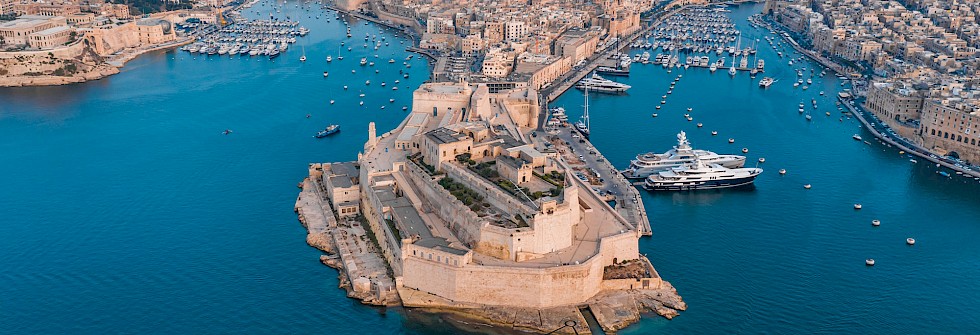
From tourism and gaming to financial services and technology, Malta’s diversified economy is delivering strong, sustainable growth – and the UK is a key partner to continue that story.
In October 2026, Malta hosted the three-day World Travel & Tourism Council Global Summit – widely referred to as the “Davos of tourism” – which brings together leaders from across the global travel and hospitality industry for a programme of more than 100 speakers. In his speech to open the event, Prime Minister Robert Abela called the choice of Malta as a venue a significant vote of confidence in the country’s booming tourism sector. “Global leaders from the biggest international brands are all gathered here at the Mediterranean Conference Centre, having come to Malta because they see it as the ideal place to shape the future of this industry,” he said. He then used that platform to set out the nation’s ambitions in the sector, noting that the shift to higher-value tourism benefits citizens, visitors, workers, businesses and communities alike.
Yet tourism is just one driver of an increasingly diversified economy. Financial and professional services, already a major pillar, continue to expand as technology reshapes the sector. Malta’s ship registry is the largest in Europe, its aircraft register continues to expand and the Malta Freeport ranks among the Mediterranean’s leading transshipment hubs. In parallel, gaming, advanced manufacturing and a fast-developing digital economy – shaped by one of the world’s earliest national artificial intelligence strategies – are also engines of growth. Together, they have helped Malta’s GDP grow from €14.5 billion in 2019 to €25 billion today.1 The European Commission expects the country to remain among the fastest-growing economies in the EU, forecasting a 3.6% GDP increase in 2027.
Financial and professional services, already a major pillar, continue to expand as technology reshapes the sector.
That growth has been achieved with a notable degree of stability. Inflation has held at around 2%2, well below the euro-area average, according to the Central Bank of Malta, while a broad cross-party consensus on foreign investment and financial policy gives businesses a predictable environment in which to operate. For Christopher Fearne, Malta’s minister for foreign and European affairs and trade, that consistency is a defining factor behind the country’s economic success. “This rate of growth is not a fluke,” he says. “It has been sustained over a number of years.”
Malta’s trajectory is shaped by Vision 2050, the national development plan whose central aims are productivity-led growth and raising quality of life. Speaking at the summit, Abela made clear that its success depends on continuing to attract investment. “The government’s choice is to continue improving people’s quality of life and increasing the income of our people,” he said. “But to do that, we need to allow the private sector to continue investing within the parameters of Malta Vision 2050 as well.”
Fast Facts
Malta’s current GDP, up from €14.5 billion in 2019.
European Commission growth forecast for Malta in 2027, among the fastest in the EU.
UK–Malta trade in the 12 months to March 2026, up 39.6% year on year.
Tourist arrivals from the UK in 2025, Malta’s largest source market.

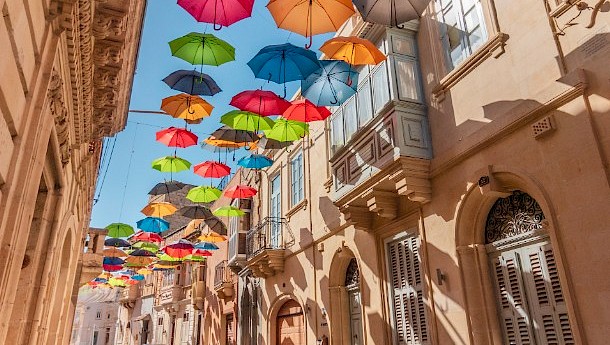
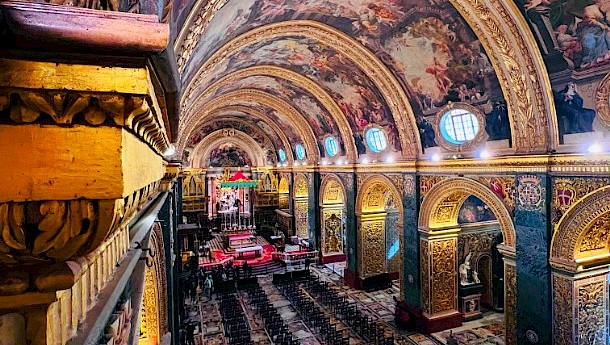
In that context, the UK is seen as a natural partner, with a relationship built on deep linguistic, cultural, historic and business ties, Commonwealth membership and a company law framework modelled on the British system. Britain remains Malta’s largest tourism source market, while commercial links have surged in recent years. UK government figures show bilateral trade rose 39.6% to £5.2 billion in the 12 months to the end of the first quarter of 20263 – and as the EU moves to favour goods produced inside the bloc, Malta offers British companies a natural base from which to serve the European market. For Fearne, meanwhile, the Commonwealth’s scope represents another area of opportunity. “The Commonwealth is a supra-regional organisation, which makes it genuinely distinctive,” he says. “It creates substantial opportunities for intra-Commonwealth trade that we are only beginning to exploit.”
For investors, Malta’s size represents a key asset. Decision-makers are accessible, institutions can move quickly and partnerships between government and business are easier to build than in larger economies. That agility has allowed the country to move early on emerging sectors, from online gaming to digital finance and artificial intelligence. “Being a small country is actually an advantage,” says Fearne. “We are agile and flexible – not in our regulatory standards, but in the way we make foreign investment work.”
Britain remains Malta’s largest tourism source market, while commercial links have surged in recent years.
Complementing that agility is the appeal of an economy with strong synergies between its key sectors. Air connectivity built for holidaymakers also serves business travellers and investors; the legal, financial and digital services that grew alongside tourism now compete internationally in their own right; and a growing calendar of conferences and events, including the WTTC summit itself, brings decision-makers to the islands. Specialist institutions such as the Institute of Tourism Studies, meanwhile, are developing the skilled workforce on which both tourism and the wider services economy depend. In turn, that wider economy is helping tourism move towards a higher-value, year-round model – cementing the kind of sustainable growth that has become Malta’s calling card.
Fast Facts
Population as of 2025⁵
Total land area of the islands⁵
Year Malta joined the EU
Official languages – Maltese and English