







With record visitor numbers behind it, Malta is now putting value before volume – building a tourism model that protects its rich heritage while deepening ties with the UK.
The UK remains a cornerstone of Malta’s tourism economy. Around 840,000 British visitors travelled to the islands in 2025, spending approximately €940 million1 – and keeping the UK as Malta’s largest source of arrivals. With the island nation targeting 4.5 million total visitors in 2026, the priority for the Malta Tourism Authority (MTA) is no longer simply growth. “Our focus is now firmly on consolidating that base and increasing the value generated per visitor,” says CEO Carlo Micallef.
The shift towards value sits within a broader responsible tourism strategy, one designed to ensure tourism supports Malta’s heritage, traditions and crafts. For Micallef, it is also a response to what visitors themselves want: “A destination can easily fall into the trap of offering visitors a home away from home, but we have learned that this is not what people are seeking,” he says. “They want a different experience to take home with them, in their memories, in the stories they tell and in what they share with others.”
Malta’s farming community offers an example of the approach in action. Visitors can pick strawberries, press olives, harvest grapes and bake Maltese bread, tasting it warm from the oven – experiences that bring alive Malta’s traditions and local life. “In an era of mass production, smallholder farmers in Malta cannot compete on volume, but tourism creates a new purpose for their work,” says Micallef. In that sense, tourism acts as both an economic driver and a way to sustain rural traditions, while giving visitors a deeper connection with the islands. “We want visitors to arrive as tourists and leave feeling like locals.”
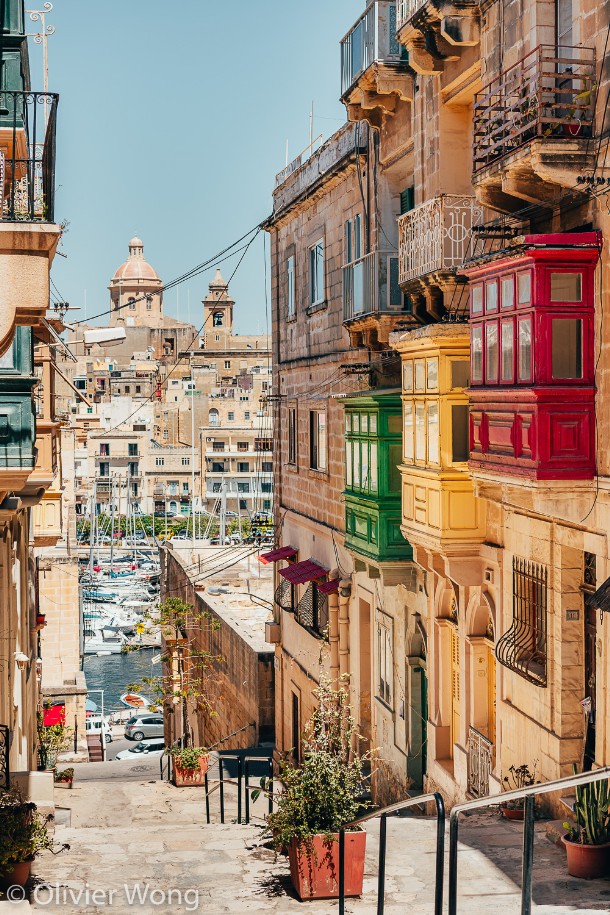
Rural experiences are just one strand of the broader offer. Malta combines thousands of years of layered history with Baroque architecture, a vibrant food and wine scene and an extensive events calendar. For British visitors and businesses alike, the long-standing ties between the two countries add a natural appeal – alongside the practical benefits of Malta’s EU membership. “For investors, Malta represents a stable environment within the EU, with a growing economy and a well-established tourism sector that continues to outperform,” says Micallef.
In this interview, the MTA’s CEO discusses Malta’s transformation into a year-round destination, what sets it apart from its Mediterranean rivals and why technology can never replace the human touch.
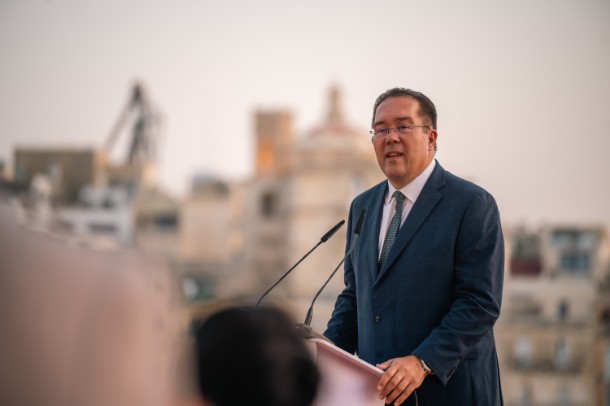
“There is now real opportunity for top international brands to invest in Malta – in quality accommodation, in experiences, in digital solutions, in sustainable mobility.”Post This
Q: How has Malta’s tourism industry evolved since your appointment?
Tourism is absolutely central to Malta’s economy, and it was among the industries that suffered most during the pandemic. In 2019, our record year before the pandemic, we hosted 2.75 million tourists, with the UK consistently our largest source market, followed by Germany, Italy, France, Poland and the Benelux countries.
When the pandemic hit, everything stopped, but we never stopped promoting Malta. We launched a campaign called Dream Now, Travel Later, which proved very successful, and used that period to deepen our relationships with travel agents and tour operators, expand our digital presence and educate both B2B and B2C audiences on what Malta truly has to offer.
The recovery, when it came, was remarkably swift. In 2022, when I took office, we reached 2.3 million visitors. By 2023 that figure had risen to 3 million, by 2024 to 3.75 million and last year we surpassed the 4 million mark, recording 4,022,000 arrivals. But the numbers alone do not tell the full story. The real shift has been in the nature of the tourism itself, moving away from the traditional sun-and-sea model that once made Malta dependent on the package tour operator, towards a far more diverse, year-round offering built around culture, heritage and authentic experience.
Q: How do you aim to position Malta in UK and European markets?
We are already in a strong position in the UK market, and across many of the markets where we have successfully established Malta and Gozo as year-round destinations. Visitors no longer come solely for sun and sea. They come for our history, our culture, our heritage, our gastronomy, our wines, our sports training camps, our events, our concerts and our festivals. It is a rich and varied mix of motivations that draws people to our islands throughout the year.
A telling indicator of how far we have come was a recent Eurostat finding that Malta has the lowest share of tourism arrivals in the peak summer months of any Mediterranean island in the European Union. July and August account for only around 21% of our annual visitor figures. For an island in the Mediterranean to have achieved that kind of seasonal balance, with some of the highest proportional visitor numbers in winter, is a significant achievement.
Our marketing strategy is geographically targeted but audience specific. We reach people according to their demographics, income levels, interests and proximity to airports with direct connectivity to Malta. Travellers increasingly prefer to fly from their nearest regional airport rather than travel to a hub, so route connectivity is foundational to our approach. Within those catchment areas, we then target specific segments, whether that is diving, heritage, gastronomy or cultural experiences.
The broader shift in what people want from travel has also worked in our favour. The world has moved on from simply visiting a museum to wanting to experience it. People want to hear the story behind an artefact, to understand who made it, how it was used, what it meant. Malta’s history is extraordinarily layered. Anyone who wanted to control the Mediterranean had to hold Malta, and that strategic reality brought successive civilisations to our shores, from the Phoenicians and Romans through to the Knights of St John and the Second World War. That depth of history gives us a remarkable story to tell.
Q: What is Malta’s competitive advantage as a destination?
Small is beautiful, in the sense that a territory of 316 square kilometres contains extraordinary diversity. Our layers of history, our landscapes, our architecture and our culture are all packed into a compact area, which means visitors can access an enormous variety within a short holiday.
English is widely spoken across Malta, our legal and legislative framework is modelled on the British system and we drive on the left. These practical affinities matter, particularly for UK travellers, and they reflect a long-standing friendship between our two countries.
What distinguishes us further is that we have preserved our heritage without sacrificing our authenticity to development. Our bastions, our Baroque architecture, our medieval streets – all of this remains intact and alive. The film industry has recognised this diversity for years, using Malta to represent Greece, the Middle East and other European settings. That versatility reflects the genuine diversity of what we have to offer.
Beyond the richness of the experience itself, Malta continues to offer strong value. The combination of concentrated attractions, short travel distances and competitive pricing makes it an appealing proposition for visitors who want to make the most of their time and their money.
Q: Why is now the right moment for UK investors to consider Malta?
The message is straightforward: Malta offers stability, excellent connectivity and a proven track record of economic performance. We are connected to approximately 120 routes by air, providing fast and accessible links for people, alongside our free port, which serves as a key node for cargo and sea freight. That combination of air and maritime connectivity, within a politically stable, EU-member economy whose legal system is rooted in British tradition, makes Malta a compelling and well-founded choice for investment.
Q: How important has that air connectivity been to unlocking investment?
It has been absolutely central, and I say that from personal experience. I remember a time when airlines would not consider Malta because there was not enough volume to sustain a route. I remember investors who, because there was not sufficient air or sea connectivity, found it genuinely difficult to commit capital here – the logistics of importing raw materials or exporting goods simply did not add up. That was a real structural barrier.
We have overcome that. Today, Malta is connected across Europe and into the Middle East and North America, and we are looking towards further routes from Asia and Latin America. That connectivity has been transformative, not only for tourism but for the wider economy. And it underpins the investment case: you cannot attract top-tier hospitality brands or serious investors without the infrastructure to bring people in and move goods efficiently.
Q: How are innovation and sustainability shaping your strategy?
The right balance is to apply technology to the back office, to visitor flow management, operational efficiency and climate-friendly resource use, while protecting and prioritising the human connection at every point of the guest experience.
Our industry does face labour shortages, and we rely significantly on workers from overseas to meet demand. Technology can help us manage operations more efficiently and more sustainably. But the front end of tourism, the moment when a guest interacts with a person, whether that is at a hotel, a restaurant, a heritage site or a village festival, cannot and should not be replaced by a screen. The beauty of tourism must remain the human connection. That is what makes it worth travelling for, and that is what no algorithm can replicate.
Q: What is your goal for the sector’s next stage of development?
My ambition is to lead this authority and this industry into a phase of tourism that delivers greater value than it does today – greater economic value, but also greater respect for what makes Malta special.
We are at a genuine inflection point. Malta is making a deliberate shift towards quality tourism, towards a more responsible and sustainable model: preserving heritage, respecting our communities, moving away from volume-led thinking. Vision 2050 sets out that direction clearly. And there is now real opportunity for top international brands to invest in Malta – in quality accommodation, in experiences, in digital solutions, in sustainable mobility and in the services that will help us grow in the way we want to grow.
The right investors, the right partners, the right brands – those who share that vision – will find Malta ready and open. And if I can be the person who helps lead this industry through that paradigm shift while protecting everything that makes this destination so special, that would be my dream.