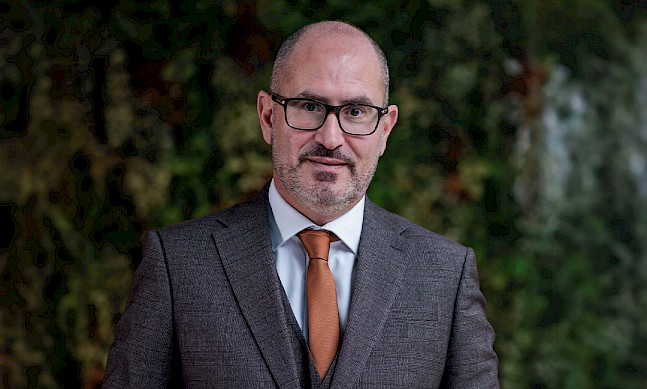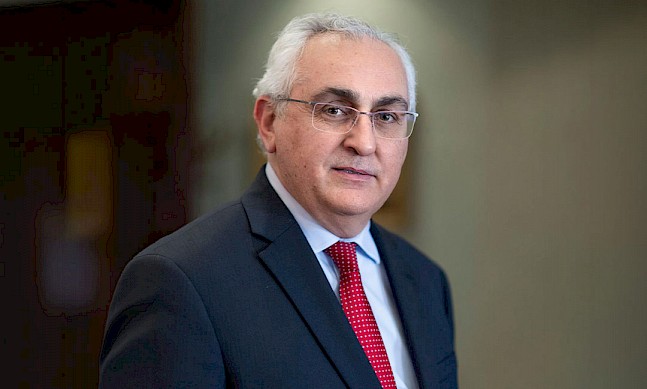







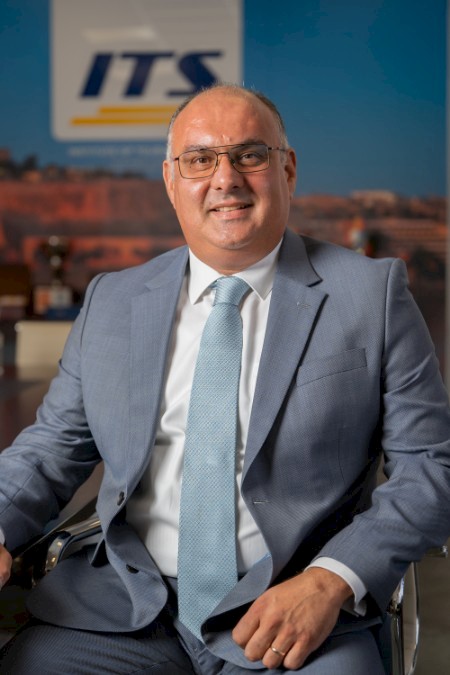
Appointed CEO of the Institute of Tourism Studies in April 2015, Pierre Fenech leads Malta’s national institution for tourism and hospitality education, the same institute from which he graduated. Here, he explains how ITS is preparing tomorrow’s workforce for one of Malta’s most important industries.
Q: How has your vision for ITS evolved?
I was part of roughly the fifth cohort of students, and next year we will celebrate 40 years since the inception of ITS. I never imagined, as a student, that one day I would be at the helm of the very institution from which I graduated, but it happened. My first aim was to grow ITS further, and one of the central pillars of that effort was internationalisation. We embarked on a strategic plan to take abroad what we do extremely well here in Malta.
Q: How has your programme offering expanded?
A second pillar was the expansion of our programme offering in terms of European Qualifications Framework (EQF) levels. At the time, the institute was focused mainly on vocational education up to Level 5 of the EQF. Today we offer Level 6 and Level 7 qualifications as well, meaning we now provide degree programmes and master’s degree programmes. We have also become one of only three self-accrediting institutions on the island.
Q: How should UK students and educators perceive ITS?
Our teaching is conducted entirely in English, which makes us attractive to foreign students. The proportion of international students has risen to around 35 per cent.
British students are very much welcome. Malta is an English-speaking country, and the two nations share a long and close history. We are both Commonwealth members, and there has always been a strong sense of mutual support between us. Beyond that, from 2027 the Erasmus programme will once again be available to British students – a significant development. That will open up further opportunities for students from the UK to study here, and we are looking forward to that.
Q: How does ITS contribute to Malta’s tourism sector?
What we now need to focus on is quality rather than quantity. Government strategy, private sector strategy and our own institutional strategy are all aligned on this point: the aim is to generate more value from fewer visitors. To achieve that, you need not only quality products – hotels, restaurants, infrastructure – but quality service providers.
Tourism is an industry that depends heavily on human interaction, and that is precisely where ITS comes in. We prepare tomorrow’s workforce, and we must ensure our students are ready not for the industry as it exists today, but for what it will look like in five and ten years’ time.
“In a country where around 25 per cent of GDP derives from tourism, the relevance of an institution like ours is arguably greater than it would be elsewhere.”Post This
Q: How does the Skills Pass strengthen ITS’s role?
We were one of the main drivers behind the introduction of the Skills Pass. Not all workers in the tourism industry are ITS graduates. Most of our alumni go on to occupy managerial roles – they are running the industry today. But the frontliners, in many cases, are people who have come from abroad to work here.
It is therefore essential that those frontline workers possess the skills the country requires. The Skills Pass was introduced to address precisely that. The sector now sees the benefits clearly. Given the success of the scheme, the government has decided to extend the Skills Pass model to other industries as well.
Q: What opportunities exist for partnerships with the UK?
This is an area we are keen to advance. We already have agreements with institutions in China, Japan and several African countries, so there is no reason the same approach cannot be extended to the UK. One model that has worked well elsewhere is the 2+2 agreement, where students spend part of their studies in their home country and then complete two years with us in Malta. We welcome any UK institution that wishes to explore this kind of arrangement and give its students that opportunity.
Q: How is innovation shaping the way ITS prepares graduates?
We are preparing students not for today but for tomorrow. We have established a number of programme advisory committees comprising industry professionals, academics, students and alumni. Their role is to analyse all our programmes, identify what is needed and determine where improvements can be made – with particular attention to the impact of artificial intelligence and new technology systems on the future of the sector.
One of the most valuable aspects of the global network we have built over the past ten years is that it enables genuine exchange. Institutions learn from us, but we also learn from them.
Q: Why should UK investors look at Malta’s tourism sector now?
The tourism and hospitality sector in Malta has grown steadily over many years. We have been tried and tested. Malta was among the quickest destinations in the world to recover from the COVID-19 pandemic, and other countries studied our response as a case of good practice.
That resilience should give investors considerable comfort. We are a small country, and our scale means we can adapt quickly when circumstances demand it. Investors appreciate that agility. We have consistently been a country that identifies and acts on opportunities swiftly, and I believe that is one of the most compelling reasons to look seriously at Malta.
Q: What sets ITS apart as a specialised institution?
We are a specialised institution – we offer courses exclusively in tourism and hospitality. Within that, we have some programmes that are genuinely unique at a global level, particularly in the diving sector and in climate-friendly travel.
In a country where around 25 per cent of GDP derives from tourism, the relevance of an institution like ours is arguably greater than it would be elsewhere. That is central to why we exist and why we matter.
On the international front, we are not only attracting students to Malta – we are also establishing campuses abroad. We already have two campuses open in China, in Shanghai and Zhengzhou, where Chinese students study as full ITS students in their own country.
Q: What lasting impact do you hope your leadership will have?
My aim is to leave ITS in a significantly stronger position than I found it. I am giving back to the institution that gave me a great deal. I had a successful career in the industry for 25 years before joining ITS, and I feel a genuine obligation to use this role to place the institution on an even stronger footing than it was eleven years ago.
My wish is that we continue to grow in ways that sustain the industry. Our intention is to expand the campus, attract more students and, in doing so, deliver more quality workers to the industry for the future.