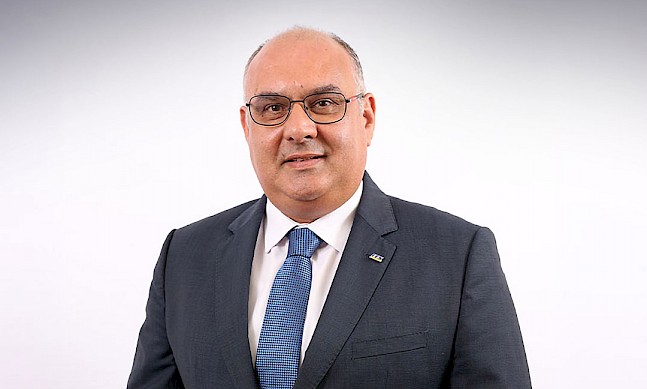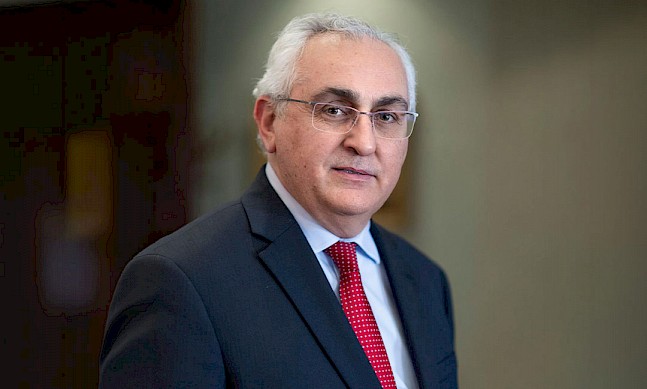








Approaching five years as CEO of the Malta Digital Innovation Authority, Kenneth Brincat has repositioned the body as Malta’s lead authority for artificial intelligence, cybersecurity and digital identity. Here, he explains why Malta offers UK technology businesses an agile gateway to the European market.
Q: How has your vision for MDIA evolved?
When I joined MDIA, the authority was focused primarily on its role in DLT certification – certifying the underlying blockchain technology behind cryptocurrency. The new strategic approach I gave the authority was this: innovation should enable regulation, not the other way around.
From that starting point, we repositioned MDIA to be far closer to industry. One of the first major initiatives was the launch of a Digital Innovation Hub, designed to facilitate and enable digital innovation across the country – offering startups space, mentorship, facilities and access to funding.
Q: What role have regulatory sandboxes played?
The other significant move was the introduction of sandboxes. In 2021, we launched the Technology Assurance Sandbox, which provides a flexible testing environment for companies developing new products – not just from a technical standpoint but as a tool to test solutions against an adaptable regulatory framework.
When the EU AI Act was published, it mandated all member states to establish a national sandbox. We had already been operating one for several years at that point. That, for me, reflects the kind of foresight we were trying to build into the organisation from early on.
Q: How should UK investors and partners perceive Malta?
Malta offers a genuinely unique opportunity for companies – British companies or US companies – seeking to develop, test and scale emerging technologies within a supportive and agile regulatory environment. That combination of support and agility is central to how we position ourselves.
Malta has a proven track record when it comes to regulatory agility. We were among the first countries in the world to introduce a legal framework for cryptocurrency.
Q: How does Malta’s legal framework support that agility?
Part of that agility is certainly a function of scale. Being a small country makes it easier to move quickly. But it is also by design. Under the MDIA Act, we issue what are called legal notices – an instrument that will be familiar to those who know the British legal system, given that Malta’s legal architecture is rooted in it. This means we can respond to new developments in a relatively short timeframe.
For UK investors and partners, that responsiveness matters enormously.
“Malta offers a genuinely unique opportunity for companies – British companies or US companies – seeking to develop, test and scale emerging technologies within a supportive and agile regulatory environment.”Post This
Q: How can UK technology firms use Malta as an EU gateway?
If a UK-based technology business has a product – a software solution or an AI application – and wants to deploy it across the EU, it must comply with EU regulations. Malta offers a highly practical route to achieving that.
Take the Cyber Resilience Act or the EU AI Act as examples. If a product is classified as high-risk under EU law, it requires a conformity assessment before it can enter the European market. Going through Malta’s framework to achieve that certification gives companies access to all 27 member states. That is a meaningful proposition, not just for UK businesses but for US companies looking to enter Europe as well.
Q: Why should UK firms establish operations in Malta?
The attractiveness there is multi-layered: regulatory agility, tax incentives and access to talent. We consistently attract a significant number of expatriates, in part because Malta is a desirable place to live – safe, well-connected and with a high quality of life.
There is also strong government support for foreign direct investment in digital innovation. If a company comes to us and we see merit in what they are doing, we can facilitate access to grants through Malta Enterprise, link them with JobsPlus – the national employment agency – and assist with finding office space through INDIS Malta. The ecosystem is small, but that makes it genuinely efficient and business-friendly in a way that larger markets simply cannot replicate.
Q: What does the integration of eSkills Malta bring to MDIA?
There is a third pillar that is equally important: education. Since 2021, MDIA has been running a number of projects around digital literacy and the upskilling and reskilling of the workforce.
The eSkills Malta Foundation had a very similar remit. The government took the decision to integrate its role within MDIA because the authority had grown significantly and it made sense to optimise the services both entities were providing rather than operate them in parallel.
One of our existing projects that reflects this educational mission is the Pathfinder Scholarship Scheme, which funds master’s degrees and PhDs in areas including digital innovation, AI, cybersecurity, digital trust and digital identity.
Q: How has the AI for All programme been received?
Our most significant recent project in this space is AI for All. It is an AI literacy programme offered free of charge online to all residents of Malta aged 14 and above. The course was developed by the University of Malta, takes approximately 90 minutes and is available in both Maltese and English. Upon completing the course, participants receive a free annual subscription to either ChatGPT Plus or Microsoft Copilot.
The response has been extraordinary. We launched in May, with a target of making 10% of the population AI literate. Within four months, approximately 50,000 people had enrolled and around 26,000 had completed the course and received their subscriptions.
Q: How is Malta’s national AI strategy evolving?
Way back in 2019, Malta had a national AI strategy. We were one of the first countries in the world to have one. We have since updated that strategy. The new strategy is focused on the deployment of AI, particularly by the private sector, with a final goal of achieving societal well-being.
As regards MDIA’s own strategy, it is very similar in spirit, but the emphasis has shifted. This new strategy is oriented around providing assurances. Our primary aim is to provide the right legal frameworks, keeping them flexible, in order to foster trust.
Q: What opportunity does the digital identity wallet present?
At the moment, the public procurement tender for the digital wallet is open, and we are aware that there is considerable interest at a global level rather than simply a local one. The European Union is obliging all member states to have a national European digital identity wallet. We decided to offer an opportunity to the private sector to compete openly.
In practical terms, this means that if a police officer asks to see your driving licence, you can present it on your mobile device and they can verify your identity immediately through a trusted, government-backed solution. If a Maltese citizen travels to another EU country, their wallet will still function.
The digital wallet is, without question, the largest project we have at the moment.