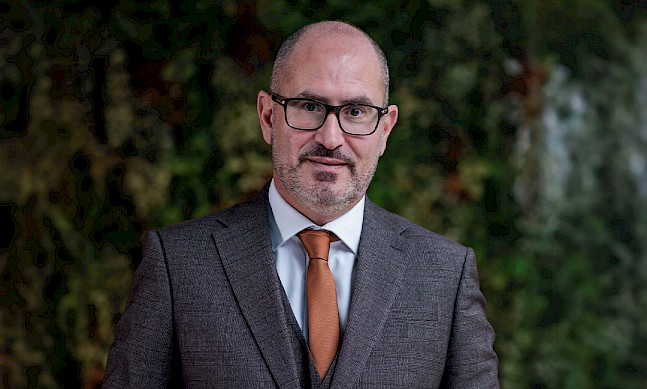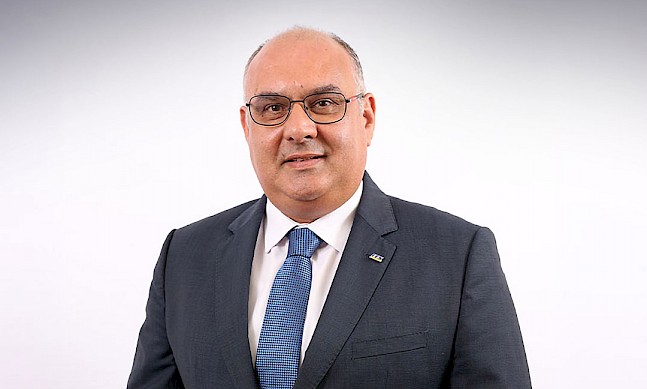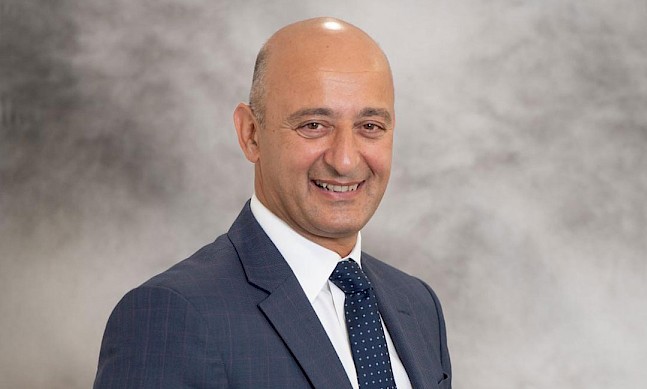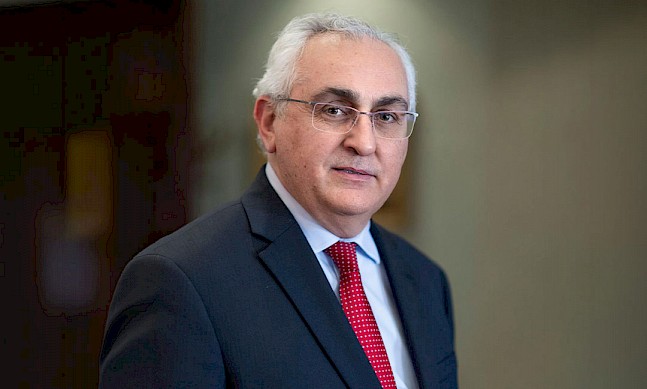








Appointed Chairman of Finance Malta in 2022, George Vella leads the public-private partnership that promotes Malta as an international financial services centre. Here, he explains why Malta is a UK-aligned jurisdiction that remains firmly within Europe.
Q: How has your vision for Finance Malta evolved?
Initially, it was mostly about acquainting myself with the landscape – a landscape that was changing. At the centre of that was finding a strong way to collaborate with the two other main bodies in the country, which we did willingly. The first is what we call MFSAC, which is the strategy-setting body with representation from government authorities as well as operators and practitioners in the market. Then, of course, there is the MFSA, which is the regulator.
What I have tried to influence most is ensuring that we welcome all initiatives happening on all sides with open arms and that we are as supportive as we can possibly be.
Q: How do Malta’s financial services bodies work together?
You cannot showcase Malta as a robust, serious, diligent and innovative jurisdiction without being in strong collaboration with the regulator.
If I had to identify what has taken most of my time and what represents my biggest hope, it is this: that when people look at the industry from outside, they understand that there are three different bodies, each with its own function and its own role, and yet these bodies work very well together. We have been praised for this on a number of occasions.
Q: How should UK investors perceive Malta?
I would love the UK business community to think of Malta as an offshore extension of the UK. Most of the practitioners who are at their prime today are UK-trained. Most of the governance structures we have are closely modelled on those of the UK, and if there is one legacy we are very proud of from Malta’s time as a British colony, it is that we have tried our very best to take what is distinctive in UK governance and replicate it here. The added benefit is that we are still in Europe. So if there is one thing I would love people to believe, it is this: Malta is a UK-aligned jurisdiction that remains firmly within Europe.
Q: What makes Malta’s legal framework distinctive?
Our inspiration does not start and stop with the UK. We have been shaped by multiple legal traditions, and our lawyers have always been very capable of mixing and matching to arrive at solutions not necessarily available in other jurisdictions.
A clear example of this is our maritime register and, increasingly, our aviation sector. Our courts of law are recognised internationally for their effectiveness in protecting the rights of vessel owners. In aviation, when people compare our framework to that of Luxembourg or Ireland, it is not found to be lacking in any of the flexibilities those jurisdictions offer.
Q: Which areas hold the most promise for Malta?
Two areas in particular are now looking very promising: family offices and fintech. Fintech represents a very clear marriage between the strengths we have built in gaming and those in financial services, supported by strong regulatory leadership.
On family offices, we are speaking to Americans who tell us our jurisdictional framework is very close to what they are used to in Delaware. Malta’s sustained growth over the last 10 to 15 years continues to attract attention, because wealthy individuals and family offices always want to be associated with jurisdictions that are moving forward.
“In my view, fintech alone is going to double the size of financial services in Malta and, by 2035, will on its own generate around 10% of our economy.”Post This
Q: How is Malta building on the sector’s strong growth?
This growth is testament to Malta’s shift towards a knowledge-based economy. Other jurisdictions are increasingly coming to Malta to learn from our experiences.
The same dynamic is now playing out in fintech. Seven or eight years ago, Malta had already set its sights very clearly on that sector, invested significantly in the required skills and attracted foreign talent who wanted to be part of the ecosystem. Today, other jurisdictions use Malta as a benchmark. This has also happened in gaming in earlier years. Despite our small size, there are niche areas in which we have managed to achieve genuine international leadership.
Q: What can Malta offer UK firms seeking growth in the EU?
Malta offers, first and foremost, political stability. We have a two-party system that closely resembles the one in the UK. Historically, governments have alternated roughly every 15 to 25 years, and irrespective of who is in power, there has always been an unwritten rule – one we hold very dearly – that the sector is allowed to lead the way, with government promising to be as supportive as possible.
We also have a 60-year growth record since independence, averaging 6% per annum. That is not a 10- or 15-year cycle – it is six decades of consistent performance, and we are committed to continuing it.
Q: How central is innovation to Malta’s future?
Innovation in regulation is equally central. The MFSA conference I attended brought in leading minds in fintech to discuss decentralised finance, tokenisation and what lies ahead. We are not claiming to be smarter than others – we are simply committed to ensuring that Malta continues to contribute meaningfully to the world’s understanding of where finance is heading.
A Mastercard and Junior Achievement-supported programme launched in October: the gamification of financial literacy. These are the kinds of initiatives that keep the sector energised.
Q: How is fintech strengthening Malta’s appeal?
Malta’s early leadership in fintech, anchored by our VFA Act launched seven or eight years ago, sent a very clear message to the market: if you are in this sector for the long term, robust and strong regulation is in your interest.
Those who chose the regulated route and built their roots in Malta over the past seven or eight years are now seeing an ecosystem forming around them – which is exactly what they wanted. This mirrors what happened in gaming. I believe the same is now happening in fintech. In my view, fintech alone is going to double the size of financial services in Malta and by 2035 will on its own generate around 10% of our economy.
Q: What do you hope to accomplish over the next decade?
It is not about me personally. My tenure here may be long or short, but the idea is to ensure that everyone capable of making an impact is contributing to a collective purpose. And it is genuinely a purpose, not just a vision.
Something that our foreign members remind us of regularly is that Malta’s size is itself a competitive advantage. The accessibility to C-suite executives, to decision-makers, to high-level support – that level of interconnectedness is rare and genuinely meaningful, particularly for smaller companies looking to scale within Europe. That is where our strength lies, and that is where Finance Malta will continue to focus its efforts and support.