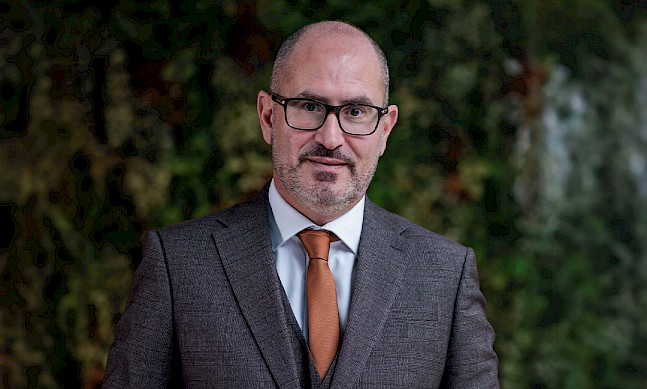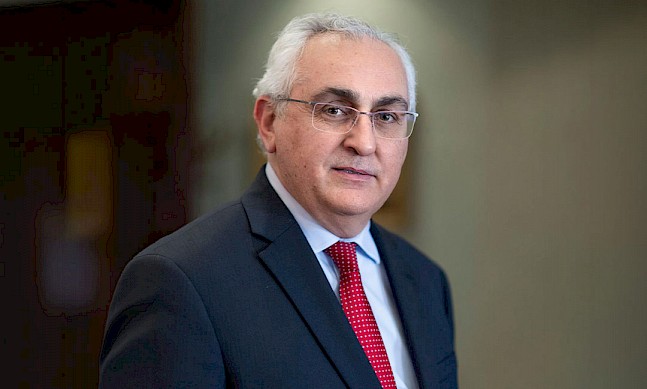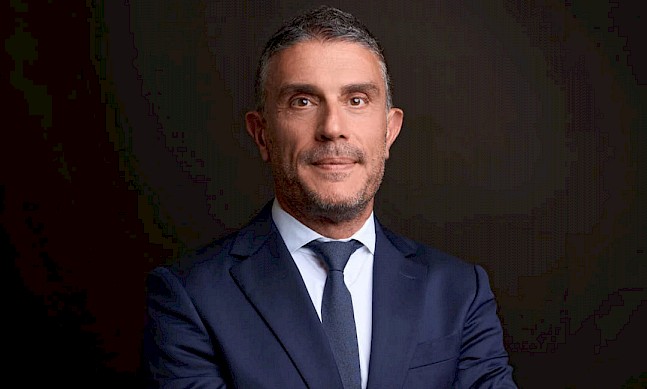








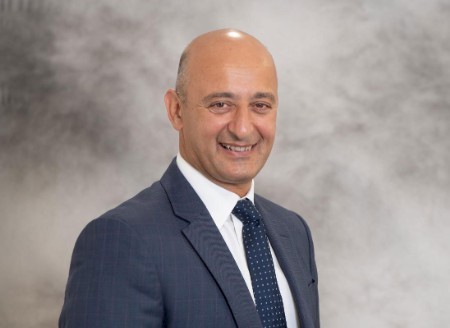
Appointed CEO of Bank of Valletta in September 2022 after four decades at the institution, Kenneth Farrugia leads Malta’s largest bank, which holds around half of the domestic market. Here, he explains why investing in the bank is investing in the country.
Q: How has your vision of the bank evolved?
I have been at the bank for just over four decades. I have seen the evolution of the bank across those decades, and I think the transformation is very much driven by technology. It is all about personalisation today, and technology can go a long way to facilitate that.
In these last four years, we have ramped up investment in technology and in personalisation, ensuring that our foundational technology platform is adaptable to meet the changing requirements of our customers. We are using that platform to engage with customers in a more personalised manner through customer relationship management systems, data analytics and, increasingly, deploying that information to pre-empt customer needs.
Q: In what direction are you taking the bank?
We are a very domestic bank. Malta is growing at an above-average economic rate, there are still significant opportunities in the market and we remain firmly anchored in serving our customers while acting as a catalyst for economic growth.
We have a 50% market share in the country, which means the economy is important for the bank but the bank is equally important for the economy. Our market capitalisation today stands at €1.5 billion and our balance sheet at €17.5 billion, both of which have grown markedly in these last four years, reflecting the dedication of our team.
Q: How should UK investors view Malta?
When you look at Malta, what stands out is the breadth of sectors contributing to growth. We have financial services, which I remember contributing around 3% to GDP in my earlier years and which now exceeds 10%.
When it comes to the UK specifically, Malta is not new to British investors or visitors. Our legal and regulatory framework is very similar to what you find in the UK, which means UK businesses can set up here with a clear understanding of how they will be regulated and what legal frameworks will bind them. Language, of course, helps enormously. Malta is a natural consideration for British businesses looking to access the European single market.
Q: What sets Bank of Valletta’s competitive position apart?
Our size plays to our advantage, but it is important to contextualise it. Malta has a GDP of around €24 billion, and with a balance sheet of €17.5 billion, we are a sizeable bank here but a small one in European terms. That scale, however, is itself an advantage: it creates an environment where things get done.
Our market position rests on two pillars: we are very strong on the deposits side and very strong on the lending side. We now hold over €14 billion in deposits, and that base continues to grow at a strong rate, which reflects the trust that both personal and business customers, Maltese and foreign alike, place in the bank.
“Investing in the bank is investing in the country: because of our market position, capital deployed into Bank of Valletta flows directly into the projects and businesses we finance across the economy.”Post This
Q: What is sustaining your strong financial performance?
The overarching answer is the economic growth of the country. Europe is running at around 1.25% growth today, while Malta has been running at 4.5% to 5%, and is now settling at around 4%, with forecasts for this year in the region of 4.5%. That economic momentum is a direct catalyst for our own growth as a bank.
Our balance sheet is very strong and our headroom to finance good projects gives comfort to large investors developing factories, warehouses or hotels. On the deposit side, the strength of our franchise continues to attract liquidity, and that feeds directly through to treasury.
Q: What would you highlight for UK-based investors?
The story behind Bank of Valletta is really the story of Malta – where the country is today and where it is heading strategically. And crucially, investing in the bank is investing in the country: because of our market position, capital deployed into Bank of Valletta flows directly into the projects and businesses we finance across the economy.
The institutional investor response was very strong. We received around €777 million in orders within a few hours. That level of oversubscription is a clear vote of confidence.
Q: What does your inclusive banking award demonstrate?
We are a purpose-led organisation. Our mission is to support our customers through the different stages of their lifecycle, but as a domestic bank deriving our profitability from the local economy, we feel a genuine obligation to give back to the community. In 2024, we established a foundation that consolidated all our community-led initiatives under an independent structure. Its funding is tied to a percentage of our total gross revenue.
It is pleasing to be recognised, but recognition is not the purpose. The purpose is to support those who need it most. We recently gave all staff members a day of leave to dedicate to supporting NGOs and foundations. The take-up has been excellent.
Q: How does innovation shape your competitive position?
Innovation needs to be embedded in the mindset of the organisation, and it needs to be planned innovation – not reactive, but sequenced.
We approach this from two directions. The first is inside out: we run an internal programme called EPIC – Empowering Pioneers in Innovation and Change – through which we mobilise our own people and invite them to develop innovation ideas. The second is outside in: we are actively engaging with technology firms and startups that have compelling digital propositions. Innovation is not a project. It is an ongoing programme that must be continuously refreshed.
Q: What is your message to investors considering Malta?
When you establish an operation in a jurisdiction, you are not doing it on the back of a single year’s economic performance. You are there for five, ten, fifteen years, and what matters is the sustainability of that growth – the political stability, the economic ecosystem, the banking infrastructure, the utilities, the regulatory environment. Overall, Malta presents a compelling proposition.
Malta also functions as an excellent testbed for new businesses. In a small jurisdiction, you can pilot a proposition, refine it and then scale it internationally. For non-European operators, Malta offers access to both European and African markets from a single, well-regulated base.
Q: What are you proudest of at Bank of Valletta?
I am always driven by the mantra that you let others be the judge of your successes. I am not one to attribute the bank’s achievements to myself – I am the leader of the organisation, but it is the leadership team and every member of staff who make it happen.
We have worked hard to ensure that everyone understands why change and innovation are not threats but drivers of success. The numbers reflect that, and I am genuinely pleased. The challenge now is to keep pushing – moving from good to great and from great to exceptional. We are heading in the right direction. I am confident in the future.