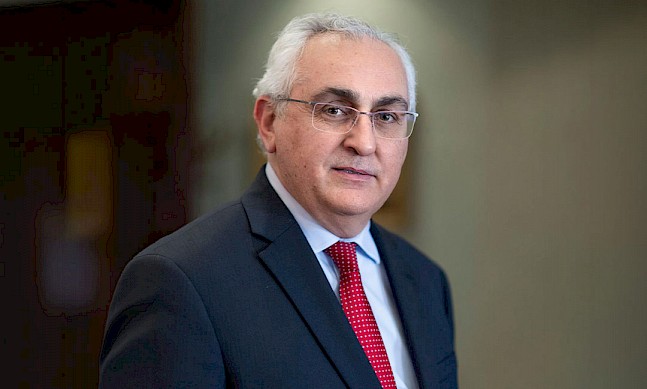








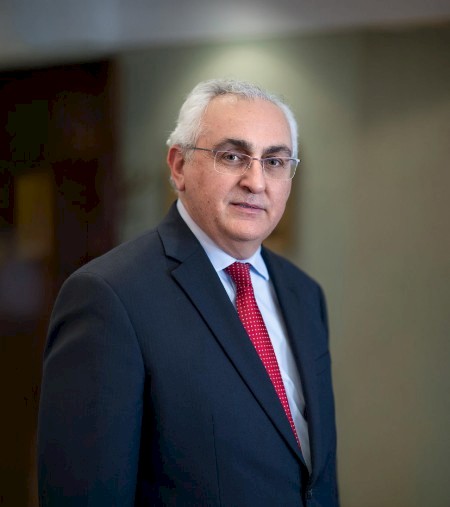
Appointed Governor of the Central Bank of Malta in January 2026 after more than four decades at the institution, Alexander Demarco also sits on the ECB Governing Council. Here, he explains how the Bank is modernising Malta’s payments landscape and supporting the next phase of the country’s economic growth.
Q: What is your vision for the Bank?
Very recently, in September, the Bank published its strategic plan for the next four years. Our vision is to be a trusted, credible, independent and forward-looking institution to serve Malta well within the Eurosystem. The anchor of this institution remains our commitment to price stability, financial stability, independence from fiscal policy and loyalty to the public interest.
We need to adapt ourselves to a changing environment. Risks and technologies are evolving, and we therefore need to maintain the effectiveness of our institution by acting through stronger evidence-based analysis, building resilient systems and work processes and adopting innovation in a responsible manner.
Q: What are the main priorities of the strategic plan?
We have basically identified eight strategic pillars in the plan that translate our vision into areas of sustained action. These pillars are also all essential to safeguard our institutional independence.
Perhaps our main priority for these coming four years will concern the payments system, with the expected launch of the digital euro in 2029, introduction of SEPA Instant agency services of the CBM, core payments system replacement, expanding TARGET services to settle DLT-based wholesale payments and securities transactions, as well as directing the private sector through regulation to provide interoperable payment services both at the national and pan-European level.
Q: How would you like the Bank to be perceived internationally?
The Central Bank of Malta is a credible, trusted and forward-looking institution, recognised for the quality of its analysis, the professionalism of its staff and the integrity with which it discharges its mandate, and indeed already enjoys a high reputation. We approach our responsibilities with a European outlook and with the ambition to contribute meaningfully to the policy debates that shape our common future.
Its small size makes the Bank highly agile and committed to delivering work of the highest standard both in Malta and at the Eurosystem level.
Q: How are you strengthening the Bank’s institutional credibility?
We are embedding further the principles of transparency and robust internal governance into all our operations, in line with the Eurosystem accounting rules and financial disclosures. Over the years we have also built a very strong internal audit function that ensures strong governance across all business areas within the Bank. We have also recently established an anti-financial crime department to ensure a robust screening process of the transactions of the Bank and all the service providers who support the Bank in its operations.
Q: What is the Bank’s role within the European financial architecture?
The Bank is responsible for a wide range of functions. It has, under the Central Bank of Malta Act, the primary objective of maintaining price stability and is tasked with ensuring the stability of Malta’s financial system. As a member of the Eurosystem, it contributes to the maintenance of price stability in the euro area through its participation in the formulation of the single monetary policy. Within the European financial architecture, it then implements in Malta the monetary-policy decisions of the ECB Governing Council.
Within the Eurosystem it operates TARGET2, settling payments in real time between banks and non-bank financial institutions with central bank money. The CBM also operates the T2S platform for securities settlement.
Q: What will sustain Malta’s economic momentum?
Malta’s growth performance remains strong, but the nature of growth will become increasingly important. With the labour market already tight, we cannot expect future expansion to come mainly from having more people working in the economy. The key challenge is therefore to raise the productive capacity of the economy.
Malta needs continued investment in technology, digitalisation, automation and artificial intelligence, both by businesses and in the public sector. A more productive economy requires a workforce with the right skills. The objective should be a model where economic expansion increasingly comes from productivity, investment, skills and innovation.
“Its small size makes the bank highly agile and committed to delivering work of the highest standard, both in Malta and at the Eurosystem level.”Post This
Q: Where are the greatest opportunities for UK–Malta cooperation?
The sectors underpinning the Malta–UK relationship are already among the more high-value-added parts of our economy. The opportunity now is to use these strong foundations to deepen cooperation in ways that support Malta’s transition towards a more productive and innovation-driven economy.
Financial services are probably the clearest example. Malta can offer the EU market, an established financial services ecosystem and an agile business environment, while the UK brings deep pools of capital, expertise and one of the world’s most developed financial technology sectors. There is scope for much greater cooperation in fintech, digital payments, sustainable finance, AI and other areas where UK expertise and investment can complement Malta’s position within the EU.
The objective should be to build on the relationship we already have and make it more technology-intensive, knowledge-based and higher-value.
Q: How will the digital euro influence innovation in Malta?
Malta is approaching the digital euro as part of a wider transformation of its payments ecosystem rather than as a standalone initiative.
The Bank has decided to develop further the domestic payments infrastructure through MTEUROPAY, by introducing instant-payment functionality next year. Taken together with the implementation of the EU Instant Payments Regulation, this should progressively move the Maltese market towards payments that are available on a 24/7/365 basis and settled within seconds.
If this transition is managed well, it should create opportunities not only for established banks but also for payment institutions, fintech companies, merchants and technology providers to develop new services and business models to the benefit of consumers.
Q: What is your message to UK investors?
My message to international investors, including those in the UK, is that Malta remains an attractive base for international business. It offers stability, access to the European market and a flexible business environment.
Our EU and euro-area membership, English-speaking workforce and established financial and legal infrastructure are important parts of our ability to offer an environment where business can flourish. We are committed to maintaining and strengthening financial supervision and regulatory credibility.
For UK investors in particular, Malta also benefits from long-standing commercial and cultural links, a shared language and established expertise in sectors such as financial services and insurance.
Q: What legacy would you like to establish as Governor?
A major objective that I would like to realise over the coming years is that of creating a more efficient, resilient, interoperable, faster and cheaper payment system in Malta because payment systems are vital for a well-functioning economy, especially one that is highly open to international business, like Malta. Our vision is that of achieving this objective through collaboration with the private sector.
By first strengthening our national payment infrastructure, as a jurisdiction we could also become more integrated in cross-border payments through bilateral and multilateral links developed by the Eurosystem.