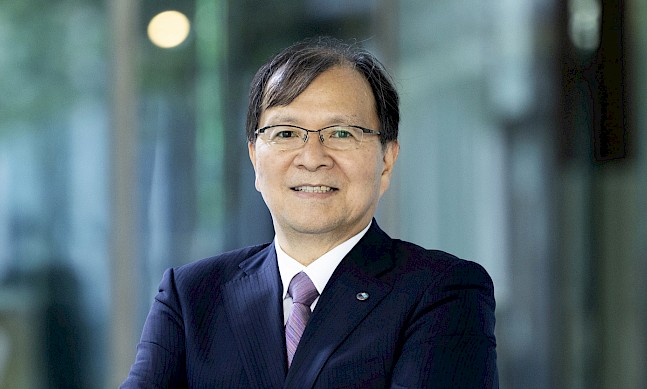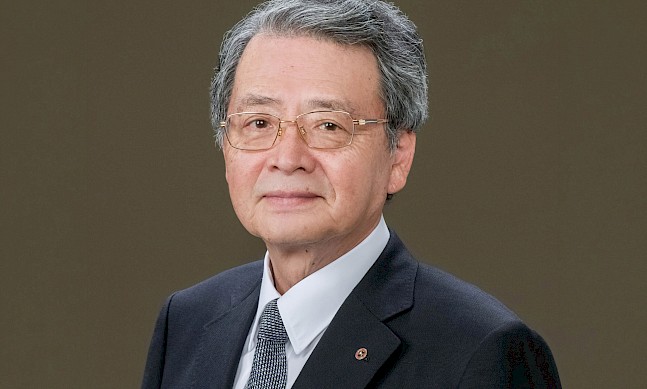








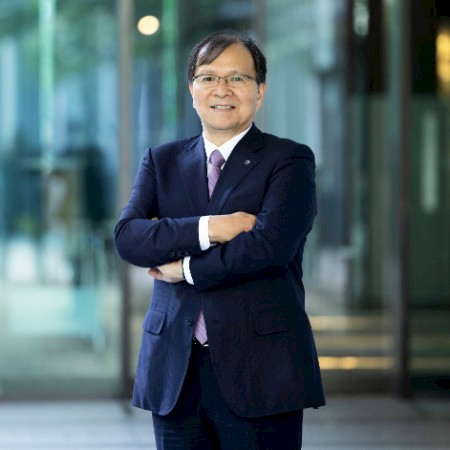
Japan’s medical research agency has opened a new global hub in Boston, bringing Japanese expertise to the heart of the thriving U.S. ecosystem of investors, startups, and pharmaceutical companies. The new office is designed to help Japanese startups gain access to U.S. funding, driving greater global competitiveness in drug development. The move comes as Japan works to turn its strengths in basic research into treatments, a shift underscored by the recent approval of two therapies based on induced pluripotent stem (iPS) cells. Leading that effort is Dr. Hitoshi Nakagama, President of the Japan Agency for Medical Research and Development (AMED). In this interview, Dr. Nakagama discusses U.S.-Japan research collaboration, AI-driven drug discovery, and Japan’s clinical trial environment.
“Our new global hub in Boston places us at the center of one of the most dynamic life sciences clusters in the world.”Post This
Q: How has your experience shaped your vision for AMED?
My career in oncology spans more than 40 years, with 30 of those at the National Cancer Center. My expertise is rooted in basic research, particularly carcinogenesis and oncogenic pathways. Over time, however, my focus shifted toward clinical application and social implementation, which I came to see as equally important as the science itself. How to bring academic discoveries into the clinic and ultimately into society became a central concern, even at the National Cancer Center.
Cancer R&D is one of the most advanced fields in medicine, and that experience gave me a strong foundation for understanding how to move discoveries from the laboratory to practical use. What I found when I joined AMED is that the underlying principles are broadly transferable. Whether the disease is neurological, infectious, or cardiovascular, the logic of drug development and the challenge of translating research into social benefit are remarkably consistent. The targets differ, of course, but the biological foundations are shared.
At the same time, I have found it genuinely stimulating to engage with such a diverse portfolio. AMED covers areas from oncology and neurology to infectious disease, regenerative medicine, and medical devices. That breadth is intellectually rewarding, and it reinforces for me that the priority is always the same: ensuring that promising science reaches the people who need it.
Q: How does your new Boston hub bolster AMED’s U.S. presence?
The United States is home to the world's most advanced biomedical ecosystem, and that is precisely why our international presence there matters so much. Our Washington office keeps us connected to the National Institutes of Health (NIH) and to the policy environment, while our new global hub in Boston places us at the center of one of the most dynamic life sciences clusters in the world.
Boston has changed enormously since I spent time there as a postdoctoral researcher more than 30 years ago. The density of venture capital, startups, and global pharmaceutical companies in the area today is extraordinary. Approximately 240 Japanese companies already operate in Massachusetts. Establishing a hub in that environment is about more than physical proximity. It is about building relationships, making Japan's research strengths visible to global investors, and creating pathways for the kind of later-stage funding that our domestic venture capital market cannot yet fully provide.
Conducting global clinical trials requires substantial capital. Japanese venture capital does not yet have the capacity to support that consistently, so attracting global investors and funds through our Boston presence is a strategic priority.
The U.S.-Japan Cooperative Medical Sciences Program, which has supported collaboration between our two countries for more than 60 years, provides another important foundation for our work with the NIH. That program has historically focused on emerging infectious diseases, but it connects across cancer, nutritional disorders, and a range of other areas where our two countries share research interests. The relationship between our researchers and their American counterparts is deep and genuinely collaborative, and AMED's role is to strengthen the translational and implementation dimension of that partnership, the part that moves discoveries from the laboratory into the clinic and the market.
Q: What is the significance of Japan’s recent approval of two iPS cell-based regenerative medical products?
This is a significant moment. Japan has long been recognized for the strength of its basic research in iPS cell technology, and these approvals demonstrate that we are now also capable of translating that foundational science into licensed, clinical-stage therapies. The products address ischemic cardiomyopathy and Parkinson's disease, and while they carry conditional and time-limited approval status, which means further evidence must be gathered post-marketing, the fact that they have reached this stage is genuinely historic.
My hope is that these therapies will eventually be distributed globally. Beyond iPS, I also see significant potential in other advanced modalities, including targeted therapies, antibody-drug conjugates, radioisotope therapeutics, and gene therapy. In gene therapy in particular, I believe Japan has real strengths, though we must continue to accumulate the clinical evidence and develop the vectors and delivery mechanisms that will make these approaches more widely applicable.
The lesson from iPS is that sustained investment in basic science, combined with a clear commitment to translational infrastructure, can produce world-leading results. That is the model we want to replicate across other priority areas.
Q: How are AI and digital transformation shaping your approach to R&D?
AI is a powerful accelerator across every stage of the drug development process, from molecular design and target identification through to clinical trial design and the detection of adverse effects. Companies in the United States are already deploying AI extensively in these areas, and Japan must be equally ambitious.
What I believe differentiates Japan's opportunity is the quality and breadth of our data assets. Japan has strong biobank systems, longitudinal cohort data, and rich clinical records. The challenge is that these datasets are not yet seamlessly connected. Japan's government is investing in efforts to link them, and if that is achieved, we will have access to something approaching a true life-course dataset, encompassing a patient's health journey from early life through to disease onset and beyond.
That kind of longitudinal, integrated data is where AI becomes the most powerful. It allows us to identify disease trajectories before symptoms emerge, determine optimal intervention timing, and discover targets that are specific to early-stage disease rather than advanced pathology. In cancer, for example, the molecular target in a high-risk pre-cancerous state may be entirely different from the target in established disease. AI, combined with rich longitudinal data, is what makes that level of precision possible.
One of AMED's eight integrated project categories is dedicated specifically to data-driven research, and this reflects how central we believe this capability is to the future of medical R&D. There is also clear scope for collaboration with the United States in this area, particularly as both countries grapple with emerging challenges such as obesity-related liver disease, which is growing in both populations.
Q: What is your message to investors about the strength of Japan’s life sciences sector?
Japan has genuine, established strengths in biomedical research, in iPS cell technology, in oncology, in neurological disorders, and increasingly in gene therapy and other advanced modalities. What has historically been the gap, the translational and implementation infrastructure needed to move those discoveries into the clinic and the market, is precisely what AMED exists to address, and it is an area where we are investing heavily.
Prime Minister Takaichi has identified the medical field as one of Japan's strategic priorities, and that political commitment is real. The establishment of our Boston global hub, the strengthening of our clinical trial networks, the introduction of industry collaboration mechanisms like AND-E, and the push to link Japan's data assets into a coherent longitudinal resource are all part of a deliberate and coordinated effort.
Japan's clinical trial environment is also worth highlighting. We are working to strengthen the national network of clinical trial sites, and there is a genuine opportunity for international partners, including those from the United States, to conduct trials in Japan, particularly in fields such as oncology where Japanese institutions have deep expertise.
For investors and partners, the combination of strong basic science, improving translational infrastructure, government backing, and an open, collaborative posture toward international engagement makes this a compelling moment. We are ready to engage, and we welcome the partnership.