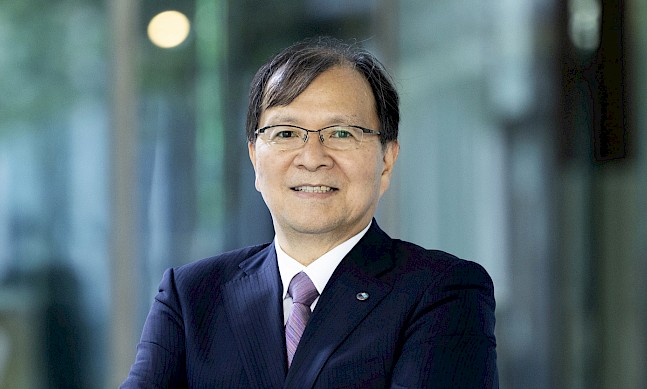







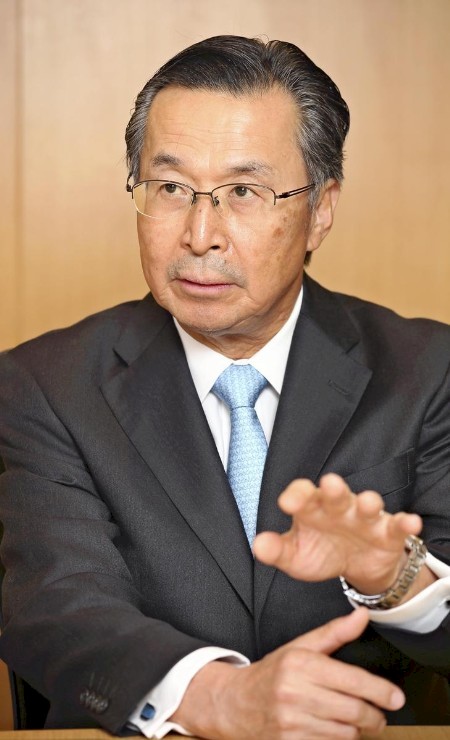
Japan’s companies are showing a greater appetite for investment and risk, and are increasingly open to M&A and partnerships with foreign firms. As the country looks abroad for growth, it aims to build a new export model while attracting overseas companies, capital, and talent. One of the figures leading that effort is Norihiko Ishiguro, Chairman and CEO of the Japan External Trade Organization (JETRO). In this interview, Chairman Ishiguro sets out his ambitions for Japanese exports, how JETRO helps connect startups with global capital, and opportunities for U.S. investors in semiconductors and life sciences.
“The economy is growing again in a real and sustained sense. The key to that growth going forward is clear: earn more overseas, and incorporate the energy, capital, companies, and talent that exist overseas into Japan.”Post This
Q: Which priorities have most defined your tenure as Chairman and CEO?
To understand where we are heading, it helps to understand the backdrop against which I assumed office. When I took up the role in 2023, Japan was at a genuine inflection point. Following the collapse of the bubble economy in the early 1990s, and the financial crisis of the late 1990s, the economy did begin to recover in the early 2000s, but that recovery was painfully slow. Wages stagnated, the birth rate declined, the population aged, and consumption remained weak. It is fair to say that Japan endured 30 lost years.
Around 2023, the environment began to shift. Prices started to rise, and a consensus formed within the business community that wages had to increase for the economy to grow. Deflation was finally coming to an end, and with it came the first signs of real, sustained growth.
The second backdrop is more structural in nature. Japan's population stood at just over 120 million in 2020, but projections place it at 87 million by 2070 and as low as 60 million by 2100. That demographic trajectory defines the medium- to long-term challenge: Japan must earn more overseas and find ways to incorporate overseas growth, capital, and talent into its domestic economy.
Against those two backdrops, I have identified two strategic priorities. The first is building a virtuous cycle of innovation and demand. When innovation is generated on the supply side, personal consumption and capital investment rise on the demand side. The challenge is how to strengthen Japan's innovation ecosystem by connecting it to the global ecosystem—attracting foreign companies, overseas venture capitalists and accelerators, and highly skilled international talent.
The second priority is building a new export structure. Japan's large corporations have, over the decades, shifted their production bases overseas, so the traditional model of exporting from within Japan no longer functions as it once did. What we want to do now is create a new export structure centered on Japan's soft power: agricultural, forestry, and fishery products; anime, manga, and games; and the fine products of small and medium-sized enterprises and mid-tier companies. These represent Japan's next generation of global competitiveness.
Q: How do you define JETRO’s role within Japan's broader trade and investment landscape?
The network is what makes seamless promotion possible. Our domestic offices can identify and support small and medium-sized enterprises in local areas across Japan—food producers, agricultural businesses, niche manufacturers—and our overseas offices can then take those same companies and promote them in international markets. The connectivity between the two is what distinguishes JETRO.
That connectivity operates in both directions. We also use our overseas offices to identify foreign companies with an interest in investing in Japan, and our domestic offices then support those companies once they arrive, helping them establish themselves in the local environment. We are simultaneously promoting Japanese businesses outward and welcoming foreign investment inward.
Q: Which sectors and opportunities would you highlight for U.S.-based investors?
The Japanese government's growth strategy has identified 17 strategic areas, with a combined public and private investment target of ¥370 trillion by FY2040. Within that framework, there are several sectors I would particularly highlight.
The first is semiconductors and microelectronics. Given the scale of global AI demand, I expect semiconductor-related investment to grow considerably from here. Japan already hosts major players: TSMC and Micron both have operations here, and Rapidus has now launched its own project. Beyond that, Japan has historically maintained very strong competitive positions in semiconductor manufacturing equipment—Tokyo Electron is a representative example—and in semiconductor materials and components. These companies together form a powerful ecosystem, and we very much want overseas companies to join and deepen their participation in it.
The second area is life sciences. We are actively connecting Japanese startups in this field with some of the world's leading institutions, including the Mayo Clinic Platform in the United States, through our accelerator programs.
The third is green transformation, or GX. Japanese industry has long had deep expertise in clean technology, recycling, and zero-emissions processes, and this is an area where we are actively seeking overseas corporate investment and collaboration.
Q: How does JETRO drive innovation and technology adoption?
Through our acceleration programs, we are connecting Japanese startups with venture capitalists and accelerators not only in Silicon Valley, but across Boston, New York, Texas, and beyond. We also maintain links into the EU and Singapore, giving Japanese companies access to a genuinely global innovation network.
But we are not simply sending Japanese startups abroad. We are also actively attracting overseas accelerators and VCs to establish a presence in Japan. In recent years, firms including Techstars and Alchemist have set up offices in Tokyo. That is not coincidental—it reflects a structural change in Japan's startup landscape.
Twenty years ago, Japan's most talented graduates almost universally went to large corporations. That is no longer the case. Today, highly capable young people are founding their own companies, in some cases while still undergraduates. Deep tech activity is increasing, and the quality and quantity of Japanese startups have grown considerably as a result. Overseas accelerators and VCs have taken notice.
There is a parallel cultural shift within Japan's established corporate sector as well. Two decades ago, Japanese companies operated with a strong "not invented here" mentality—developing everything internally and avoiding outside collaboration. That has changed fundamentally. Japanese businesses are now extremely enthusiastic about open innovation, M&A, and partnerships with foreign companies and startups. Labor mobility has also increased: the old models of lifetime employment and seniority-based pay have broken down, replaced by merit-based systems. People move between companies, and talent follows opportunity.
We are channeling all of this through two specific platforms. J-Bridge facilitates collaboration between Japanese and overseas companies. J-StarX deepens connectivity between Japanese startups and international accelerators and VCs.
In terms of which sectors are attracting startup activity, fintech and AI are prominent, and Japan's particular strength in physical AI is worth highlighting. Manufacturing industries here hold vast amounts of operational data, and applying AI to that data base is an area where Japan has genuine competitive potential. Clean tech is another strong focus: Japanese businesses have long-standing expertise in recycling technology and zero-emissions processes, and that foundation is generating high-quality startup activity.
Q: What is your message to U.S. investors about why now is the right time to invest in Japan?
There are several reasons why the timing is compelling. First, deflation has ended. After 30 years, Japanese companies are no longer able to operate in a comfort zone of stagnant prices and modest ambitions. Management is taking a more aggressive stance, appetite for capital expenditure has grown considerably, and risk-taking is being embraced rather than avoided.
Second, the government is actively supporting that shift. The Takaichi administration has identified 17 strategic sectors and is accelerating capital investment promotion across all of them.
Third, Japanese companies are genuinely open to collaboration in a way they have not been in the past. Open innovation and M&A are now enthusiastically pursued. Foreign companies will find willing partners, not closed doors.
Fourth, the startup ecosystem has matured in both quality and quantity, and our connectivity with overseas accelerators and VCs through J-StarX is deeper than it has ever been.
Finally, labor mobility has increased to the point where overseas companies coming to Japan will have no difficulty recruiting. The workforce is available, it is talented, and it is increasingly flexible.
Q: What legacy do you hope to leave?
Since the start of my career, my ambition—my mission—has been to pass on a growing Japanese economy to my children and my grandchildren.
The 1980s were an era of trade friction, and there was much talk of "Japan as Number One." Then came the bubble collapse, the financial crisis and the long years of stagnation. When I was working in New York in the mid-1990s, economists and analysts on Wall Street would ask me constantly: is the Japanese economy all right? Are the financial institutions sound? For 30 years after that, my work was to help build growth strategies for Japan, and for 30 years, little seemed to take hold.
What gives me the deepest sense of purpose now is that Japan has finally broken free from deflation. The economy is growing again in a real and sustained sense. The key to that growth going forward is clear: earn more overseas, and incorporate the energy, capital, companies, and talent that exist overseas into Japan. That is JETRO's mission, and it is the work to which I feel genuinely honored to dedicate this chapter of my career.