






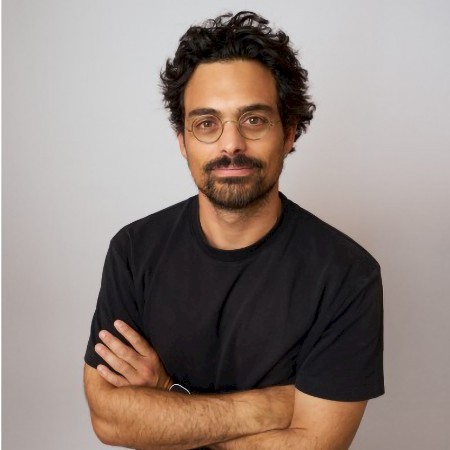
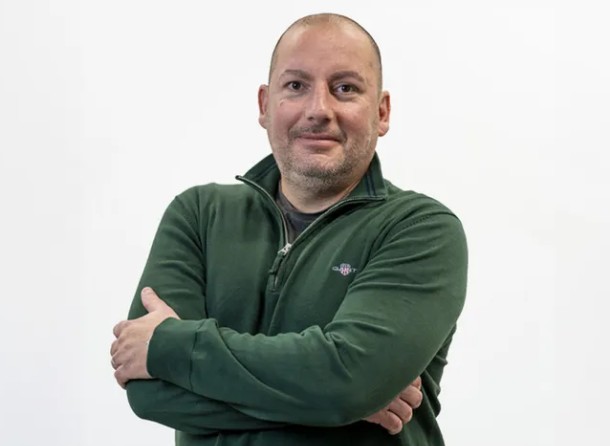
 Benji Borg, Director, 9H, and CEO, H6
Founded in a garage in 2012, 9H has grown into one of Malta’s leading creative, AI and technology groups, with offices in Malta and Saudi Arabia under publicly listed parent company 9H Capital. Here, CEO Timothy Buttigieg and co-founder Benji Borg explain how the group is combining creativity, technology and AI to deliver value for clients across Europe and the Middle East.
Q: Benji, how has your vision evolved since 2012?
From the very first day we started the business from a garage, the vision has always been to be at the forefront of the service we provide to our clients. We always wanted to be adding value, but that value changes quite a bit over time, especially as technology keeps evolving. Throughout the years we have had to adapt and readapt, continuously finding new ways to deliver value. That has never changed, and every merger and expansion we have undertaken has kept that principle at the forefront.
Q: Timothy, which strategic decisions are shaping 9H today?
9H is a services business. We do not have a product as such. In this space, which is moving very quickly and changing with AI, the business model is shifting away from quantifying a project in hours towards something value-based. We have made that pivot, and we are now firmly focused on doing more with less. Rather than pricing on how long something takes to produce, we price on the value we are proposing. This shapes everything we do, both in the creative and the tech space.
We are a large company with 70-plus people. From the outside, you might think we are competing with boutique firms of five or six, but we are not. We offer depth of expertise in specific areas in which much larger, global operators work.
Q: How do you build trust with clients and partners?
We are in a fortunate position, and that is the result of over a decade of work cementing ourselves with the largest organisations in Malta. Technology aside, trust is built between individuals. We still invest heavily in the one-to-one: meeting clients, understanding what they need, sitting in the boardroom, grasping the broader scope of where we can genuinely help.
Something we launched in the past six months takes that further. Rather than waiting for a client to come to us with a problem, we conduct the research ourselves. We are effectively becoming an extension of their own business.
Q: What differentiates 9H from its competitors?
One of the key differentiators when providing services in Saudi Arabia and the broader Middle East is that we understand the culture. There is a bond we have built, including with our team in Egypt. We are able to adapt. We are doing business in their country, within their culture, and we have to find the best ways to adapt and deliver within that framework. The key differentiator for 9H is that we carry what you might call a European mindset while remaining genuinely adaptable to different cultures in order to produce the required output.
 Timothy Buttigieg, CEO, 9h
“The key differentiator for 9H is that we carry what you might call a European mindset while remaining genuinely adaptable to different cultures in order to produce the required output.”Post This
Q: What is driving 9H’s international growth?
The absorption of MPS was significant. Historically, 9H had hundreds of clients, but they were predominantly small to medium-sized businesses. With MPS came the larger clients, the major companies and established legacies within Malta. By bringing MPS on board, we can now offer those clients the additional services MPS did not provide, including technology, which allows us to add more value and contribute further to our expansion.
In terms of our Saudi Arabia activity, there was a major investment in our team in Egypt and that has been critical. When you sit down with Egyptians, Maltese and Saudis together, there is a remarkable sense of shared culture and familiarity. That is one of the most distinctive strengths we bring as a Maltese company: the ability to draw on our British heritage, our European identity and our Arab cultural affinities, and combine them.
Q: What opportunities do you see for UK companies?
Malta is ideal for UK companies precisely because of our command of the English language, our project management frameworks and our academic traditions, all of which are grounded in British methodologies. In terms of frameworks and professional processes, there is already a strong alignment. We have had opportunities to work with English agencies, and there have been other discussions at various points. It is a genuinely interesting market.
Q: How does H6 AI reflect your approach to innovation?
Applying AI simply for the sake of applying AI has no value. We wanted to address a genuinely painful problem, and finance is exactly that. It is the only department that starts and stops every month.
The beauty of what we have built is the ability to extract knowledge and lock it in. We use AI to discover patterns, but we use deterministic logic to lock those patterns in at runtime. When the process runs, it is a controlled, locked process. We are not taking a spray-and-pray approach to AI. It is a very targeted, niche application, and that is deliberate.
Q: Could this product be exported to the UK?
Absolutely. Malta is a wonderful place to launch a product because it is a small country with a great deal happening. You can speak to many different types of businesses very quickly. In a larger market, you might manage two meetings a day due to logistics alone. In Malta, you can meet five businesses in a single morning. So Malta is an ideal place to build and refine the product, but the ultimate goal is to export it. The UK is already a market we have begun to explore seriously, and there is clear scope for that.
Q: What does the next phase look like for 9H?
We are at the very start of a new phase. This is not about executing and delivering discrete projects. It is about embedding ourselves more deeply with our core clients, understanding their real business needs and developing solutions that address them. That is the journey for the next couple of years, and it will be driven by creative technology combined with AI.
The ultimate goal is to become a complete ecosystem of services. Clients’ needs vary widely, but fundamentally they all come down to the same question: how do we increase revenue or optimise the business? The answer to that can be delivered through creative technology or AI.
Q: What do UK businesses need to hear about Malta?
Malta’s size is its advantage. The agility that comes from being a small country means we can adapt fast. Even at the government level, if an initiative is identified, it is far easier and quicker to implement in Malta. Doing business with Malta is quicker, and there is more agility because we can steer the ship faster.
Maltese businesses also tend to be early adopters. Consumers here adopt quickly too. Malta is simply a great place to incubate.
Beyond all of that, there is a great deal of talent here, across healthcare, technology, design and many other sectors. For a country of our size, we punch well above our weight. We are small, but we always find solutions.