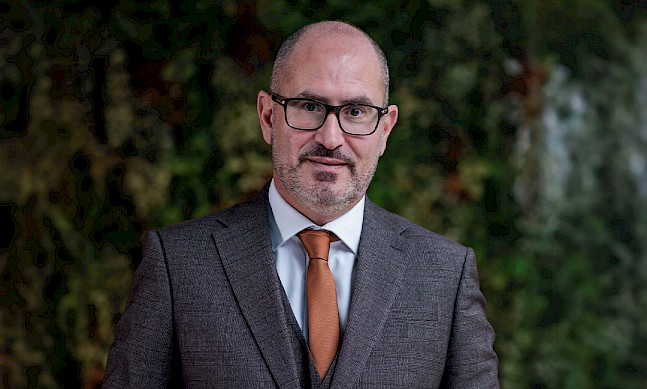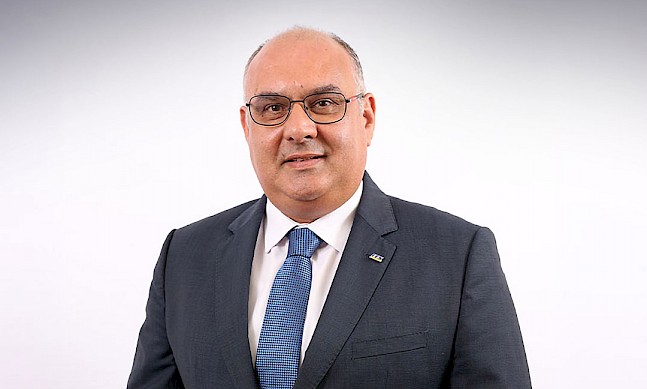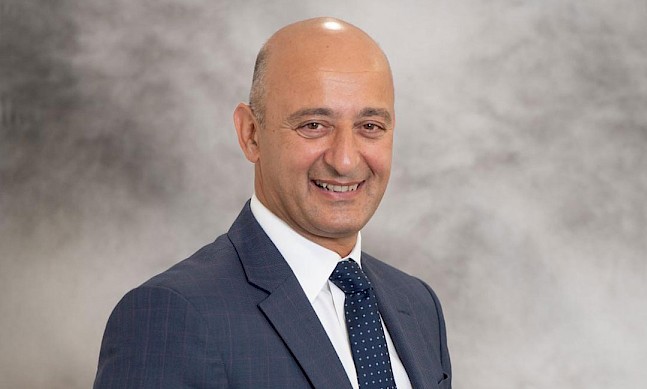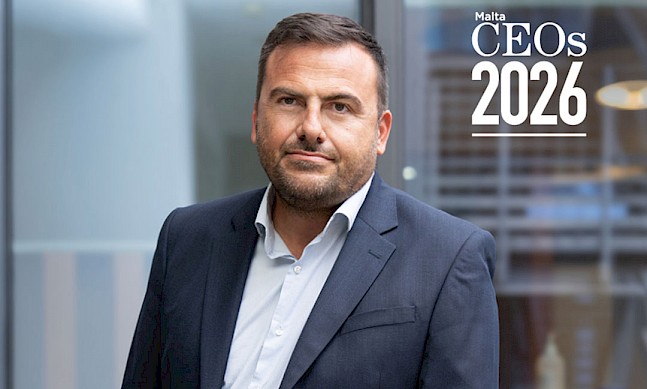







CEO of Malta Enterprise since September 2024, George Gregory brings more than 30 years of experience in accountancy and strategic advisory work to Malta’s economic development agency. Here, he explains how Malta is attracting higher-value investment and why the UK remains an especially important partner.
Q: What is your vision for Malta Enterprise?
My vision is for Malta Enterprise to be increasingly recognised not simply as an economic development agency, but as a strategic partner for businesses looking to establish, grow and innovate in Malta.
Going forward, Malta needs to focus not just on attracting more investment, but on attracting investment that creates greater long-term value for the country. We want to attract investment that creates high-value employment and careers, strengthens our knowledge and technology base, supports research and development and connects Maltese businesses to international markets.
Q: How does Malta Vision 2050 shape your approach?
The ambition is to look beyond the immediate economic cycle and think about the Malta we want to build over the coming decades: a more productive, innovative and sustainable economy with better-quality opportunities for our people. Malta Enterprise has an important role to play in turning that long-term vision into reality by helping attract investment that supports the country’s economic transformation and strengthens its competitiveness for the future.
Q: What should UK investors associate with Malta Enterprise?
I would like UK investors to associate Malta Enterprise with accessibility, credibility and solutions.
Investing in another country inevitably involves navigating unfamiliar systems, institutions and regulations. Malta Enterprise can play an important role in making that journey clearer and more efficient. We are not there simply to promote Malta; we are there to understand what an investor is trying to achieve and help identify the right opportunities, partners and support mechanisms.
Ultimately, reputation is built through delivery. The strongest endorsement of Malta Enterprise is an investor who has had a positive experience and is prepared to invest again or recommend Malta to others.
Q: Why does the semiconductor sector matter to Malta?
The semiconductor sector is strategically important to Malta because it combines significant economic activity with more than four decades of industrial and technological experience.
At the heart of this foundation is STMicroelectronics, which has been manufacturing in Malta since 1981. Its Malta site has grown into ST’s largest packaging and testing centre in Europe, producing advanced chip packages for applications including MEMS sensors and automotive technologies. The scale of the sector today is reflected in more than 4,000 full-time jobs and over €1.2 billion in annual exports. This demonstrates that semiconductors are not a niche activity, but an established part of Malta’s industrial economy and export base.
Q: How is Malta building on its semiconductor base?
The next stage is to build greater depth around that foundation. Through the Malta Semiconductor Competence Centre and initiatives such as ChipStart EU, Malta is connecting companies with specialist skills, professional design tools, technical expertise, European funding opportunities and international semiconductor networks.
Malta Enterprise is also developing partnerships that strengthen these connections. Collaboration with imec, for example, creates pathways for students and researchers from the University of Malta and MCAST to gain exposure to advanced semiconductor research facilities and expertise. This can reinforce Malta’s position within European semiconductor value chains while creating opportunities for higher-value activities and skilled employment.
“We want to attract companies that bring new capabilities, knowledge, technology and international networks to Malta.”Post This
Q: Where are you seeing investment demand beyond financial services?
Malta’s FDI performance reflects the continued confidence of international investors in the country. At the same time, we are seeing opportunities in a broader range of sectors. Technology and digital services, advanced manufacturing, life sciences, aviation, maritime activities and other knowledge-intensive activities all have potential for further development.
Our focus at Malta Enterprise is increasingly on diversification and value creation. We want to attract companies that bring new capabilities, knowledge, technology and international networks to Malta, while also creating opportunities for Maltese businesses to participate in their supply chains.
Q: What opportunities do you see in life sciences?
The UK has an exceptionally strong life sciences ecosystem, and Malta has an opportunity to position itself as a complementary partner rather than trying to replicate what the UK already does.
Malta has developed a specialised pharmaceutical and life sciences ecosystem built around advanced manufacturing, EU market access, a highly regulated operating environment and a skilled workforce.
The recent investment by Vantive, with a €150 million commitment to a new manufacturing and research facility focused on kidney-care medical devices and consumables, is a good example of the kind of higher-value activity we want to encourage. It is expected to create around 250 new jobs, primarily in science and technology.
Q: What can Malta offer UK life sciences companies?
The Malta Life Sciences Park, alongside the University of Malta, Mater Dei Hospital and the National Oncology Centre, brings industry, academia and healthcare institutions into close proximity. There are opportunities across pharmaceuticals, biotechnology, medical technology, digital health and research and development.
For UK companies, Malta can offer an EU base, access to the European Single Market and an established regulatory and manufacturing environment. For Malta, collaboration with UK businesses can bring expertise, technology, investment and international networks.
Q: How is digital innovation shaping your support for start-ups?
Digital innovation is fundamentally changing what it means to start and scale a business, and Malta Enterprise needs to evolve with that reality. Our focus is increasingly on creating the conditions for innovative businesses not only to start in Malta, but to develop, commercialise and scale from here.
The Malta Venture Capital Fund, with an initial allocation of €10 million, provides equity investment to innovative start-ups. We are also working on a dedicated Malta Startup Framework, which is intended to create a more coordinated environment for start-ups throughout their journey, from incorporation through growth and scale-up.
Q: What is your message to UK investors?
My message to UK investors is straightforward: Malta should be considered not only as a place from which to access the European market, but as a long-term business partner within Europe.
The relationship between Malta and the UK is deep and goes well beyond trade. We share strong professional, educational and cultural links, and there is already extensive experience of UK businesses operating successfully in Malta.
Malta offers a combination of EU membership, an English-speaking, safe and stable environment, connection to the Commonwealth and an established international business community. The best investment relationships are not transactional. They are partnerships that create value for both sides.