






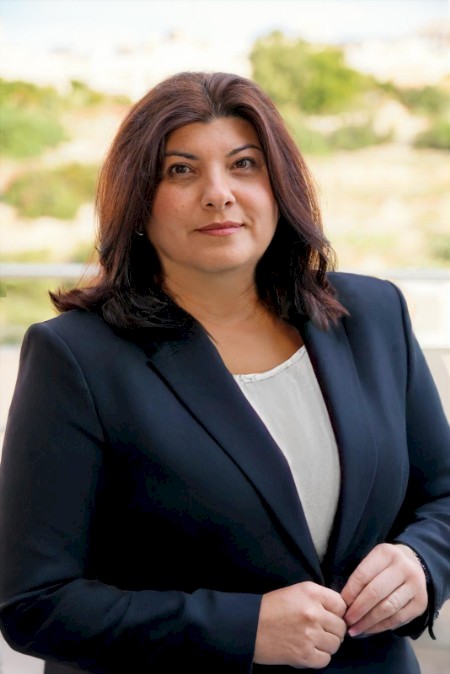
Appointed CEO of Trade Malta in January 2026, Tania Brown leads the country’s only public-private body dedicated to helping Malta-based companies grow internationally. Here, she explains why the UK is a natural partner and how Maltese businesses can build lasting alliances abroad.
Q: How has your vision for Trade Malta developed?
Trade Malta has been operating for the last 10 years as a public-private partnership between the Government of Malta and the Malta Chamber of Commerce, Enterprise and Industry, shaping the internationalisation of Malta-based businesses. We are now at the cusp of significant change.
In that context, it is essential for us to build new collaborations and partnerships – not transactional, point-to-point trade activities, but deeper, more enduring alliances.
Q: What makes Malta an attractive partner for international business?
Malta’s strategic position, situated between Europe, Africa – predominantly the Maghreb region, but increasingly sub-Saharan Africa as well – and the Middle East, has been one of our strongest assets for millennia.
We are a member of the European Union with an expected growth rate of around 4.5% this year – approximately five times the EU average. We offer a stable political environment, a well-established financial services framework and a judicial system rooted in common law. That last point is particularly relevant for UK-based businesses, given the familiarity of our legal structures. Malta’s two national languages, as enshrined in our Constitution, are Maltese and English, and all business and transactions are conducted in English.
Q: Why was your first trade mission as CEO to the UK?
It was not a coincidence that my first trade mission as CEO of Trade Malta was to the UK. There is a clear appetite among UK businesses and partners to form new collaborations, particularly with European member states. The historic relationship between Malta and the UK long predates EU membership, and it carries genuine strategic depth for both countries.
Q: Why did the mission focus on the UK’s regions?
Our mission took us to Liverpool, Wrexham and Cardiff – a deliberate choice. Rather than returning to London, we focused on emerging regional economies that are vibrant, forward-looking and underserved in terms of international partnerships.
The delegation was broad and substantive. Alongside Trade Malta, it included Malta Enterprise, the Institute of Tourism Studies, TechMT, the Malta Chamber, the GoTo Business Chamber and the Malta Financial Services Authority – organisations with genuine policy influence and the capacity to make things happen. That matters enormously when the goal is sustainability, not just a single transaction.
“Malta’s strategic position, situated between Europe, Africa and the Middle East, has been one of our strongest assets for millennia.”Post This
Q: Which sectors offer the strongest opportunities with the UK?
Knowledge-based services are where Malta is genuinely strong. Technology – and I am not referring solely to artificial intelligence, which has become something of a generational buzzword, but also to MedTech, FinTech, monetisation and EdTech – is another area of real strength.
These two pillars, knowledge-based services and technology and digitalisation, represent sectors where Malta and the UK have significant common ground, as we saw clearly during the recent trade mission.
Q: Where else do you see potential for collaboration?
A further mission to the UK is already in the pipeline for 2027 – this time targeting Scotland and the North West, which brings a different dynamic. We are also looking seriously at education and research, particularly with the reintroduction of Erasmus+ in 2027. The UK is home to some of the world’s finest universities, and there is strong potential for collaboration with the University of Malta, the Malta College of Arts, Sciences and Technology and the Institute of Tourism Studies.
Life sciences also represent a compelling opportunity, encompassing medical devices and pharmaceuticals. And then there is renewables and water management – a sector in which the UK, and Scotland in particular, has exceptional expertise.
Q: How does the Global Growth Programme support businesses?
The incentive scheme is designed specifically to support Malta-based businesses in their internationalisation journey. The cap currently sits at €30,000 per annum, and it covers a wide range of eligible activities – participation in trade fairs overseas, involvement in trade missions, digital and conventional marketing and what we call global growth and market research.
That last element is particularly important. Before any business can succeed internationally, it needs to understand the landscape it is entering. Trade Malta will be issuing a revised version of the incentive scheme.
Q: How does Malta’s Vision 2050 shape your work?
We work closely with Malta Enterprise, which is responsible for attracting foreign direct investment into Malta. Together, we are now in a position to be more selective – to move towards higher-value FDI rather than growth for its own sake.
That selectivity is grounded in the country’s Vision 2050, which sets out a 25-year blueprint for both economic and social well-being. Two of its central pillars are the green economy and the blue economy – sectors that are increasingly central to Trade Malta’s work.
Increasingly, we are seeing knowledge-based businesses, technology companies and digitalisation-focused enterprises enter Malta already oriented towards international growth. That is exactly the thrust we want to encourage.
Q: What sets Trade Malta apart from similar organisations?
Being small is not always a disadvantage. Malta has demonstrated, consistently, that it can punch well above its weight. At its peak – around 2022 to 2023 – growth reached approximately 6.5%. We are now stabilised at around 4.5%, which reflects a prudent and sustainable trajectory.
Trade Malta’s position as a public-private partnership between the Government of Malta and the Malta Chamber places us in an enviable position – we have access to both the policy levers and the business community in a way that few organisations can match. That duality is a genuine structural advantage, and it is one that enables us to move quickly, connect the right parties and translate relationships into results.
Q: What do you hope to achieve over the next decade?
The final objective will remain the same: helping Maltese businesses internationalise to the best of their ability. What I would like to have achieved is to see new businesses opening in Malta with the aim to internationalise from the outset, because that gives them an entirely different trajectory.
Two companies from entirely different sectors can come together, join the dots and unlock areas of collaboration that neither could access alone. A tech company here in Malta and a manufacturing company in the United Kingdom, for instance, can form a collaboration, build combined capacity and bid on larger tenders together. They are bringing their respective strengths to the table.