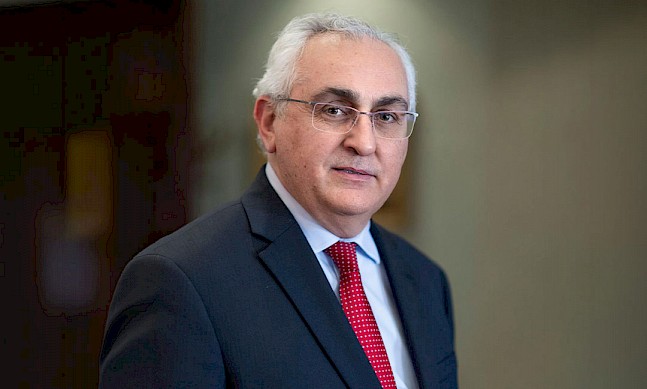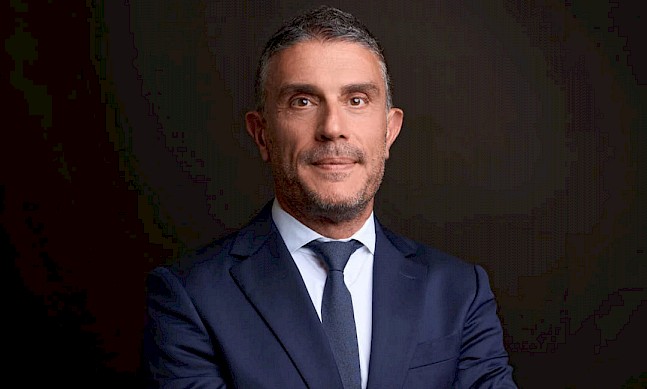








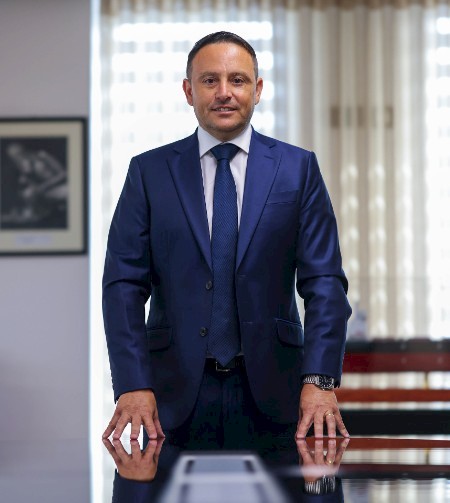
Appointed CEO of Transport Malta in July 2026, Leonid McKay leads the national authority responsible for the regulation and strategic development of land, sea and air transport across the Maltese islands. Here, he explains why Malta is a natural EU platform for UK investors and how the authority is putting people at the centre of transport.
Q: What is your vision for Transport Malta?
As the newly appointed CEO, I have spent the past few weeks absorbing the full scope of what Transport Malta represents and operates within. No transport system exists in a vacuum, and Malta has seen a number of key changes in recent years. The economy is one of Europe’s fastest growing.
There are four key lessons that have shaped my early thinking. The first is that you simply cannot separate land from sea from aviation. They are deeply interconnected across all transport systems, and in Malta, given our geography and our scale, that interdependency is even more pronounced. That is precisely why Transport Malta holds regulatory responsibility across all three domains.
Q: What principles guide your approach?
The second lesson is that this authority is not simply about infrastructure. It is about connecting people – from their homes to their schools, to their hospital appointments. The focus must be human, not just concrete.
Third, we must be demand-responsive. We should invest in upgrading our network to meet market demand, but we must also honour our social responsibilities.
The fourth lesson is that Transport Malta is fundamentally about public safety. We have introduced legislative amendments to regulate ride-hailing platforms, such as Bolt and similar operators, establishing that no driver may exceed 12 hours on the road in a single day.
Q: How should UK investors perceive Transport Malta?
We stand for success. Let me give you two specific examples.
First, the Malta Ship Registry. We are the largest ship registry in Europe and the sixth largest globally in terms of vessel tonnage, with more than 10,000 vessels on our register. We are also leaders in superyachting, with over 1,000 superyachts exceeding 24 metres registered with us. The Malta Ship Registry is, quite simply, the flag of confidence for operators worldwide.
Q: What defines the way Transport Malta operates?
Then there is our aircraft register, which has grown by 500% over the past decade, with more than 950 aircraft currently registered. That level of growth does not happen by accident – it reflects a sustained commitment to excellence and international credibility.
For UK-based investors specifically, I would highlight several qualities that define how we operate. We are highly responsive. We do not compromise on safety standards. We are an open authority, forward-looking in our approach and deeply committed to ease of doing business.
“We are the largest ship registry in Europe and the sixth largest globally in terms of vessel tonnage, with more than 10,000 vessels on our register.”Post This
Q: What opportunities exist for UK maritime operators?
There are several distinct opportunities worth highlighting. The first is the sheer diversity of our register – bulk vessels, tankers, containers, specialised vessels and superyachts all sit within it. That breadth is a strength.
The second is our international reputation, which we have invested in consistently. Part of that reputation rests on our safety track record. We are whitelisted by both the Paris and Tokyo Memoranda of Understanding, placing us in the highest performance category for port state standards.
Malta’s membership of the European Union gives UK investors a direct platform into European maritime and aviation markets – something that has become particularly significant since Brexit. The message is straightforward: come and engage with Malta.
Q: What is the Malta in Motion plan delivering?
Malta in Motion is not a plan for the next 15 years. Malta in Motion is now.
We have already begun electrifying our public transport fleet. Our sister island, Gozo, now operates a fully electrified, zero-emission bus fleet – achieved earlier this year – and by 2030 we intend to have a fully electrified public transport fleet across Malta as a whole.
We are an island. The sea is not just a backdrop; it is a transport corridor. Over the past few months, we have introduced fast ferry services connecting Valletta with Sliema, Mġarr and Buġibba, extending our reach further north and expanding the established Malta–Gozo crossing.
Q: How will Malta in Motion connect different modes of transport?
We are also investing heavily in decarbonisation at our ports, in road management backed by digitalisation, in park-and-ride facilities and in active mobility.
Most importantly, Malta in Motion is about integration. We want e-scooters, buses, private cars, ferries and cycling to communicate with each other – to function as a single ecosystem rather than competing in isolation.
Q: How is sustainability embedded across your remit?
One initiative I want to highlight in particular is our onshore power supply project at the Grand Harbour. We have invested substantially in shore-to-ship connectivity, enabling large cruise liners calling at Malta to switch to the national grid and power down their auxiliary engines while berthed. That means less air pollution and less noise for the densely populated inner harbour neighbourhoods.
On the land side, alongside the electrification programme in Gozo – 24 fully electric buses, plus a further six serving the park-and-ride network – we have invested in dedicated charging depots to support the growing fleet.
We also recognise that sustainability means more than zero-emission vehicles. Active mobility matters enormously.
Q: Why should UK investors engage with Malta now?
We are a stable EU jurisdiction offering a direct platform into the Mediterranean ecosystem and into EU maritime and aviation markets. Our connectivity is strong – direct flights now connect Malta to the US, we are minutes from Sicily and an hour from Rome. We have a highly skilled, English-speaking workforce operating within a legal tradition that UK investors will immediately recognise.
Within the transport sector specifically, we try to be an enabling regulator – not just another market, but a strategic base. We make investment easier. Our EU-approved tonnage tax regime offers genuine predictability for vessel operators. Malta is the natural EU platform for UK-based investors, and Transport Malta is their natural partner within it.
Q: What mark do you hope to leave on Malta’s transport sector?
My background has always been rooted in social justice. At the Housing Authority we undertook significant legal reforms in social and affordable housing between 2018 and 2022. At Jobs Plus, we reformed elements of ride-hailing regulation. Each of those roles was ultimately about creating frameworks that serve people better.
Transport Malta is no different. My legacy here, the mark I most want to leave, is that transport in Malta becomes genuinely about connecting people. Not just demand-driven, but people-driven. Whether that is aviation, maritime or land transport, whether it is regulation, infrastructure or service delivery, the measure of success should always be: are we connecting people more effectively, more safely and more equitably than before?